MBN-Company
MBN-Company
MBN-Company
MBN-Company
MBN-Company
MBN-Company
MBN-Company
MBN-Company
Information of news
  • Views: 429
  • Author: mbncom
  • Date:

Iran 10-month sponge iron production over 21m tons

Category: News

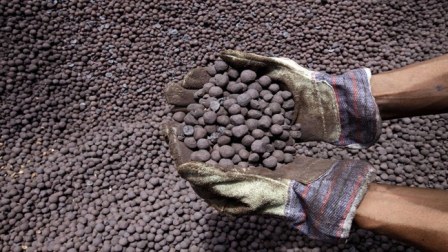
Iran produced over 21 million tons of sponge iron during March 21, 2018-January 20, 2019 showing a 27-percent increase compared to figure for the same period of the preceding year.


According to Reporters, 2.145 million tons of sponge iron were produced during December 22, 2018-January 20, 2019, recording a 29-percent growth against the figure for the same period a year earlier.

Based on statistics, Iran produced 25.54 million tons of sponge iron in 2018 showing an increase of 31.6 percent compared to the output for 2017.

World Steel Association (WSA) announced on January 25 that Iran ranked 10th among crude steel producers last year with 25 million tons of production.

Its figures show a 17.72-percent rise for Iran compared to the figure for 2017 which was 21.24 million tons.

Iran ranked 14th among steelmakers in the world in 2017.

According to WSA report, China topped the list of crude steel producers in 2018 with 928.26 million tons.

The report further listed the second to ninth rankings as: India, Japan, the US, South Korea, Russia, Germany, Turkey and Brazil with production at 106.46 million tons, 104.33 million tons, 86.7 million tons, 72.46 million tons, 71.68 million tons, 42.44 million tons, 37.31 million tons and 34.73 million tons respectively.

World crude steel production reached 1.789 billion tons for 2018 — up 4.5 percent compared to the amount for 2017, which was 1.712 billion tons.

According to the Islamic Republic's Vision Plan, the country's total steel production capacity is to hit 55 million tons a year by 2025, with exports figure expected to reach 10-15 million tons.

The World Steel Association (WSA) is one of the largest and most dynamic industry associations in the world. WSA members represent approximately 85 percent of the world's steel producers, including over 150 steel producers with nine of the 10 largest steel companies, national and regional steel industry associations and steel research institutes.


Iran-Import-Export-Oil-Gas-Petrochemical-Iron-Steel-Equipment-Laboratory-MBN-

www.mbncompany.com


Information of news
  • Views: 482
  • Author: mbncom
  • Date:

Hand-Arm and whole-Body Vibration Measurement Instrument

Category: News

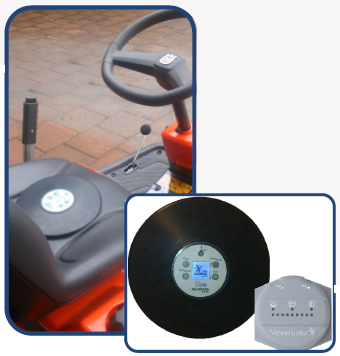
Measurement of vibration exposure on different hand-held machines.

Mounting on machine: directly mount sensors on machines to measure vibration exposure.

Pedagogical vibindicator: to use the simoultaneous vibration monitoring to educate oprators.

Perform risk assessment: to minimize vibration exposure risks at work.


Import-Export-Iran-Laboratory-Measurement-Vibration-Hand-Arm-Whole body-MBN

Import-Export-Iran-Laboratory-Measurement-Vibration-Hand-Arm-Whole body-MBN

www.mbncompany.com


Information of news
  • Views: 413
  • Author: mbncom
  • Date:

Tehran, Moscow to further increase cooperation

Category: News

Iran and Russia discussed ways to further bolster economic ties between the two countries and exchanged views on hold the upcoming meeting of their between Iran and Russia joint cooperation commission.


Iran's Energy Minister Reza Ardekanian and his Russian counterpart Alexander Novak, in a telephone conversation, as heads of Iran-Russia Joint Cooperation Commission also dealt with cooperation in different arenas.


They also exchanged views on the date of the upcoming meeting, as the meeting is slated to be held in Tehran soon. The 14th meeting of Iran-Russia Joint Cooperation Commission was held in Moscow in March 2018.

Ardekanian further pointed out that Iran is to host the 15th meeting of the commission March 20.

He also hailed Russia's position, especially after the unilateral US exit from Iran nuclear deal, hoping that bilateral relations would further improve.

Meanwhile, Iran's Ambassador to Russia Mehdi Sanaei said on Friday that Tehran-Moscow ties became stronger and bilateral relations increased after the two countries saw common interests in regional and international developments.

Sanaei described the development of Iran-Russia political and security relations after the signing of the Joint Comprehensive Plan of Action (JCPOA) as unparalleled, adding that bilateral ties have yet to use all its potentials.

He made the remarks in a panel discussion at the Institute for Iran-Eurasia Studies (IRAS) in Tehran.

At the meeting, Sanaei first dealt with the latest status of Iran-Russia relations in political, economic and cultural fields, noting relations between the two countries have undergone a major transformation as a result of the growth of mutual needs and regional conditions.

The Iranian diplomat also hailed Iran's cultural activities in Russia. Meanwhile, he described the development of Iran-Russia political, security relations as unparalleled.

The two countries' common approaches and perspectives towards global trends and shared regional interests, especially in relation to developments in the Middle East, were the most important force behind the development of political relations between the two countries, according to the ambassador.


Import-Export-Iran-Oil-Gas-Russia-Commission-Equipment-Laboratory-MBN

www.mbncompany.com


Information of news
  • Views: 439
  • Author: mbncom
  • Date:

Tehran, Moscow to further increase cooperation

Category: News

Iran and Russia discussed ways to further bolster economic ties between the two countries and exchanged views on hold the upcoming meeting of their between Iran and Russia joint cooperation commission.


Iran's Energy Minister Reza Ardekanian and his Russian counterpart Alexander Novak, in a telephone conversation, as heads of Iran-Russia Joint Cooperation Commission also dealt with cooperation in different arenas.


They also exchanged views on the date of the upcoming meeting, as the meeting is slated to be held in Tehran soon. The 14th meeting of Iran-Russia Joint Cooperation Commission was held in Moscow in March 2018.

Ardekanian further pointed out that Iran is to host the 15th meeting of the commission March 20.

He also hailed Russia's position, especially after the unilateral US exit from Iran nuclear deal, hoping that bilateral relations would further improve.

Meanwhile, Iran's Ambassador to Russia Mehdi Sanaei said on Friday that Tehran-Moscow ties became stronger and bilateral relations increased after the two countries saw common interests in regional and international developments.

Sanaei described the development of Iran-Russia political and security relations after the signing of the Joint Comprehensive Plan of Action (JCPOA) as unparalleled, adding that bilateral ties have yet to use all its potentials.

He made the remarks in a panel discussion at the Institute for Iran-Eurasia Studies (IRAS) in Tehran.

At the meeting, Sanaei first dealt with the latest status of Iran-Russia relations in political, economic and cultural fields, noting relations between the two countries have undergone a major transformation as a result of the growth of mutual needs and regional conditions.

The Iranian diplomat also hailed Iran's cultural activities in Russia. Meanwhile, he described the development of Iran-Russia political, security relations as unparalleled.

The two countries' common approaches and perspectives towards global trends and shared regional interests, especially in relation to developments in the Middle East, were the most important force behind the development of political relations between the two countries, according to the ambassador.


Import-Export-Iran-Oil-Gas-Russia-Commission-Equipment-Laboratory-MBN

www.mbncompany.com


Information of news
  • Views: 421
  • Author: mbncom
  • Date:

Iranian steel exports steady: Official

Category: News

Iran's steel exports remained steady in the nine months from March 21-December 21, 2018 despite the reimposition of US sanctions in August on metals trading, according to the CEO of Tehran-based AASIM Consulting Group.


According to spglobal.com, Mohsen Parvan said for the full year to March 2019, Iran's steel exports may equal last year's record of over nine million tons, as links with existing steel trade partners, particularly in the Middle East, Russia, China and the EU, have largely remained in place.

"Iran has so far exported six million tons of steel since March 21, 2018, similar to the previous year. At least half is semi-finished products such as billet and slab," Parvan said in an interview in London last week.

Billet steel is being supplied to Oman for rerolling, with other customers in Qatar, Iraq, the UAE, CIS nations including Ukraine and Kazakhstan and small amounts being sold into the EU, specifically Germany, Spain and Italy, he said.

Starting August 6, 2018, the US reimposed secondary sanctions on trade to and from Iran in steel and aluminum products, gold and precious metals, graphite and coal, giving non-US persons 90 days in which to wind down their steel/metal trade activities with the country or risk US enforcement action.

Other sectors of Iran's economy, including oil, energy and shipping, were affected from November, 2018.

The European Parliament passed a blocking action in early August protecting EU citizens and governments from the impact of the US secondary sanctions.

The EU and other governments, including the UK, Germany, France, Russia and China — which remain committed to the 2015 Iran nuclear deal from which the US withdrew last May — could thus take steps to protect their countries' businesses and trade with Iran, Sue Millar, London-based partner in international law firm Stephenson Harwood said at the time.

A significant weakening of the rial since the US announced it was reimposing sanctions means Iran's steel remains competitive on world markets. This, sources say, has helped boost Iranian exports of finished, higher-value added products in recent months.

The latest figures from the Iranian Steel Producers' Association (ISPA) show exports totaled 5.273 million tons of steel products during March 21-November 21, 2018 including 1.92 million tons of finished products, up 104 percent year-on-year, and 3.335 million tons of semi-finished products, down 21 percent, compared with around 5.165 million tons in the year-ago period, which included 940,000 tons of finished and 4.225 million tons of semi-finished products.


Iran-Import-Export-Equipment-MBNCo

www.mbncompany.com


Information of news
  • Views: 485
  • Author: mbncom
  • Date:

Iran manufacturing passenger aircraft

Category: News

Iranian experts and engineers are currently involved in manufacturing a 72-seat aircraft in a project that began in 2017, an official said on Monday.


Secretary of the Headquarter for the Development of Aeronautics Technology of Iran's Vice Presidency for Science and Technology Manouchehr Manteqi said that Iran started the project to produce an advanced passenger plane in early 2017.

He put the current physical progress of manufacturing this advanced aircraft at about eight percent.

Announcing the operation date of this giant project depends on two important factors, he said, adding, "Continuous and nonstop allocation of budget to this project is one of the most important factors to keep it going in full swing."

He called on relevant officials to take effective steps to allocate funds for the completion of this important project.

He cited gaining international certificates as the second important factor, adding, "Effective steps have been taken in this respect."

"Engineers of knowledge-based companies have been hired for this important project with the aim of delivering a completely domestic-manufactured product."

Iran has made huge progress in science and technology in recent years.

Iran's Vice President for Science and Technology Sorena Sattari announced early in December, 2018 that Iran enjoys top position among nations of the region in the production of science and technology.

"Now, Iran ranks first in the region in science and technology," Sattari said.

Also, in June, Sattari underlined that Iran's international ranking in science production had risen from 34th to 16th.

"Iran ranks first in West Asia in terms of science output with the number of its college students rising to 4.8 million from 2.4 million," Sattari said in an address to the Second Iran-Europe Cooperation Conference in Brussels, Belgium.

Sattari said that there were 47 million Internet users in Iran who constitute nearly half of the total Internet users in the Middle East, and added, "Iran ranks first in the Middle East for production of biological drugs."

He said that Iran had one of the most successful biotech companies with young and skilled staff aged 33 on the average which exported biological drugs to 10 countries, Sattari said.


Import-Export-Equipment-Technology-Aircraft-Airplane-MBNCo

www.mbncompany.com


Information of news
  • Views: 460
  • Author: mbncom
  • Date:

400 companies from 15 countries to join Chabahar FTZ

Category: News

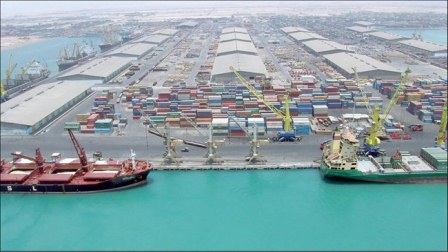
Almost 400 companies from 15 countries have officially applied so far to conduct business in Chabahar Free Trade Zone (FTZ), an official of the Chabahar Free Trade Zone Organization announced on Tuesday, adding that the Iran's oceanic hub will have a tremendous impact on the entire region.

Director General of Chabahar Free Trade Zone Organization Abdul Rahim Kordi announced that more than 3,000 companies have registered to set up business in Chabahar .

He added that 400 out of the 3,000 companies which have registered are from 15 countries.

Addressing the Iran-India Economic Forum, Kordi said that as a new regional actor in the Middle East, Chabahar plays a special role in economic diplomacy of the region.

"The Chabahar agreement, between Iran, Afghanistan and India, is a milestone in the development of relations between the three countries, and will have a special impact on relations among countries in the region," he said.

The official noted that the presence of Indian port operators in Shahid Beheshti port of Chabahar has increased the importance of Chabahar.

"Changes in regional economic arrangement and justification of industrial and logistic activities in Chabahar concurrent with completion of the basic infrastructure has opened up a new chapter in the regional and international role of Chabahar," he added.

Kordi noted, "In the past two years, we have witnessed a dramatic growth in the demand for investment in this area, and the number of the finalized investment contracts in this period is more than the total investment contracts signed over the past 10 years."

He added, "We have been working hard to provide the necessary infrastructures for attracting more investment."

India's Shipping Ministry officially announced in a statement on Monday that the country has taken over the operations of strategic Chabahar port in the Sistan-Baluchestan Province of Iran's southeastern coast, during the Trilateral Agreement meeting in the port on December 24.

The heads of Indian, Iranian and Afghanistan delegations jointly inaugurated the office of the Indian SPV — India Ports Global Chabahar Free Zone (IPGCFZ) at Chabahar.

"The physical take-over of the terminal area, cargo handling equipment and Office building was completed by December 29, 2018," the statement said.

"This step marks the beginning of a long journey. India has written a history with its engagement in Chabahar and is now leading the regional cooperation and joint efforts to support land locked Afghanistan. This is the first time India will be operating a port outside its territories," the Indian government's statement said.

India began interacting with Iran on Chabahar Port around 2003 but a major push was received in the second half of 2014, resulting in the signing of an MoU between the two countries.

The statement added that the challenges facing the contract between Iran and India were resolved through a formal short term contract between the two sides which was signed on May 6, 2018 during Iranian President Hassan Rouhani's visit to New Delhi.

Earlier on December 24, 2018, representatives from Iran, India and Afghanistan signed a nine-article memorandum of understanding (MoU) in Chabahar where they convened to hold the first follow-up committee on trilateral agreement of the city's oceanic port.

Deputy Head of Iran's Ports and Maritime Organization Mohammad Ali Hassanzadeh announced the news, adding that the next round of the committee will be held in India.

The committee aims to finalize the protocol to harmonize transit, roads, customs and consular matters for making the route attractive and decrease logistic costs.

Reportedly, detailed discussions were held between the three sides on drawing the necessary provisions for the full operation of the agreement. Further details are yet to be disclosed.

Earlier on October 12, senior Iranian and Indian trade officials met in New Delhi to review ways to bolster bilateral relations, especially development of Chabahar port.

During the meeting in the Indian capital, Iran's Deputy Roads and Urban Development Minister and Head of Ports and Maritime Organization Mohammad Rastad and senior officials from India's Ports and Shipping Ministry explored avenues for bolstering cooperation, in particular the development of Chabahar port.

During the meeting, the two sides discussed the development of Chabahar port as well as the schedule and conditions for implementing the main contract.

The Indian company, IPGL, has been tasked with administering and running the terminal of the first phase of 'Beheshti harbor' at Chabahar port as a mere operator.

Supplying the equipment for development of the port by the Indian company was also on the meeting's agenda.

During his two-day stay, Rastad visited Jawaharlal Nehru Port (JNPT Port), a strategic Indian trade hub, and conferred with related officials on boosting ties between the JNPT Port and Chabahar port.

Chabahar is Iran's closest and best access point to the Indian Ocean. In May 2016, Iran and India signed a deal to equip and operate containers and multi-purpose terminals at Shahid Beheshti port in Chabahar with the capital investment of $85.21 million and annual revenue expenditure of $ 22.95 million on a 10-year lease.
 

Import-Export-Iran-Equipment-Oil-Gas-Petrochemical-

www.mbncompany.com


Information of news
  • Views: 523
  • Author: mbncom
  • Date:

Iran's electricity export to fetch $33b by 2025

Category: News

Iran's Energy Ministry plans to earn $33 billion from electricity export by 2025, an official said.


Mohsen Bakhtiar, deputy energy minister for planning and economic affairs, said Iran has the technological know-how and capacities to play an active role in the international energy market.

He was speaking on the sidelines of the 18th Iran International Electricity Exhibition (IEE), which began on November 2 and will end today in Tehran.


Bakhtiar said Iran's quality services in the energy sector is among the country's advantages in international market, but added that more needs to be done to ensure greater overseas competition.

Iran, the largest exporter and importer of electricity in the Middle East, plays the role of central power distributor in the region, with an installed power generating capacity of around 80,000 MW.

The country's electricity industry ranks 14th in the world in terms of output.

Iranian contractors are currently involved in Iraq and Syria as the two biggest potential markets. They also have 58 projects underway in other countries, including Turkmenistan, Afghanistan, Azerbaijan, Armenia, Pakistan, Tajikistan, Uzbekistan, Sri Lanka, Uganda, Nigeria, Ethiopia, Oman and India.

Iran is among the six countries possessing the technical expertise to construct dams and hydroelectric power plants, as Iranian developers dominate the regional hydropower industry.

Hydropower is the country's largest renewable source in terms of generational capacity and Iranian companies have considerable experience in hydropower development. They are also increasingly active on the international stage by implementing large-scale projects.


Iran-Import-Export-Economy-Energy-Power-Market-Laboratory-Equipment-MBN-Electricity-Trade-Analyzer

www.mbncompany.com


Information of news
  • Views: 535
  • Author: mbncom
  • Date:

Japan's August crude imports from Iran rise 65%

Category: News

Japan's crude oil imports from Iran jumped 65 percent year on year in August, marking the fourth consecutive month of increase, according to government trade data released on Monday.


The rise lifted Japan's imports of Iranian crude oil to 177,475 bpd in August, contributing to the 5.9 percent year on year rise in overall crude imports to 3.39 mbd in the month, preliminary data from the Japan's Ministry of Economy, Trade and Industry (METI) showed, reported S&P Global Platts.


Imports of Iranian crude in August edged down 3.3 percent from July, but the Persian Gulf producer was the fifth-largest supplier to Japan in the month, accounting for 5.2 percent of the total volume, according to METI data.

Japan's oil imports from Iran have surged since May as domestic refiners rushed to secure as many cargoes as possible before US sanctions return.

Accordingly, Japan's crude oil imports from Iran over January-August averaged 166,890 bpd — up 4.8 percent from a year earlier.

Japanese refiners have urged the government to seek a waiver from the US as they are keen to continue importing usual volumes of Iranian crude.

Japan remains firmly committed to seeking US exemption for Iranian oil imports as it sees the supply as important for the country's energy security and business, Ryo Minami, METI's the director general of oil, gas and mineral resources, told S&P Global Platts earlier.

US President Donald Trump said on May 8 that the US would withdraw from the Iran nuclear deal and reimpose sanctions that have been frozen since January 2016 as part of the Joint Comprehensive Plan of Action.


Iran-Import-Export-Trade-Oil-Gas-Petrochemical-Japan-Analyzer-MBN-Crude-

www.mbncompany.com


Information of news
  • Views: 428
  • Author: mbncom
  • Date:

Germany grapples to find exit from diesel-emissions crisis

Category: News

Germany’s government is preparing a second round of potentially costly measures to reduce pollution from diesel vehicles as the country struggles to come to terms with excess emissions three years after Volkswagen AG admitted to cheating.


With cities like Stuttgart and Frankfurt poised to impose driving bans because of excessive levels of smog-causing nitrogen oxides, Chancellor Angela Merkel’s government is under increasing pressure to come up with a solution. Actions agreed with automakers last year, including software upgrades to emissions systems and trade-in incentives for older diesels, have proven insufficient, bloomberg.com reported.


“The quick and overall better way is to replace the old fleet with a new one,” Merkel said at a town-hall event in Augsburg, Germany.

“In addition, the door can be opened for retrofits on some vehicles. And if and when that happens, we believe the customer shouldn’t have to pay for it.”

Automakers, including BMW AG and Daimler AG, are expected to play along, even though the government has little legal leverage because the vehicles were properly certified. The manufacturers are keen to avert driving bans as the incessant debate is causing consumers to shy away from diesel technology, which is profitable, secures German jobs and helps meet tighter environmental regulations.

 “The carmakers caused the diesel crisis,” Environment Minister Svenja Schulze said on Twitter. “That’s why they need to finance the solution.”

Here’s a look at the three main options:


Trade-In incentives


This is the plan preferred by automakers as it deals with the pollution problem by promoting sales of new models. For the government, it’s good because it’s a quick fix. The incentives need to be generous enough to get a hefty uptake. Last year, car manufacturers offered rebates, such as 2,000 euros ($2,335) on a new BMW. That means more could be expected this time around.


Hardware fix


Politicians, including Environment Minister Schulze, are calling for automakers to bolster emissions systems on older vehicles by installing new hardware such as tanks for urea, which neutralizes nitrogen oxides. While that could reduce pollution on the road, developing, certifying and installing the equipment would be complex and take time. Carmakers and Transport Minister Andreas Scheuer warn that costs could exceed estimates of 1,400 to 3,300 euros per car. Still, some type of hardware fix will likely be part of the package.


Buybacks


The government is considering allowing customers to return an older diesel for its current value plus a bonus. This would be the worst-case scenario for automakers, as customers could use that money to buy a vehicle from another brand or pocket it and take the bus. This is unlikely as it would prompt stiff resistance from Germany’s manufacturers.


Iran-Import-Export-Trade-Germany-Environment-Analyzer-MBN-Equipment-Manufacture-Oil-Gas-Petrochemical

www.mbncompany.com


Related Posts :

    Contact Us :

    Headquarter: Unit:15-No:12-Gandhi 19-Gandhi Blv-Tehran-Iran
    Postal Code: 1517874438
    Telephones: (+98-21)44237763 (+98-21)88668972 (+98-21)88663258
    Fax NO: (+98-21)89770683
    E-mail : Info@mbncompany.com
    Laboratory and instrumentation section: mbnasir.co@gmail.com
    Electrical section: mbnco@outlook.com
    After sales section: support@mbncompany.com

    Google Map :


    سئو | کاشت مو | صندلی پلاستیکی | بادکنک آرایی