MBN-Company
MBN-Company
MBN-Company
MBN-Company
MBN-Company
MBN-Company
MBN-Company
MBN-Company
Information of news
  • Views: 428
  • Author: mbncom
  • Date:

Germany grapples to find exit from diesel-emissions crisis

Category: News

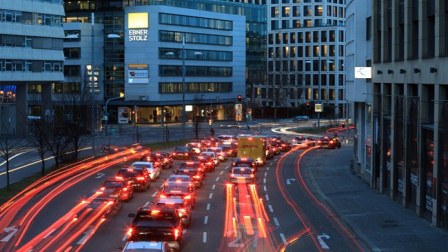
Germany’s government is preparing a second round of potentially costly measures to reduce pollution from diesel vehicles as the country struggles to come to terms with excess emissions three years after Volkswagen AG admitted to cheating.


With cities like Stuttgart and Frankfurt poised to impose driving bans because of excessive levels of smog-causing nitrogen oxides, Chancellor Angela Merkel’s government is under increasing pressure to come up with a solution. Actions agreed with automakers last year, including software upgrades to emissions systems and trade-in incentives for older diesels, have proven insufficient, bloomberg.com reported.


“The quick and overall better way is to replace the old fleet with a new one,” Merkel said at a town-hall event in Augsburg, Germany.

“In addition, the door can be opened for retrofits on some vehicles. And if and when that happens, we believe the customer shouldn’t have to pay for it.”

Automakers, including BMW AG and Daimler AG, are expected to play along, even though the government has little legal leverage because the vehicles were properly certified. The manufacturers are keen to avert driving bans as the incessant debate is causing consumers to shy away from diesel technology, which is profitable, secures German jobs and helps meet tighter environmental regulations.

 “The carmakers caused the diesel crisis,” Environment Minister Svenja Schulze said on Twitter. “That’s why they need to finance the solution.”

Here’s a look at the three main options:


Trade-In incentives


This is the plan preferred by automakers as it deals with the pollution problem by promoting sales of new models. For the government, it’s good because it’s a quick fix. The incentives need to be generous enough to get a hefty uptake. Last year, car manufacturers offered rebates, such as 2,000 euros ($2,335) on a new BMW. That means more could be expected this time around.


Hardware fix


Politicians, including Environment Minister Schulze, are calling for automakers to bolster emissions systems on older vehicles by installing new hardware such as tanks for urea, which neutralizes nitrogen oxides. While that could reduce pollution on the road, developing, certifying and installing the equipment would be complex and take time. Carmakers and Transport Minister Andreas Scheuer warn that costs could exceed estimates of 1,400 to 3,300 euros per car. Still, some type of hardware fix will likely be part of the package.


Buybacks


The government is considering allowing customers to return an older diesel for its current value plus a bonus. This would be the worst-case scenario for automakers, as customers could use that money to buy a vehicle from another brand or pocket it and take the bus. This is unlikely as it would prompt stiff resistance from Germany’s manufacturers.
 

Iran-Import-Export-Trade-Germany-Environment-Analyzer-MBN-Equipment-Manufacture-Oil-Gas-Petrochemical

www.mbncompany.com


Information of news
  • Views: 442
  • Author: mbncom
  • Date:

Russia, Pakistan sign MoU on gas pipeline from Iran

Category: News

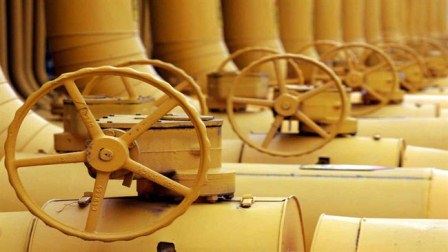
Russia and Pakistan signed a memorandum of understanding (MoU) on implementing a project to build an underwater gas pipeline from Iran to Pakistan and India, the Russian Energy Ministry said in a statement on Thursday.


"The memorandum provides for the identification of authorized organizations through which the project will be supported, including during the feasibility study, identification of the resource base, configuration and route of the gas pipeline," the statement said, according to Xinhua.

Russia's Deputy Energy Minister Anatoly Yanovsky and Pakistan's Ministry of Energy Additional Secretary Sher Afgan Khan signed the document in Moscow.

Now Russia will have to inform Iran and India about the signing, after which it expects to sign a similar document with India, Yanovsky said in the statement.

The project was frozen in 2013 due to the imposition of sanctions against Iran, but its revival started in 2017. In November 2017, Russia and Iran signed a memorandum that envisaged Russian support for gas supplies from Iran to India.

In March, a Russian-Iranian working group on the implementation of the project had its first meeting.

According to Yanovsky, Russia and Pakistan were holding consultations on another project of building the 1,100 kilometer North-South Gas Pipeline (NSGP) between Pakistan's Karachi and Lahore to transport 12.3 billion cubic meters of gas per year.

The implementation of an agreement signed in last October between Russia and Pakistan on Russian liquefied natural gas (LNG) supplies "can become a promising direction of cooperation", he said.

The governments of the two countries were also considering signing an agreement on Russian oil products supplies to Pakistan, Yanovsky said.

In addition, Russian electric power industry has shown interest in the Pakistani market, he said.


Iran-Import-Export-Oil-Gas-Petrochemical-Economy-Technology-Russia-Analyzer-MBN-Pipeline

www.mbncompany.com


Related Posts :

    Contact Us :

    Headquarter: Unit:15-No:12-Gandhi 19-Gandhi Blv-Tehran-Iran
    Postal Code: 1517874438
    Telephones: (+98-21)44237763 (+98-21)88668972 (+98-21)88663258
    Fax NO: (+98-21)89770683
    E-mail : Info@mbncompany.com
    Laboratory and instrumentation section: mbnasir.co@gmail.com
    Electrical section: mbnco@outlook.com
    After sales section: support@mbncompany.com

    Google Map :


    سئو | کاشت مو | صندلی پلاستیکی | بادکنک آرایی