MBN-Company
MBN-Company
MBN-Company
MBN-Company
MBN-Company
MBN-Company
MBN-Company
MBN-Company
Information of news
  • Views: 442
  • Author: mbncom
  • Date:

Russia, Pakistan sign MoU on gas pipeline from Iran

Category: News

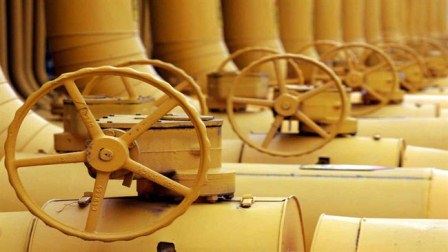
Russia and Pakistan signed a memorandum of understanding (MoU) on implementing a project to build an underwater gas pipeline from Iran to Pakistan and India, the Russian Energy Ministry said in a statement on Thursday.


"The memorandum provides for the identification of authorized organizations through which the project will be supported, including during the feasibility study, identification of the resource base, configuration and route of the gas pipeline," the statement said, according to Xinhua.

Russia's Deputy Energy Minister Anatoly Yanovsky and Pakistan's Ministry of Energy Additional Secretary Sher Afgan Khan signed the document in Moscow.

Now Russia will have to inform Iran and India about the signing, after which it expects to sign a similar document with India, Yanovsky said in the statement.

The project was frozen in 2013 due to the imposition of sanctions against Iran, but its revival started in 2017. In November 2017, Russia and Iran signed a memorandum that envisaged Russian support for gas supplies from Iran to India.

In March, a Russian-Iranian working group on the implementation of the project had its first meeting.

According to Yanovsky, Russia and Pakistan were holding consultations on another project of building the 1,100 kilometer North-South Gas Pipeline (NSGP) between Pakistan's Karachi and Lahore to transport 12.3 billion cubic meters of gas per year.

The implementation of an agreement signed in last October between Russia and Pakistan on Russian liquefied natural gas (LNG) supplies "can become a promising direction of cooperation", he said.

The governments of the two countries were also considering signing an agreement on Russian oil products supplies to Pakistan, Yanovsky said.

In addition, Russian electric power industry has shown interest in the Pakistani market, he said.


Iran-Import-Export-Oil-Gas-Petrochemical-Economy-Technology-Russia-Analyzer-MBN-Pipeline

www.mbncompany.com


Information of news
  • Views: 558
  • Author: mbncom
  • Date:

Iran's five-month cement, clinker exports up 17.3%

Category: News

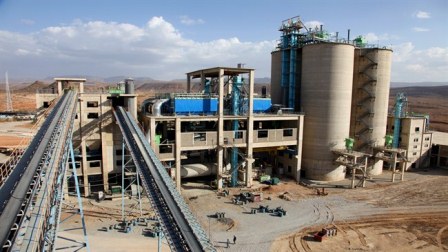
Cement and clinker exports from Iran during March 21-August 22, 2018 witnessed a 17.3-percent growth compared to the figure for the same period last year, said the head of the Cement Industry Employers Association.


Mohammad Atabak put the country's total overseas sales of cement and clinker during this period at 5.81 million tons, adding the figure amounted to 4.95 million tons in the same five-month period a year ago.

He said that the exports of cement in the same timespan exceeded 2.93 million tons, indicating a nine-percent rise year-on-year.

Atabak added clinker exports reached 2.88 million tons in this duration — up 26.9 percent compared to last year's figure which was 2.27 million tons.

He said more than 20 countries from Asia, Europe and Africa were the destinations of Iran's cement exports during the five-month duration to August 22, 2018, adding Afghanistan and Iraq ranked first and second in terms of importing the Iranian product, accounting for 30 percent and 26 percent, respectively, of purchases from the Middle Eastern state.

In the same period, Russia imported more than 44,300 tons of cement from Iran, Atabak noted, listing Kazakhstan and Uzbekistan as other importers of the Iranian construction material.

He added in the same duration, Bangladesh and Kuwait purchased 22 percent and 21 percent, respectively, of Iran's total 2.8-million cement exports, to rank among the top customers of the Iranian product.

Islamic Republic of Iran Customs Administration figures show that in the same five-month time-span, 7.53 million tons of cement industry products were exported from Iran — up eight percent year-on-year.

According to IRICA, the value of Iran's exports of cement industry products in this period stood at $270.4 million, showing a seven-percent increase compared to the figure for the corresponding period a year ago.

In addition, Iran imported more than 20,400 tons of cement industry products worth $14.9 million in this time span, indicating increases of 23 percent and 26 percent in terms of weight and value respectively year-on-year.


Iran-Import-Export-Trade-Equipment-Oil-Gas-Petrochemical-Cement-Clinker-Russia-MBN-Analyzer

www.mbncompany.com


Information of news
  • Views: 665
  • Author: mbncom
  • Date:

Iran-Pakistan non-oil trade grows by 19.7%

Category: News

Iran-Pakistan trade in non-oil products witnessed a significant growth of 19.7 percent in the five months to August.


 Trade in non-oil products between the two countries increased to $642.6 million during March-August, 2018. Bilateral trade recorded a growth of 19.7 percent compared to the figure for the same five months of 2017.

The report further said that the growth in bilateral trade among the neighboring countries will entail development and stability in the region.

Officials of Iran and Pakistan agreed to increase bilateral trade to $5 billion in the next five years.

Experts say that the scope of trade between Iran and Pakistan is very high and it is good that bilateral trade has seen a positive growth in recent years.

Meanwhile Iran's exports to Pakistan in the three months from March 21 to June 21 rose by 61 percent compared to the figure for the same period of the previous year, according to statistics available.

President of Islamabad Chamber of Commerce and Industry Sheikh Amir Waheed told IRNA that Iran is a future gateway of Muslim countries and Pakistan must benefit from Iran's emerging economic opportunities.


Iran-Import-Export-Trade-Equipment-Oil-Gas-Petrochemical-Pakistan-Analyzer-Laboratory-Chamber-MBN

www.mbncompany.com


Information of news
  • Views: 740
  • Author: mbncom
  • Date:

India's oil imports from Iran jumped 44% in August

Category: News

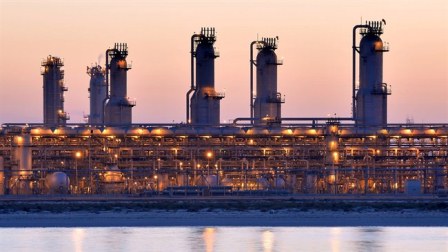
India's crude oil imports from Iran jumped a whopping 43.72 percent to 2.07 million tons (mt) in August this year.


India is among the largest importers of Iranian crude oil and the jump in imports comes amid increasing pressure from the United States on Iran's oil customers to cut purchases, PTI reported.

Cumulatively, oil imports by India from Iran in the first five months (April to August) of the current financial year increased 43.69 percent to 13.32 mt as compared to 9.26 mt imported in the corresponding period a year ago, fresh data sourced from the Directorate General of Commercial Intelligence and Statistics (DGCIS), an arm of the Ministry of Commerce and Industries showed.

In value terms, India imported crude oil valued at $1.08 billion from Iran in August alone, as compared to $0.52 billion worth of crude imported in the corresponding month last year.

India's oil import from Iran, in value terms, during the five month period doubled to $6.82 billion from $3.27 billion worth of imports in the corresponding period last year.

US had in May walked out of the Joint Comprehensive Plan of Action (JCPOA) with Iran and reimposed economic sanctions on the country. The sanctions prohibit other nations to enter into new contracts with Iran immediately and provide a six-month period ending November 4 to wind-down existing commitments with the country, especially with Iranian oil companies.

Economic Times had last week reported Indian refiners will pay for oil from Iran in rupee, using UCO Bank and IDBI Bank channels, beginning November 4 when oil-related sanctions against the Islamic Republic go into effect.

Also, India has offered to cut oil purchase from Iran significantly to secure a waiver from the US to continue its imports.

Indian refiners are currently using State Bank of India (SBI) and Germany-based Europaeisch-Iranische Handelsbank AG to buy Iranian oil in euros, according to a Reuters report.

Iran's Oil Minister Bijan Namdar Zanganeh has said removing Iran's oil from the market was not a possibility in the mid-term and US plans of bringing Iran's oil exports to zero in the short term, even for a month, will not happen.

Zanganeh added that some countries have lowered their oil import from Iran following US pullout of the JCPOA in May, but no country other than South Korea have stopped imports from Iran since then.

India meets over 82 percent of its crude requirement through imports. Around 10-12 percent of these shipments are sourced from Iran.

Indian refiners prefer Iranian crude owing to better pricing and credit terms.

The three-month credit period offered by Iran results in lower working capital for domestic Indian refiners leading to lower borrowings and increased floating money.

Iran's OPEC Governor Hossein Kazempour Ardebili on Sunday said that no production increase was discussed during Sunday's meeting of the Joint OPEC – Non-OPEC Ministerial Monitoring Committee (JMCC) in Algiers.

OPEC — together with a group of non-OPEC producers including Russia — started withholding oil supplies up to 1.8 million barrels per day since 2017 to prop up prices and reduce oil inventories.

The cuts, which deepened to 2.8 million barrels per day for the month of May lifted prices from lows of around $42.20 per barrel in November 2016 to highs of around $80 dollar per barrel in May 2018.

Subsequently, in June this year the group along with its non-OPEC members decided to not to over-comply on production cuts beginning July this year.

Saudi Arabia's crude oil exports to India declined 1.07 percent to 3.03 mt in August.

In the first five months of the current fiscal (March-August), Saudi Arabia's oil exports to India rose 8.53 percent to 15.67 mt, DGCIS data showed.

The Arab nation's overall crude oil exports in April-July 2018 period increased 4.15 percent, according to information published by JODI-Oil World Database.

Iraq's oil exports to India in August decreased 9.60 percent to 3.38 mt. Cumulatively, oil exports to India in the first five months of the present financial year increased 7.26 percent to 19 mt.

Iraq overtook Saudi Arabia to become the largest crude oil exporter to India last financial year which ended March 2018.

Overall, Iraq's crude oil exports in the April-July 2018 period increased marginally to 62,285 mt.

India's crude oil imports from Nigeria increased 8.42 percent to 1.09 mt in August as compared to one mt of crude oil imported in the corresponding month of the previous financial year. Cumulatively, crude oil imports from Nigeria in the April-August period decreased 20.34 percent to 5.81 mt.

Nigeria's crude oil production and exports have been on a decline in the past few months owing to increased internal conflict in the nation.

Similarly, India's crude oil imports from Venezuela fell over 91 percent in August this year to 0.18 mt. Cumulatively, India's crude oil imports from Venezuela in the first five months of the current fiscal fell 11.36 percent to 7.63 mt.

Venezuela's crude oil production is at its lowest point in 60 years on the back of lack of investments.

In an indication of increasing appetite for US crude, India's crude oil imports from the US during the first five months of 2018-19 fiscal year rose nine times to 2.60 mt as compared to 0.28 mt of crude imported in the corresponding period last fiscal.
 

Iran-Import-Export-Trade-Oil-Gas-Petrochemical-Crude-India-Equipment-Laboratory-Analyze-MBN-

www.mbncompany.com


Information of news
  • Views: 619
  • Author: mbncom
  • Date:

Mazandaran Province caviar production up 30%

Category: News

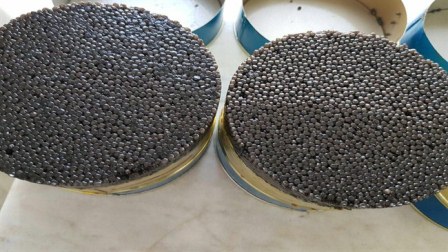
Caviar production in the northern Iranian province of Mazandaran witnessed a 20 to 30 percent growth this year compared to the figure for last year, a provincial official said.


Valiollah Mohammadzadeh, director general of Mazandaran Fisheries Organization, told Iran Daily that Mazandaran produces more than 50 percent of Iran's caviar, noting, "Production of sturgeon fish and caviar in the province this year has increased by 20 to 30 percent."

He added that 2,000 tons of sturgeon fish and more than 2,500 kilograms of caviar are expected to be farmed in Mazandaran this year.

Pointing to the decreasing sturgeon fish stock and the restrictions on fishing in the Caspian Sea in the past decade, the official noted that sturgeon fish farming has seen a significant growth to become the main source of caviar harvest.

Mohammadzadeh said Mazandaran is the leading province in caviar production, both through fish farming in freshwater and in fisheries near the Caspian Sea.

"Inland fisheries account for 90 percent of sturgeon fish farming while only 10 percent is done in freshwater fisheries," he added.

The official said fish farmers prefer to farm sturgeons in fisheries where the water can be easily supplied from the sea. He added that sturgeon and caviar harvest farmed in such fisheries are of better quality than those farmed in freshwater.

Mohammadzadeh said there are currently 18 sturgeon fish farms in Mazandaran, with seven additional farms to be constructed by the yearend.

He described sturgeon fish farming as economically viable, saying those investing in the field can expect suitable financial gains.

Mohammadzadeh said that the quality of farmed caviar is no different from those in the wild, adding that Iran has the permit to export farmed caviar to the European Union.

"Each kilo of caviar in European Union member states is sold at $1,000, with prices going up to $1,500 on special occasions like Easter or Christmas," he said.

Pointing to the popularity and quality of Iranian caviar, he added that caviar all over the world is synonymous with Iran.

"On average, Iranian caviar is 10 percent more expensive than other caviars."


Germany, France and Italy are among the buyers of Iranian caviar, he said.


Iran-Import-Export-Trade-Equipment-Economy-Caviar-MBN-Germany-France-Oil-Gas-Analyze

www.mbncompany.com


Information of news
  • Views: 441
  • Author: mbncom
  • Date:

Iran non-oil exports hit $19 b in past five months

Category: News

Iran's non-oil exports of Iran reached $19 billion in the five months from March 21-August 22, announced the governor of Central Bank of Iran (CBI).


Abdolnaser Hemati further said that $3 billion earned from exports of oil, gas and condensates have already entered the economic cycle while the remaining $16 billion will soon be made available.

Referring to the Foreign Exchange Deals Integrated System, locally known by its acronym NIMA, he added, "To date, a total of €2 billion have been supplied in NIMA, of which 80 percent was made available by petrochemical producers."

Elsewhere in his remarks, he referred to the $13 billion assigned for importing staples, medicine and medical equipment and said that the import of these commodities is ongoing.


Iran-Import-Export-Equipment-Oil-Gas-Petrochemical-

www.mbncompany.com


Information of news
  • Views: 542
  • Author: mbncom
  • Date:

Over 18 m tons of iron ore aggregate concrete produced in five months

Category: News

Iran produced 18.428 million tons of iron ore aggregate concrete during the first five months of the current Iranian year.


According to a report by Iranian Mines and Mining Industries Development and Renovation Organization (IMIDRO) on Monday, the figure shows 19 percent of growth compared to corresponding figure of preceding year which was 15.544 million tons, imidro.gov.ir reported.

Gol-e Gohar produced 6.615 million tons of iron ore concentrate during the period while Chadormalu, Iran Central Iron Ore Company, Middle East Industries Development Holding Company (MIDHCO), Gohar Zamin, Opal Parsian of Sangan, NIMIDCO and Jalalabad produced 3.728 million tons, 2.261 million tons, 2.097 million tons, 1.83 million tons, 1.187 million tons, 456,000 tons and 252,772 million tons of concentrate, respectively.

In 2012, Iran discovered huge reserves of high-quality iron ore in the country's Central Lut desert.

Iran ranks third in Asia and 11th in the world in terms of iron reserves.

Iran is among the 15 major mineral-rich countries and exports its industrial and mineral products to 159 countries, including Iraq, China, the United Arab Emirates, India and Afghanistan.

The country’s production of iron ore, used to make steel, will reportedly rise to 40 million tons. Steel output is set to jump to 55 million tons by 2025, according to Industry, Mine and Trade announcement.


Iran-Import-Export-Mining-Oil-Gas-Petrochemical-Iron-Trade-Equipment-Industry-MBN-Measurment


www.mbncompany.com


Information of news
  • Views: 449
  • Author: mbncom
  • Date:

Iran exports over 4m tons of condensate in five months

Category: News

Iran exported 4.17 million tons of gas condensate worth $2.17 billion during the first five months of the current Iranian year (March 21-August 22), the Iranian Customs Administration data showed.


The country’s five-month condensate exports fell nearly 40 percent in terms of weight compared to the same period last year.

The figure also shows a decrease of 22.53 percent in terms of value, the report added.

The country exported 7.139 million tons of gas condensate valued at $2.8 billion during the last year’s corresponding five-month period.

Condensate exports accounted for nine percent and 11.23 percent of the country’s total exports in terms of weight and value respectively in comparison with last year’s figures of 14.97 percent and 16.49 percent in order.


Iran-Import-Export-Trade-Oil-Gas-Petrochemical-Condensate-Economy-Equipment-MBN

www.mbncompany.com


Information of news
  • Views: 414
  • Author: mbncom
  • Date:

Azerbaijan-Iran car plant to export to Russia, CIS

Category: News

Azerbaijan-Iran joint car plant Khazar plans to begin exporting cars to Russia and other CIS countries next year, AzerMash, one of the plant's owners announced in a statement.


According to the News, the company noted in its statement that it is currently holding talks on supplying cars to these countries. In general, there are plans to supply about 20 percent of the plant's output to foreign markets.

Presently, the plant produces Khazar LD and Khazar SD models.

In the near future, the factory plans to set up production lines for Renault and Peugeot brands, which will cost 18,000-21,000 manats ($10,600-$12,350). The cost of cars presently produced at the plant is 14,000-16,000 manats ($8235-$9410).

Khazar car plant is located in southeast Azerbaijan in the Neftchala Industrial District. All cars produced comply with Euro 5 standards.

On Aug. 6, 2016, a major Iranian automaker Iran Khodro and Azerbaijani company Azeurocar (a subsidiary of AzerMash) signed an agreement to establish a joint automobile factory in Neftchala.

The total cost of the project is estimated at 24 million manats ($14.1 million). Azerbaijani investment in the factory was 75 percent while the Iranian side invested 25 percent.


Iran-Azerbaijan-Export-Import-Equipment-Automobile-Economy-Technology-Car-Oil-Gas-MBN

www.mbncompany.com


Information of news
  • Views: 439
  • Author: mbncom
  • Date:

Volkswagen to end production of the Beetle next year

Category: News

REUTERS

Volkswagen said it would stop producing its Beetle compact car in 2019, ending a model that looked backward to the 1960s counterculture as the automaker prepares for a leap toward a future of mass-market electric cars.


The original VW Beetle, developed in the 1930s, made a journey from a product identified with Adolf Hitler to a symbol of Germany’s rebirth as a democratic, industrial powerhouse after World War Two. In the 1960s, the Beetle was a small-is-beautiful icon of the postwar baby boom generation. Volkswagen discontinued US sales of the ‘bug’ in 1979, but continued production for Mexico and Latin America, Reuters reported.

In the mid-1990s, at a time when Volkswagen was struggling to rekindle sales in the United States, then-Chief Executive Ferdinand Piech pushed to revive and modernize the distinctive Beetle design pioneered by his grandfather, Ferdinand Porsche. The result was a crescent-shaped car called the ‘New Beetle’, launched in 1998, which offered playful touches such as a built-in flower vase.

The New Beetle was a hit during its early years, with sales of more than 80,000 in the United States in 1999, but recently the car’s US sales have suffered along with most other small cars. Overall, VW has sold about 500,000 Beetles globally since 1998, the company said.

Volkswagen sold a total of 11,151 Beetles in the United States through the first eight months of 2018, down 2.2 percent from the same period a year earlier.

US consumers looking for a small Volkswagen vehicle overwhelmingly prefer the Jetta sedan, or a Tiguan compact sport utility vehicle. The Jetta, Tiguan and Beetle are built for North America and other markets at a factory in Mexico.

The end of the Beetle comes at a turning point for Volkswagen. The German automaker’s last three years have been rocked by the fallout from a scandal caused by its admitted cheating on diesel emissions tests. Now, Volkswagen is gearing up to launch a wave of electric vehicles to appeal to a new generation of environmentally conscious consumers — children and grandchildren of the 1960s Beetle enthusiasts.

In a statement announcing the end of the Beetle, Hinrich Woebcken, head of Volkswagen of America, said that as the company ramps up its electrification strategy, there are no plans to replace the Beetle.

However, his statement did not rule that out someday. He noted the company’s I.D. Buzz, a prototype for a 21st Century reincarnation of the microbus. The automaker has said it intends to put a vehicle similar to the I.D. Buzz into production as an electric vehicle.

The company said two special Beetle models will join the final lineup —Final Edition SE and Final Edition SEL — in the United States and would offer driver-assistance technology.


Iran-Export-Import-Trade-Volkswagen-Beetle-Market-Test-Equipment-Technology-Economy-Vehicle

www.mbncompany.com


Related Posts :

    Contact Us :

    Headquarter: Unit:15-No:12-Gandhi 19-Gandhi Blv-Tehran-Iran
    Postal Code: 1517874438
    Telephones: (+98-21)44237763 (+98-21)88668972 (+98-21)88663258
    Fax NO: (+98-21)89770683
    E-mail : Info@mbncompany.com
    Laboratory and instrumentation section: mbnasir.co@gmail.com
    Electrical section: mbnco@outlook.com
    After sales section: support@mbncompany.com

    Google Map :


    سئو | کاشت مو | صندلی پلاستیکی | بادکنک آرایی