MBN-Company
MBN-Company
MBN-Company
MBN-Company
MBN-Company
MBN-Company
MBN-Company
MBN-Company
Information of news
  • Views: 477
  • Author: mbncom
  • Date:

Iran, Finland to boost agricultural cooperation

Category: News

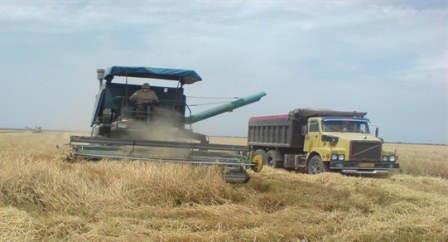
Iran and Finland signed five documents to enhance their cooperation in the sector of agriculture.


The documents were inked in Helsinki on Thursday by Iranian Agriculture Minister Mahmoud Hojjati and his Finnish counterpart Kimmo Kalevi Tiilikainen. 

The two sides agreed to increase mutual cooperation in various agricultural fields, the report added.

Finland is self-sufficient in most major agricultural products and the key sector accounts for 2.5 percent of the country’s $186 billion GDP.

In March, Iran signed an agreement with Sweden, Denmark and Finland to cooperate over joint industrial projects.

The agreement was signed between the ambassadors of the three countries and the head of the Industrial Development and Renovation Organization of Iran (IDRO).

Finland’s Ambassador to Iran Keijo Norvanto in a Twitter message said the agreement was meant to promote collaboration in a variety of technical areas.

They, Norvanto emphasized, included oil and gas, high-tech, transportation, renewable energies, manager training, industrial renovation, steel, water, investment and finance. 


Iran-Finland-Import-Export-Trade-Agriculture-Sweden-Equipment-Oil-Gas-

www.mbncompany.com


Information of news
  • Views: 480
  • Author: mbncom
  • Date:

Iranian engineers to cooperate with Airbus to raise plane efficiency with nano-coatings

Category: News

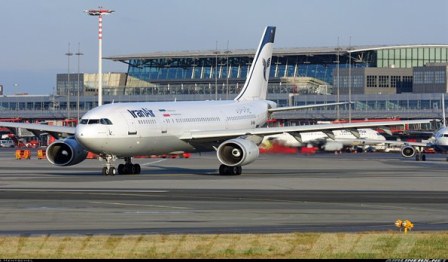
Iranian researchers at the University of Tehran found a method, using nano-coatings, to increase the efficiency of aircraft, and plan to test it in large scale in cooperation with Airbus company.


 Farshid Chini, the executor of the plan said on Monday, "We have increased nearly 30 percent the lift power and drag power factors in the laboratory stage which means that we have boosted efficiency of planes by 30 percent in the lab."

He added, "We have increased efficiency of the planes by reducing friction, using nano-coatings."

Chini explained that he and his team visited Airbus research center in France to talk about the project a month ago, noting that a delegation from France will travel to Iran in the fall to continue research.

"Based on a contract with Airbus, we will test our studies at a larger scale," he added.

Iranian researchers from University of Tehran had also earlier proposed biocompatible anticorrosive coatings with nano-sized thickness to increase corrosion resistance in metallic structures in various fields, including oil, gas, petrochemical, automobile fabrication and marine industries.

Chromate coatings are highly toxic despite their desirable anticorrosive performance and provision of good cohesion for the next coating. Therefore, many studies have so far been carried out on the finding of a biocompatible replacement.

One of the proposals is the use of silane based coatings that is placed on the metallic substrate as lining. The aim of the research was to improve the protective performance of silane coating as a lining coating.

The produced coating provides desirable resistance against corrosion and increases cohesion for the next coating (such as paint). Therefore, it can be used in various industries for the production of structures and increasing their lifetimes. For instance, mention can be made of application of the coating in automobile fabrication industries, piers, and petroleum and gas industries that deal with oil and gas pipelines.

According to Najmeh Assadi, a member of the research team, the project has the potential to be commercialized because the coating has been carried out through the simple sol-gel method and it is a biocompatible coating.

Despite its very thin thickness, the coating is able to act as a physical block aggressive agents and their movement to the metallic substrate. On the other hand, the properties have been improved due to the addition of clay sheet-like nanoparticles to the coating.


Iran-Import-Export-Airbus-Nano-Research-university-Industry-Equipment-Trade-Economy--MBNCo

www.mbncompany.com


Information of news
  • Views: 482
  • Author: mbncom
  • Date:

New railway launched between Iran, China

Category: News

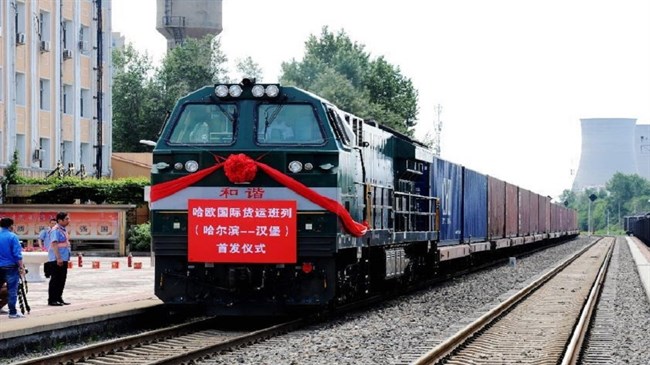
In the framework of the new Silk Road program, China has established a new railway between Inner Mongolia and Iran for logistics purposes.


The almost 9,000-km-long railway connects Inner Mongolia to the city of Bam in southeastern Iran and will be used by cargo and service trains.

In the opening ceremony of the new railway, a cargo train moved from Inner Mongolia logistic and industrial town to the city of Bam. It is estimated to arrive in Bam in 15 days.

The train consists of 41 containers carrying equipment, machineries and car spare parts.

The consignment worth is $1.5 million.

In another development, a cargo train left the city of Bayannur in western Inner Mongolia for the Iranian capital city of Tehran.

The two railways are part of a larger rail network which is to connect China to the Europe via Iran.

The railways have been launched since March 2011 and been used by almost 10,000 cargo trains.


Iran-Import-Export-Railway-Economy-Trade-Equipment-Logistic-Cargo-Iran-Import-Export-Railway-Economy-Trade-Equipment-Logistic-Cargo-


www.mbncompany.com


Information of news
  • Views: 468
  • Author: mbncom
  • Date:

Azerbaijan-Iran car plant to export to Russia, CIS

Category: News

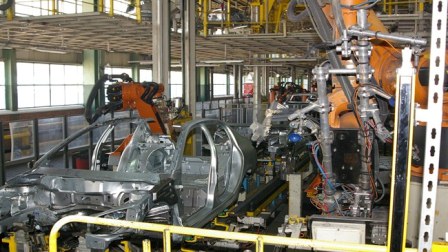
Azerbaijan-Iran joint car plant Khazar plans to begin exporting cars to Russia and other CIS countries next year, AzerMash, one of the plant's owners announced in a statement.


According to the News, the company noted in its statement that it is currently holding talks on supplying cars to these countries. In general, there are plans to supply about 20 percent of the plant's output to foreign markets.

Presently, the plant produces Khazar LD and Khazar SD models.

In the near future, the factory plans to set up production lines for Renault and Peugeot brands, which will cost 18,000-21,000 manats ($10,600-$12,350). The cost of cars presently produced at the plant is 14,000-16,000 manats ($8235-$9410).

Khazar car plant is located in southeast Azerbaijan in the Neftchala Industrial District. All cars produced comply with Euro 5 standards.

On Aug. 6, 2016, a major Iranian automaker Iran Khodro and Azerbaijani company Azeurocar (a subsidiary of AzerMash) signed an agreement to establish a joint automobile factory in Neftchala.

The total cost of the project is estimated at 24 million manats ($14.1 million). Azerbaijani investment in the factory was 75 percent while the Iranian side invested 25 percent.


Iran-Import-Export-Equipment-Economy-Factory-Russia-Azerbaijan-

www.mbncompany.com


Information of news
  • Views: 535
  • Author: mbncom
  • Date:

Sepahan signs contract with German company to upgrade raw materials

Category: News

Iran's Sepahan Oil Company (SOC) signed an oil sector partnership agreement with Germany's EDL to upgrade the quality of its raw materials including motor and industrial oils, announced the first deputy managing director of SOC.


Speaking to Sputnik, Masoud Ahmadzadeh further said that he discussed the purpose of the partnership agreement in the context of the US sanctions as well as the benefits that Iran would get from it.

"Unfortunately, I can't tell you the exact number of the contracts since it is classified information. The German EDL has strong ties with Iran, and it has been operating in the Middle East and Iran for about 20 years. The company is interested in continued cooperation with Iran. However, the German government, as well as the European Union, allowed these companies to work with Iran, and support some of the companies so that the American restrictions would not affect their performance."

According to Ahmadzadeh, SOC held talks on the issue of sanctions with these companies. Fortunately, he added, EDL did not consider the sanctions a problem, so the sides managed to sign a partnership agreement.

Ahmadzadeh mentioned the introduction of new technologies to upgrade the quality of production is among the areas of cooperation between the two companies.

"Our company specializes in oil refining as well as commercial oils and oil production. Our challenge now is to attain a new level in creating wax concentrates. Rubber, textile and wood-working industries use wax concentrates. We are going to go further and start manufacturing highly-refined wax for use in healthcare and food industries," he pointed out.

Ahmadzadeh said SOC plans to implement this project jointly with EDL, and this will have many financial benefits for Iran as the price of the wax concentrate is now between $550 and $600 while highly refined wax costs $1,100 per ton.

He said large companies such as Total which are leaving Iran are being replaced by small and medium-sized European companies.

"As the sanctions make large companies leave Iran, smaller European firms willing to cooperate with Iran take this opportunity to replace them and the process has already started."

He pointed out that Germany's EDL was one of the first companies to sign a contract with Iran.


Iran-Import-Export-Equipment-Mine-Industry-Goods-Trade-Oil-Gas-Petrochemical-MBN Co.

www.mbncompany.com


Information of news
  • Views: 476
  • Author: mbncom
  • Date:

Official: Chabahar exported 1,000 tons of shrimps in five months

Category: News

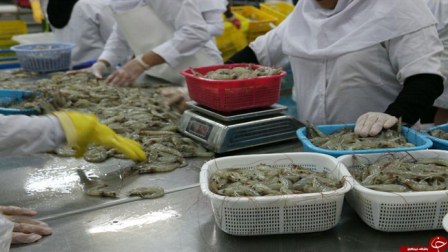
Sistan-Baluchestan Province exported 1,000 tons of shrimps to the UAE, China, Russia and Vietnam in the five months to August 22, 2018, said the head of the southeastern province's Fisheries Organization.


Hedayatollah Mir-Moradzehi said the shrimps were exported from the Gwadar region of the port city of Chabahar.

He said that 1,600 tons of shrimps were produced in the region over the past five months.

The official noted that each hectare of shrimp farm can produce between 500 kilograms and 2,800 kilograms of shrimp.

Mir-Moradzehi added that Gwadar shrimp farm has created 400 direct jobs and 800 indirect jobs.

Earlier, Mehdi Hosseini the head of Sistan-Baluchestan's Veterinary Department, said plans have been drawn up to export shrimps to the European Union.

In June, Deputy Head of Iran's Seafood Exporters Union Hassan Ahmadi Jazani, said Iran produced some 20,000 tons of shrimps last year and this is expected to reach 30,000 in the year to March 21, 2019.

The provinces of Khuzestan, Hormuzgan, Sistan-Baluchestan, Bushehr and Golestan are the main centers for shrimp farming in Iran.


Iran-Import-Export-Trade-Fish-Shrimp-MBN-Equipment-Instruments-

www.mbncompany.com


Information of news
  • Views: 517
  • Author: mbncom
  • Date:

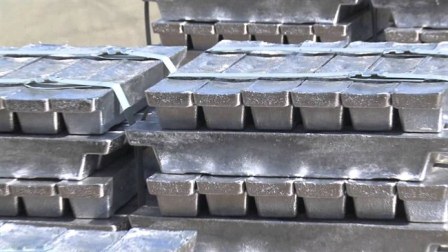
Lead, zinc exports reflect growing trend despite raw material shortage

Category: News

Iran's lead and zinc exports during the five-year period to March 2018 reflected an increasing trend despite the shortage of raw materials faced by the domestic industry, according to figures by the Iranian Mines and Mining Industries Development and Renovation Organization (IMIDRO).


According to some sources, the history of lead and zinc industry in Iran dates back to more than seven centuries ago.


Lead exports

Iran exported lead worth $745 million in the five years to March 2018. In the year to March 2018, lead exports generated the highest annual revenue ($214 million) in the five-year time-span. The value of exports was the lowest ($104 million) in the year to March 2014.

Lead exports in the 12-month period to March 2017 recorded the highest year-on-year growth within the five-year period, with an increase of 35 percent compared to the year earlier, to amount to $174 million from $129 million.

The lowest year-on-year growth in the 60-month time-span, however, pertained to the year to March 2016, when exports of the mineral brought in $124 million to set a five-year low record of one-percent.

In the year to March 2018, India was Iran's biggest lead importer with purchases amounting to $59 million (27.6 percent). In the 12-month period to March 2017, India had bought lead valued at $41.8 million from Iran.

During the 12-month time-span to March 2018, South Korea ($50 million) and the UAE (46.7 million) were the second and third biggest lead importers from Iran. Turkey and Indonesia are other lead export destinations in the same period.


Zinc exports

In 2017, Iran exported zinc ingots valued at $302 million to rank 15th among the world's top exporters. In this year, Iran accounted for 1.6 percent of the total global zinc exports. In 2016, zinc exports fetched $227 million in revenue for Iran.

This comes as in 2017, South Korea, the Netherlands and Canada exported $1.6 billion (8.8 percent of the total global exports), 1.41 billion (7.5 percent) and $1.4 billion (7.4 percent) worth of zinc ingots to be the world’s top three exporters of the product.

According to Islamic Republic of Iran Customs Administration figures, the value of Iran's zinc ingot exports amounted to $1.73 billion during the five-year period to March 2018.

The main importers of Iran's zinc ingots are Turkey ($216 million), India ($41 million), Taiwan ($17 million), the UAE and South Korea.


Zinc ingot imports

In 2017, China was the biggest importer of zinc ingot in the world with imports amounting to $2.49 billion. The US and Germany followed China by purchasing $2.23 billion and $1.85 billion worth of zinc ingots, respectively.

In the same year, the value of Iran's zinc ingot imports reached $5.7 million to account for 0.04 percent of the world's total imports. The figure stood at $8 million in 2016, helping Iran account for 0.06 percent of the total global zinc ingot purchases.


Production

Unofficial figures show that following China, Kazakhstan and India, Iran is the world's fourth biggest Lead and zinc producer, IRNA reported.

During May 22-June 21, lead and zinc production in the northwestern Iranian province of Zanjan witnessed a 33-percent growth, year-on-year, to reach 122,381 tons. In this period, zinc and lead output in the central Iranian province of Isfahan registered a rise of 95 percent to stand at 5,306 tons compared to the same period last year.

Zinc and lead production in these two provinces, during March 21-June 21, showed an increase of 85-percent (Zanjan) and a rise of 112-percent (Isfahan) year-on-year, to reach 371,760 tons and 15,298 tons respectively.

In this period, the two provinces jointly produced 387,057 tons. This was 86 percent higher than the figure for the same time-span last year.

International figures show that per capita zinc consumption in Iran stands at 1.14 kilograms, whereas, the figure is 5.9 kilograms and 2.5 kilograms in western Europe and China, respectively.


Obstacles to production

The main obstacle to Iranian lead production industry currently pertains to processing and producing lead ingots.

Having low productivity, the technologies presently used in Iran are not efficient enough to enable the country to import sufficient mineral soil. Therefore, Iran is required to make a sharp improvement in the technologies it employs to be able to boost productivity.

The other problem faced by the domestic lead industry is a lack of banking facilities.


A precious treasure

Located 115 kilometers southeast of the central Iranian city of Yazd, Mahdi Abad zinc and lead mine is among the world's biggest lead and zinc resources and a precious treasure for the country.

In the year to March 2017, IMIDRO — under the supervision of the Iranian Ministry of Industry, Mine and Trade — handed over the mine's operations to a domestic private consortium.

The mine has a proven 154-million-ton lead and zinc reserve.
 

Iran-Import-Export-Trade-Zinc-Lead-Material-Economy-production-MBN Co.

www.mbncompany.com
 

Information of news
  • Views: 500
  • Author: mbncom
  • Date:

Iran sets Sept. light crude price at $1.2 pb over Oman/Dubai quotes

Category: News

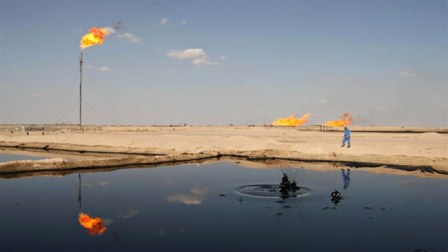
National Iranian Oil Company has set the September official selling price (OSP) for Iranian Light crude to Asia at $1.20 a barrel above the average of Oman and Dubai quotes, 80 cents lower than the previous month, a source with knowledge of the matter said on Friday.


The September OSP for Iranian Heavy crude was set at 90 cents a barrel below Oman-Dubai quotes, while Foruzan's OSP is at 75 cents a barrel below Oman-Dubai quotes, the source said, reported Reuters.

Soroush September OSP was set at $5.55 a barrel below Oman-Dubai quotes, the report added.

NIOC cut prices for crude supplies to the West by 50 cents to $1.45 a barrel.


Iran-Import-Export-Trade-Economy-Crude-Oil-Gas-Petrochemical-MBN Co.

www.mbncompany.com


Information of news
  • Views: 512
  • Author: mbncom
  • Date:

France hopeful ATR will deliver planes to Iran

Category: News

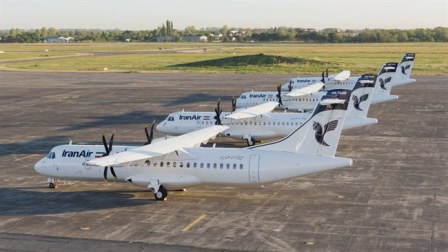
French Finance Minister Bruno Le Maire said he is hopeful that turboprop planemaker ATR would get permission from the US to deliver eight regional planes to Iran before August 6, when sanctions against Tehran kick in.


"I am hopeful that the United States will give us permission to deliver these ATRs," Le Maire told French broadcaster BFM TV.

"There were eight to be delivered before August 6," he added, highlighting the 'significant share' of the order for ATR's turnover.

Deliveries of turboprop aircraft were halted in May after the withdrawal of the United States — which must approve any export of aircraft containing more than 10 percent US-made components — from the Iran nuclear deal and the return of the US sanctions regime against the Islamic Republic.

The equally-owned group by Airbus and the Italian Leonardo had warned earlier this month of the 'serious implication' of the decision.

Le Maire expressed his optimism for other sectors, without going into detail.

"I've been negotiating for weeks with my counterpart, US Treasury Secretary Steven Mnuchin, and I'm hopeful we'll get on a number of topics that directly affect our SMEs (small and medium-sized enterprises) and our jobs in US-owned territories," he said.

"I am also fighting so that in the health sector, in the agro-food sector, which are now out of sanction, there may be funding channels that remain open," said the French minister.

France had sought, along with other European countries, exemptions from US sanctions for its companies trading with Iran, a request to which the United States objected.

A top US official made it clear last month that the US government was unlikely to approve a new request by ATR to sell more turboprops to Iranian carriers.

The official likewise said the US government was unlikely to issue any licenses that would allow companies like Airbus and ATR to continue supporting aircraft in service with Iranian airlines.

ATR Chief Executive Christian Scherer warned last month of 'serious damage' to ATR's finances from the breakdown of deals to sell 20 planes to national flag carrier Iran Air, eight of which have been delivered so far.

Iran received the first four ATR aircraft last May, two more in September, beside another two in December, with the rest due to be handed over to the country by the end of 2018.

The first group of sanctions on Iran's automotive sector, gold trade and other industries will snap back on August 6. Further sanctions on oil and transactions with the central bank of Iran will come into effect November 4.

Iran-Import-Export-Trade-Airplane-ATR-Economy-Aircraft-European-MBN

www.mbncompany.com


Information of news
  • Views: 603
  • Author: mbncom
  • Date:

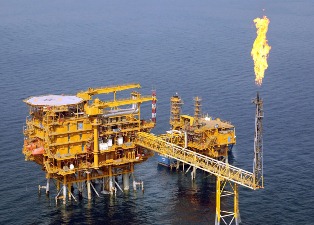
Iran's South Pars exports up 22%

Category: News

Economic Desk

Gasoline output of Persian Gulf Star Refinery hits record


Exports from South Pars, Iran’s hub of energy, have increased 22 percent in the first four-month period of the current Iranian year (March 21-July 22, 2018).


Embracing the world’s largest gas field, South Pars, is also a hub for Iran’s non-oil exports, petrochemicals and gas condensates.

Ahmad Pourheydar, the director general of the Customs Office in Pars Special Economic-Energy Zone, told that nearly $2.6 billion worth of gas condensates (3.92 million tons) have been exported from South Pars, which shows an increase of 14 percent in terms of value compared to last year.

He also said $3.26 billion worth of non-oil products (5.98 million tons) have been exported from South Pars.

Moreover, the exports have soared by 10 percent in terms of weight, and by 29 percent in terms of value, compared to figures of the same period last year, the official said.

Pourheydar noted that in total, exports from South Pars during the four-month period show a 22-percent increase.

The hike comes despite the possible reimposition of US sanctions on Iran.


Gasoline production


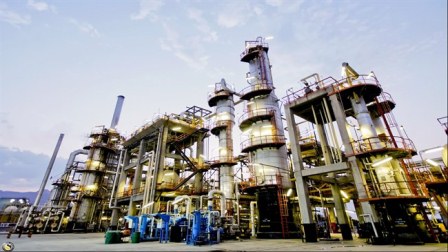
Meanwhile, the gasoline production capacity of the Persian Gulf Star Refinery, also known as the Bandar Abbas Gas Condensate Refinery, has reached 26 million liters per day, the plant's CEO said.

Mohammad Ali Dadvar told Shana that by the inauguration of the refinery’s second phase, its gasoline production reached 24 million l/d but another 2 million l/d was added to its production capacity by tapping the spare capacity of the plant’s distillation unit and phase one.

He further said that the hydrogen filtration unit for the third phase of the refinery was being installed and would come on stream within the next month to bring the plant’s daily gasoline production to 30 million liters per day.

The refinery is currently supplying 7 million l/d of gasoil, which will reach 10 to 12 million l/d in the near future, the official added.

Once operating at full tilt, the refinery will supply 36 to 40 million l/d of gasoline. Its premium gasoline output will also be at 27 million l/d from currently 10 million l/d.

The plant is designed in three phases each operating with the nameplate capacity of 12 million l/d of gasoline.

Once the third phase of the plant comes online, Iran would be poised to become a gasoline exporter.

The Persian Gulf Star Refinery is the world’s largest gas condensate refinery which is 70 percent developed by domestically-built equipment, fully installed by Iranian companies, and 95 percent operated by a domestic workforce.


Iran-Oil-Gas-Petrochemical-Refinery-Trade-Export-Import-Persian Gulf-Gasoline

www.mbncompany.com


Related Posts :

    Contact Us :

    Headquarter: Unit:15-No:12-Gandhi 19-Gandhi Blv-Tehran-Iran
    Postal Code: 1517874438
    Telephones: (+98-21)44237763 (+98-21)88668972 (+98-21)88663258
    Fax NO: (+98-21)89770683
    E-mail : Info@mbncompany.com
    Laboratory and instrumentation section: mbnasir.co@gmail.com
    Electrical section: mbnco@outlook.com
    After sales section: support@mbncompany.com

    Google Map :


    سئو | کاشت مو | صندلی پلاستیکی | بادکنک آرایی