MBN-Company
MBN-Company
MBN-Company
MBN-Company
MBN-Company
MBN-Company
MBN-Company
MBN-Company
Information of news
  • Views: 163
  • Author: mbncom
  • Date:

Basics of Electronic Systems Troubleshooting for Engineers

Category: News

Electronic systems troubleshooting is an essential skill for electrical engineers and hobbyists alike. Knowing where to look for issues—and what to look out for in general—can prevent both catastrophic failures and costly replacements.


Troubleshooting is the process of identifying problems in malfunctioning equipment and applying corrective measures to return them to their optimal operation. Engineers achieve this by testing the various components either individually or collectively to isolate faults that occur while using the product in question.


What Causes Failures in Electrical Equipment?

A great place to start troubleshooting faulty equipment is by determining what the most likely causes of the failure are. Equipment failures can be classified in several ways, such as functional failures and failures due to operating conditions. There are plenty of examples of the latter, some of which are covered in the next few sections.


Over Temperature/Heating

Except for components that are engineered for heat resistance, high ambient temperatures can have a destructive effect on various circuit components. In some devices, overheating can occur when the primary cooling system fails (e.g., an active heat sink and cooling fan in a laptop).


Extended Use

Electrical equipment that is extensively utilised (especially beyond their specified lifetimes) will eventually have failed components. Moreover, many devices that have been long relied on in industrial environments, which have both high temperatures and vibration, can eventually succumb to internal component damage due to overheating and mechanical shock.


Short Circuits

Bridged terminals brought on by moisture, rusting, and/or broken-down insulation can cause excessive current flow through electric circuits, ultimately causing a short circuit. Short-circuiting causes overheating, which can lead to electrical fires and/or explosions.


Overcurrent and Overvoltage

Overcurrent occurs when the current that flows through a conductor is greater than its maximum-rated current. Common causes are ground faults, overloading, and short circuits.

Similarly to the self-explanatory ‘overcurrent’, overvoltage occurs when the voltage within an electric component exceeds its maximum-rated voltage. For instance, when a 220 to 240V-rated appliance receives 350V from a power source, it is of course in an overvoltage condition. 

Common causes of overvoltage are power surges, electric arcs, and inadequate insulation. In situations where the supply voltage is far greater still than the

maximum operating voltage, the existing insulation even breaks down, leading some current to begin leaking through.


Failure Modes

Failures can occur at any point between the beginning and end of the useful life of an electronic product. Failure modes refer to the number of ways that a part can fail functionally, which is usually limited. Common failure modes include:

  • Mechanical failures (consider fractured components, damaged electromechanical contacts due to high mechanical stress conditions, and so on) 

  • Failure due to corrosion (one of the many examples of this involve rust and mineral deposits that form on metallic contacts and/or terminals)

Electronics Troubleshooting Techniques

Electric circuits comprise several discrete components that may fail as the product approaches the end of its lifecycle. The following techniques are useful for resolving problems and ultimately having them function properly again.


Physical Inspection

Performing a detailed physical inspection of electrical equipment is vital to identify defects, rust, cracks, chips, and other kinds of damage to internal components. Engineers often examine parts against a checklist to standardise the procedure. Visual inspection also allows engineers to spot bridged terminals, loose wiring, broken-down insulation, and worn electromechanical contacts, etc., which may result in open/short circuits and other faults.


Testing Passive Components

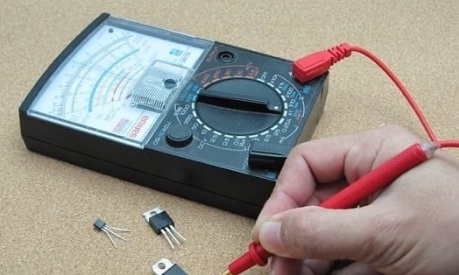
Passive components (such as resistors, diodes, and capacitors) control the behaviour of electric circuits. Faulty or damaged components can cause several fault conditions. Engineers can test and isolate failed passive components using a multimeter, and such components can be tested while connected to the rest of the circuit (or first, de-soldered).


Testing Circuit Protection Devices

Blown fuses, defective relays, or tripped circuit breakers help to isolate electrical equipment from a power source during abnormal conditions. An appliance that won’t turn on may be due to the failure of one or more circuit protection devices. Multimeters can test for blown fuses by checking for continuity between the terminals. (Note that breakers and relays should be returned to their ON/closed positions before the multimeter is used to check for continuity.)


Testing Functional Areas

Electric devices are composed of several functional areas, such as power supply, processors, signal lines, and so on. By testing functional areas separately, engineers improve the accuracy of fault detection. Sections identified with defective components should be isolated immediately.


Troubleshooting Conductors 

The said continuity function of a multimeter can be used to test the condition of connecting wires. The multimeter will give off a beeping sound and/or display infinite resistance (the OL—namely the ‘Open-Loop’ reading) when its probes are connected between any two sections of the wire. Such signals indicate that a good conductor is in use.


Signals Testing

Oscilloscopes (see example above) and logic analysers are used to test the behaviour of digital circuits. These devices generate the data of circuit parameters and display them graphically on the interface in question. Such output data can be used to localise faults within an electric circuit.


What Tools Do Engineers Require for Hardware Troubleshooting?

The tools required for troubleshooting electronic hardware are mostly test equipment for circuit parameters and/or signals.

Digital multimeter: multimeters are a particularly vital piece of test equipment. They can test for several circuit parameters, such as current, voltage, and resistance. Multimeters are also able to measure voltages up to 50VDC/250VAC. Note that currents ranging from 250mA to 10A are ideal for troubleshooting most circuits.

Oscilloscope: an oscilloscope is an electronic test instrument used to graphically visualise and analyse waveforms generated by electric circuits. It’s thanks to such generated output that engineers can more easily isolate faulty sections of the devices.

Logic analyser: a logic analyser is used to capture and display multiple signals from digital circuits. The output can be used for fault detection (for example, in integrated circuit testing).


Documentation: product documentation supplied by the manufacturer is invaluable for effective troubleshooting. Examples are circuit schematics, power distribution diagrams, part numbers (for the replacement of failed components), and even troubleshooting software.


All in all, while every electronic product is ultimately bound to fail—even when they’re properly handled and used—hardware troubleshooting (such as in the examples above) allows both engineers and hobbyists to identify, and potentially fix, electrical faults.

Indeed, by having adequate knowledge of the root causes of electronic component failure—coupled with the right test equipment and procedures, of course—engineers can maximise their products’ useful lives and therefore save costs on replacements.

 

تجهیزات-تعمیرات-برق-electronic-engineer-troubleshooting-mbncoتجهیزات-تعمیرات-برق-electronic-engineer-troubleshooting-mbnco

www.mbnco.com


Information of news
  • Views: 152
  • Author: mbncom
  • Date:

Discovery and Content Marketing Trends in Consumer Electronics

Category: News

Content Marketing Trends: By the year 2025, the consumer electronics market is expected to reach over $511 billion in value. It’s currently one of the biggest and most mature eCommerce industries out there.

The consumer electronics market is broad, and it can include anything from games consoles and wearables like headphones to washing machines connected to the internet.

Sometimes referred to as black goods; computer equipment, virtual assistant technology, and smartphones all fall under this umbrella. The demand for consumer electronics is exceptionally high.

Undoubtedly, the challenge for online retailers is competing in a saturated market and against eCommerce giants such as Amazon, eBay, and Alibaba.

Read on to learn about the latest discovery and content marketing strategies that successful consumer electronics brands and retailers use and how they can help you compete in this immensely competitive market.


Discovery marketing within the consumer electronics industry at a glance

For industries such as fashion, home furniture & decor, and even groceries, discovery marketing often takes place on popular social media channels like Facebook, Instagram, and Pinterest.

And despite the fact that not all of the products in the consumer electronics industry are considered to be “sexy” or cool, the multi-billion dollar eCommerce market for these goods is by no means an exception to the rule — with different electronics brands now exploiting the power of social media to brand heavily, and appeal to a broader audience.

Several consumer electronics brands and products have implemented discovery marketing content that caught our attention.

Fitbit, which makes the increasingly popular wearable fitness tech and watches, has a solid multi-channel presence across YouTube, social media, and its dedicated health and fitness blog.


How you can apply discovery marketing trends and principles if you’re in the consumer electronics industry

When brands and retailers compete with eCommerce giants like Amazon and eBay — which offer endless quantities of products without much emotional or social appeal — posting content that consumers can relate to or that resonates with their lifestyle habits make for effective discovery marketing strategies.

Here are some examples and stories of successful discovery marketing content strategies from consumer electronics brands and retailers:


Social commerce

Inspirational video content, high-quality product images, and customer stories or experiences make for very shareable content indeed — especially across popular social media channels.

Logitech G’s Instagram profile of 3.5M followers features its gaming and computer accessories with a combination of high-quality images of its product lines and videos of its customers using their products in context.


User-generated content

User-generated content (UGC) — especially reviews, product comparisons, or how-to videos made by influencers — is of particular relevance and importance to the consumer electronics industry.

When combined with social media, UGC of consumer electronics can provide brands with several significant assets:

  • UGC builds strong levels of trust and brand loyalty.
  • It provides authentic social proof of the quality, benefits, and features of a product or brand.
  • UGC can generate high levels of engagement, which can grow exponentially and lead to more browsers taking action or making a purchase.

A great example of this is the annual Million Dollar Challenge that leading tech and action camera maker GoPro initiates before launching a new product. In 2020, its campaign garnered over 857 million views and over 57,000 shares.


Information of news
  • Views: 157
  • Author: mbncom
  • Date:

Benefits of AI in content marketing

Category: News

The term AI still holds a lot of negative connotations. People see the letters “AI” associated with anything, and it instantly inspires a feeling of soullessness and despair. And while there are undoubtedly bad actors in AI tools, AI's best uses work in tandem with humans to produce a better result.

So, regarding AI in content marketing, it does not mean that our tech overlords are beginning to steal all content writing and marketing jobs. On the contrary, AI marketing tools help simplify the content creation and management process for the humans involved.

If you’re still hesitant or unsure of the scope of AI in content marketing, here are some benefits you should consider.

AI can be a friend, not a foe

Many controversies exist in the news today regarding AI and how damaging it can be to workers and society. It’s true that AI can be used for more nefarious purposes and have negative implications, but this is all in the user's control, not the solutions themselves. Regarding content marketing, AI is already helping many human writers and marketers improve their work, not replace it. As these tools develop, we may continue to see even more helpful progress and cooperation by using AI to empower workers. The AI doomsday scenario may be yet avoided.


Information of news
  • Views: 166
  • Author: mbncom
  • Date:

Sweet new way to print microchip patterns on curvy surfaces

Category: News

Sweet new way to print microchip patterns on curvy surfaces


NIST scientist Gary Zabow had never intended to use candy in his lab. It was only as a last resort that he had even tried burying microscopic magnetic dots in hardened chunks of sugar -- hard candy, basically -- and sending these sweet packages to colleagues in a biomedical lab. The sugar dissolves easily in water, freeing the magnetic dots for their studies without leaving any harmful plastics or chemicals behind.

By chance, Zabow had left one of these sugar pieces, embedded with arrays of micromagnetic dots, in a beaker, and it did what sugar does with time and heat -- it melted, coating the bottom of the beaker in a gooey mess.

"No problem," he thought. He would just dissolve away the sugar, as normal. Except this time when he rinsed out the beaker, the microdots were gone. But they weren't really missing; instead of releasing into the water, they had been transferred onto the bottom of the glass where they were casting a rainbow reflection.

"It was those rainbow colors that really surprised me," Zabow recalls. The colors indicated that the arrays of microdots had retained their unique pattern.

This sweet mess gave him an idea. Could regular table sugar be used to bring the power of microchips to new and unconventional surfaces? Zabow's findings on this potential transfer printing process were published in Science on Nov. 25.

Semiconductor chips, micropatterned surfaces, and electronics all rely on microprinting, the process of putting precise but minuscule patterns millionths to billionths of a meter wide onto surfaces to give them new properties. Traditionally, these tiny mazes of metals and other materials are printed on flat wafers of silicon. But as the possibilities for semiconductor chips and smart materials expand, these intricate, tiny patterns need to be printed on new, unconventional, non-flat surfaces.

Directly printing these patterns on such surfaces is tricky, so scientists transfer prints. There are flexible tapes and plastics that can do the job (like using putty to pick up newsprint), but these solids can still have trouble conforming to sharp curves and corners when the print is laid back down. They could also leave behind plastics or other chemicals that could be hard to remove or be unsafe for biomedical uses.

There are liquid techniques, where the transfer material is floated on the surface of water and the target surface is pushed through it. But that can be tricky too; with a freely flowing liquid it can be hard to place the print precisely where you want it on a new surface.

But, as Zabow discovered to his surprise, a simple combination of caramelized sugar and corn syrup can do the trick.

When dissolved in a small amount of water, this sugar mixture can be poured over micropatterns on a flat surface. Once the water evaporates, the candy hardens and can be lifted away with the pattern embedded. The candy with the print is then placed over the new surface and melted. The sugar/corn syrup combination maintains a high viscosity as it melts, letting the pattern maintain its arrangement as it flows over curves and edges. Then, using water, the sugar can be washed away, leaving just the pattern behind.

Using this technique, called REFLEX (REflow-driven FLExible Xfer), microcircuit patterns could be transferred like a stencil to allow scientists or manufacturers to etch and fill the materials they need in the right places. Or, patterned materials could be transferred from their original chip onto fibers or microbeads for potential biomedical or microrobotics studies, or over sharp or curved surfaces within new devices.

The technique proved successful for a large range of surfaces, including printing onto the sharp point of a pin, and writing the word "NIST" in microscale gold lettering onto a single strand of human hair. In another example, 1-micrometer-diameter magnetic disks were successfully transferred onto a floss fiber of a milkweed seed. In the presence of a magnet, the magnetically printed fiber reacted, showing the transfer had worked.

There's still more to explore with REFLEX, but this process could open new possibilities for new materials and microstructures across fields from electronics to optics to biomedical engineering.

"The semiconductor industry has spent billions of dollars perfecting the printing techniques to create chips we rely on," Zabow says. "Wouldn't it be nice if we could leverage some of those technologies, expanding the reach of those prints with something as simple and inexpensive as a piece of candy?"

Information of news
  • Views: 155
  • Author: mbncom
  • Date:

Top 9 New Technology Trends for 2022

Category: News

Top 9 New Technology Trends for 2022


The COVID-19 pandemic has dramatically accelerated the pace of evolution and adoption of technological advancements in the last 2 years. Presently, the global digital population has grown to be five billion strong (over 60% of the world population). So, the latest technologies and emerging technological trends hold more importance than ever in a world where the digital space is trumping all other domains. Below is a list of the top 9 emerging technology trends you should track and try to make the most out of in 2022 to advance in your career.

1. Artificial Intelligence (AI) and Machine Learning (ML)

With a projected growth of CAGR of 20.1% between 2022 to 2029, the global AI market size is expected to witness unprecedented levels of growth during the forecast period.

For instance, to tackle the global pandemic, AI’s demand has made its way into the healthcare industry with models and tools capable of improving and supporting traditional analytics and decision-making frameworks.

Developing your skills in this area can pay you well in the coming years. New employment will be generated in development, engineering, analysis, tech support, and maintenance, as the need for AI and ML grows across industries.

2. Internet of Things (IoT)

IoT is an essential technology for the creation of a network of connected devices that can continuously share data and information with other devices in real-time. As of 2021, the global IoT market had a valuation of over $260 billion.

We will be witnessing a massive increase in the amount of data volume pertaining to IoT connections in the coming years with the overall IoT data reaching over 79 zettabytes by 2025. The extensive adoption of the technology presents plenty of career opportunities across a variety of domains including the automobile sector, smart home devices industry, telecommunications, wearable fitness devices domains, etc.

3. Cybersecurity

Unlike other technologies mentioned in this article, cybersecurity has already established a robust base in the tech world. Some of the most typical cyberattacks that enterprises face are AI-enabled phishing and network infiltration, which can lead to severe consequences such as data or revenue loss. So, a career in cybersecurity is a lucrative one but requires you to constantly upgrade your skills to keep up with the evolving developments in the domain. 

As of 2021, the global cybersecurity workforce consists of more than 4 million professionals. And, as the current information age progresses and more and more devices get connected, cybersecurity will continue to remain an increasingly pressing topic.

4. Quantum Computing (QC)

Quantum computing employs quantum mechanics laws such as superposition to perform problem-solving. You can rely on QC to answer queries such as how to sort out the ideal routes for a couple of hundred tankers in a global shipping network. As of 2020, the global QC industry revenues stood at a valuation of $412 million. Given its current pace of growth and adoption, the QC market will cross the $8 billion mark worldwide by 2027.

5. Robotic Process Automation (RPA)

RPA is being employed by organizations across several business sectors to automate multiple organizational functions. Like AI, Robotic Process Automation or RPA can also be viewed as a threat to jobs as automation using specialized software programs is at the heart of the technology. However, global revenues from the RPA market are expected to reach over $10 billion by 2023. This provides a robust footing for knowledge workers in career opportunities such as RPA analysts, developers, and programmers, to name a few.

6. Virtual Reality (VR) and Augmented Reality (AR)

AR and VR are known for providing an upgraded experience that combines virtual and real-world with enhanced 3-D images. 

Gaming, e-commerce, marketing, education, and a variety of other sectors will all benefit from AR and VR in the future. The global VR gaming industry revenues alone are estimated to reach $2.4 billion by 2024.

7. Edge Computing

Edge computing is a distributed computing system that brings enterprise applications and data sources like IoT devices closer together. With increased accessibility to data, this technology is emerging as a means of gaining significant business benefits and actionable insights. Furthermore, as the number of IoT devices rises, edge computing use will also accelerate.

8. 5G

This particular technology has received its fair share of publicity by now. The fifth-gen wireless is currently the most advanced mobile broadband tech and has already roped in tech giants such as Samsung, Apple, QualComm, and Huawei. We can expect approximately 3 billion 5G subscriptions by 2025 within an industry having an active consumer base of over 6.5 billion subscriptions (as of 2021). 

5G demonstrates plentiful potential, not from a career perspective alone, but the viewpoint of a regular consumer as well. Consumers expect improved mobile data speeds with 5G and enhanced coverage among other benefits.

9. Blockchain

From Dogecoin to NFTs, blockchain technology has taken the world by storm. Casually termed an electronic “ledger,” blockchain is a decentralized list of connected records and verified records.

The global spending on blockchain solutions is forecasted to touch $19 billion by 2024. Even at this early stage in its development, blockchain has become a major market in its own right, owing to the technology's potential and extensive financial interest in the possibilities it may deliver. 

Parting Thoughts

With major advancements in technological trends in the last couple of years, you can expect faster and greater developments in the foreseeable future. Safe to say, keeping an eye out for these trends no longer remains the sole necessity for IT professionals. 

So, to remain relevant in this fast-evolving business world, it is imperative to continually learn and upskill as the demand for trained professionals with the right skill sets will never go out of trend.

Information of news
  • Views: 153
  • Author: mbncom
  • Date:

Electromechanical Engineering Technician

Category: News

Definition and Nature of the Work

Electromechanical engineering technicians work with equipment that uses electric power to operate mechanical controls. Technicians who work on this equipment understand the basic laws of electricity and electronics as well as mechanics. They design, develop, test, and manufacture electrical and computer-controlled mechanical systems. Their work often overlaps the work of electrical and electronics engineering technicians, and mechanical engineering technicians.

Most electromechanical engineering technicians work in the computer and office machines industries. Electromechanical equipment in these industries includes photocopy and facsimile machines as well as computers and related hardware. Electromechanical engineering technicians working in the computer and office machines industries work on the design and manufacture of new equipment. They also work as customer engineers who service computers and office machines.

Electromechanical engineering technicians work in a wide variety of other industries that use electromechanical equipment, such as automatic pilot systems, elevator controls, vending machines, and guided missile systems. Electromechanical equipment is used to take photographs of distant stars and regulate cancer treatments. It is also used in many manufacturing processes. Often the electromechanical equipment measures the size, shape, color, weight, or temperature of a product. It is generally linked to systems that adjust the manufacturing process automatically. For example, electromechanical devices used in the manufacture of paper control the texture of the fibers as well as the thickness of the final product. Electromechanical controls are also used in steel rolling mills and factories that make ball bearings, plastics, and many other kinds of goods.

Still other technicians work in factories in which electromechanical equipment is made. Many electromechanical engineering technicians work with the mechanical and electrical engineers who design and develop new equipment. They help the engineers by performing tests, recording information, preparing written reports, and taking care of other details. Technicians may also be directly involved in the production of new electromechanical equipment.

Education and Training Requirements

Many colleges and technical institutes offer training that can lead to a career as an electromechanical engineering technician. Some of these schools have specific training programs in electromechanical technology. Others offer programs in related areas, such as electronics or electrical or mechanical engineering technology. Most companies prefer to hire technicians who are graduates of one of these programs, which usually take two years to complete and provide the graduate with an associate degree. A few employers will hire people with less education, provided they have a good background in science and mathematics. Because the field of

electromechanical technology is changing so rapidly, technicians should keep up with new trends throughout their careers.


Information of news
  • Views: 0
  • Author: mbncom
  • Date:

What is In an Electronics Testing Lab?

Category: News

When working on electronics systems, engineers and technicians use a variety of equipment to ensure accurate results and to maintain a safe working environment. Each and every component used to build electronic devices on esd workbenches is assessed for its condition, and pieces of sensitive equipment are frequently tested to ensure that they are performing properly. 

When designing an electronics testing lab, it is important to consider the many tools and techniques used to perform these assessments and to create a space that will fully facilitate these activities. Here, we’ll share a basic overview of what you might find in a typical electronics lab to help you get started with your design. 

Building Tools

Working with electronic devices and their components requires a steady hand and a few basic tools to put things together. Though some equipment used in electronics testing labs are used specifically for testing, many are used to assemble equipment and connect components. Building tools are essential both in manufacturing, repair, and research settings since being able to take apart and rebuild equipment on esd workbenches can allow technicians greater freedom to explore the potential possibilities of their work. Some basic building tools include: 

  • Breadboard
  • Hand tools
  • Hot air guns
  • Wire strippers
  • Soldering tools

Basic Testing Equipment

The primary role of technicians and engineers working in electronics testing labs is to determine the cognition of particular devices and components. To do this, engineers use devices both to stimulate a response and to measure that response. Once measurements are taken, the next step is to analyze those results. Each of these steps can involve dozens of different tools and pieces of equipment, all of which perform various specific tasks. 

Stimulate

Tools used to stimulate electronics and electrical components force the item to respond in some way. Stimulating a device can help to test its condition, its charge, its effectiveness, and more, and these tests are performed on devices at every stage of production. Here are a few common tools used by electronics technicians to stimulate a circuit response: 

  • Digital pattern generators
  • Pulse generator
  • Signal generator 

Measure

Once the circuit has been stimulated, the next step of the testing phase is to measure the response. Common measurement tools used in electronics testing labs include: 

  • Ammeter
  • Impedance Analyzer 
  • LCR Meter
  • Logic Analyzer
  • Multimeter
  • Ohmmeter
  • Spectrum Analyzer
  • Voltmeter

Assess

Once the technicians have made measurements, the readings may be assessed manually or maybe put through another phase of testing on an anti-static workbench. Some tools commonly used to assess electronic readings include: 

  • Frequency Counter
  • Oscilloscope

Advanced Testing Equipment

Among the basic tools listed above, some electronics testing labs may also utilize more advanced equipment for specific tests and procedures. Though not necessarily an expected part of every electronics testing lab, the following tools may be used for more advanced and in-depth assessment: 

  • Clamp Meter
  • EMF Meter
  • Electrometer
  • LCR Meter
  • Pulse Generator
  • Signal Tracer
  • Spectrum Analyzer
  • Time-Domain Reflectometer
  • Vector Signal Analyzer
  • Wheatstone Bridge

Workstations

As important as it is to outfit your lab with a wide array of electronics testing tools, it is equally important to provide a solid workspace on which to perform said tests. Workstations need to hold up to regular use, need to be suited for the specific task at hand, and should be optimized to suit the particular needs of your facility and staff. In an electronics testing lab, workstations must be carefully selected to enhance safety, since choosing the wrong material could cause safety issues. 

Electrostatic-dissipative materials are specially designed for use in environments where stray electricity can wreak havoc. Static electricity has a nasty habit of hopping from object to object, skewing readings, and causing potentially devastating damage to sensitive equipment. To mitigate these risks, and to create a controlled, static-free environment, OnePointe Solutions offers our clients customizable workstations made from ESD laminate. ESD laminate prevents the accumulation of electrons by providing them a slow, controlled channel to travel through, grounding the stray electricity before it can cause any problems. 

Like other furniture available from OnePointe Solutions, our ESD workbenches are fully customizable and can come with tons of features that help to create a safer, more efficient, and comfortable working environment. Workbenches from OnePointe Solutions can be customized to include power and data, modular shelving, height adjustable features, keyboard trays, ergonomic supports, and so much more. Your options are endless when you choose OnePointe Solutions, and our team is ready and waiting to help you create the best and most efficient lab possible. 


electricity-electronic-device-test-measuring-technology-heat-motion-material-laboratory-mbn-ergonomic-workstation

www.mbncompany.com


Information of news
  • Views: 143
  • Author: mbncom
  • Date:

5 Digital Marketing Strategies for Your Electronic Products Business

Category: News

Technologies and electronics companies need to step up their game in order to stay relevant in this rapidly changing digital landscape.

In the midst of globalization and intense competition in the digital economy, technologies and electronics companies need to step up their game in order to stay relevant in this rapidly changing digital landscape.

Having a solid digital marketing plan is imperative to every business nowadays because it helps improve market reach and generate more leads for the business.


A sound marketing strategy is what fuels customers to buy more products from you.

Since digital marketing is not a one-size-fits-all strategy, we discuss some effective digital marketing tips that you can use for your electronic products business.

Build on your niche market

Niche markets are especially helpful for small businesses. Unlike other business giants who are more than capable of targeting the general public with their affordable prices, small and specialized businesses simply do not have that luxury.


Segmentation is a crucial part of digital marketing because it allows you to tailor a marketing campaign for a specific market.

Since digital marketing is mainly employing a smart tactic to persuade a certain group of audience, building on your niche market for your electronic products is a great way to start. It would allow you to easily manage and create a personalized, relatable marketing campaign for your audience.

Personalized marketing

Since we are now in the age where information is readily available at our fingertips, the digital space tends to get too crowded and it has become harder to stand out.

So rather than pushing for more content, try to maximize your content marketing performance instead. You can do this by finding ways to make your campaign more personal so that you can uniquely serve your customers without overwhelming them.

As competition increases, establishing a connection and building a better relationship with your consumers has become an effective marketing strategy. In fact, 91% of consumers are more likely to shop with brands they recognize as well as brands that provide relevant offers and recommendations to them.

Taking that into account, you need to curate the offers (newsletter, promo, deals), experience (free trial, website, and app interface), and products that your customers receive.

Have an e-commerce site

Having an e-commerce site offers flexibility and convenience to both buyers and businesses like you.

Since consumers are likely to continue to shop online, it would remain a lucrative marketing strategy for your business. In fact, e-commerce sites are projected to grow in the next five years.

So with that in mind, your electronic business needs to catch up with this development as well. Whether you are selling phones, devices, hardware, or software, you can improve your online presence and even profit from your e-commerce website.

Products that you mostly buy from the actual store now have an e-commerce website as part of their digital marketing strategy.

For instance, businesses that sell digital panel meters already have their own e-commerce website. Rather than just listing their products on Amazon, they created their own e-commerce sites as well.

By doing this, they can optimize their website and at the same time, customers can easily assess and buy their products online.

Get your products reviewed

Now that you already have an e-commerce website, you can start improving your online presence by encouraging your customers to leave reviews on your website. This way, your products will have a positive online footprint and your brand will warrant more credibility.

Having your products reviewed would improve your online presence as well as would make you more visible and transparent to your customers.

Given that online customers’ reviews are also a steady pipeline for positive content, it would also improve and optimize your website. In turn, your search ranking would essentially improve and your website would also gain more traffic.

Apart from that, you would be able to engage and know more about your customers. With the help of reviews, you would know how you can better improve your customers’ experience with your products.

Since reviews are not only limited to comments on your e-commerce website, it would also have a great impact on your reputation. Reviews from other websites and platforms can ultimately enhance your product image, making it more appealing to customers.

Create a buzz on social media

Given the fact that most of your consumers probably have social media accounts or are aware of the things that are happening on social media, it is a perfect place to endorse and introduce your new products.

Creating a buzz on social media does not necessarily mean getting to the number one spot on trending. There is so much more to social media than that.

Social media is a great platform where you can build anticipation for your new products.

It is striking a chord with consumers and getting them interested in your new products before you even launch it in the market.

Posts, contents, and even targeted ads are just some of the ways to motivate people to engage, share, and talk about your products. You can even hire social media influencers, get branded hashtags, hold contests, and create events on social media.

All of which will surely help you generate more leads for your business.

Having said that, you should know your niche market inside out so that you can effectively implement and execute a perfect marketing plan.

Information of news
  • Views: 0
  • Author: mbncom
  • Date:

Electrical Devices vs Electronic Devices: What is the difference?

Category: News

.The difference between electric and electronic is a subtle yet important distinction in the manipulation of energy


In the engineering and technical communities, the terms electrical and electronic are often conflated due to the poor understanding of the subtle yet significant distinctions between them. Understanding the difference is important not only because the two terms have differing meanings, but because of the tendency to abstract or abbreviate very particular language during technical conversation. A misunderstanding or miscommunication to an engineer could mean the difference between building an electrical toaster or an electronic toaster.

In 1893, Alan MacMaster invented the first electric toaster in Edinburgh, Scotland. The heating elements in a toaster turn electrical energy into heat so you can burn your toast. Herein lies the distinction between electric and electronic devices—the manipulation of energy in technology.

Electrical Devices

Electrical devices take the energy of electrical current, the flow of electrons in a conductor, and transform it in simple ways into some other form of energy—most likely light, heat, or motion. An electric device is one that directly uses electrical energy to perform a task.

Electronic Devices

In contrast, electronic devices do much more. Instead of just converting electrical energy into light, heat, or motion, electronic devices are designed to manipulate the electrical current in ways that adds meaningful information to the current.

For example, an electronic toaster uses the same heating elements, springs, and bread racks as an electric toaster, but may include a variety of more complex components such as an electronic display panel that shows you the progress of your toasting, or an electronic thermostat that attempts to keep the heat at just the right temperature. Electronics refers to technology that works by controlling the motion of electrons in ways that go beyond electrodynamic properties like voltage and current.

What is the difference between electrical and electronic devices?

Typically, if something uses electricity merely as energy, it is electrical. If it uses electricity as the medium for manipulating information, it is almost surely electronic. Electrical and Electronic devices are comprised of different but overlapping categories but, in short, all electronic devices are also electrical devices, it is a subset.


electricity-electronic-device-test-measuring-technology-heat-motion-material-laboratory-mbn

www.mbncompany.com


Information of news
  • Views: 644
  • Author: mbncom
  • Date:

All About Electrical Wiring Types, Sizes & Installation

Category: News

Much of what you need to know for electrical repairs and remodeling involves how to identify it, how to buy it, and how to install it with proper connections. If you're planning any electrical project, learning the basics of wiring materials and installation is the best place to start. Understanding basic wiring terminology and identifying the most common types of wire and cable will help when investigating wiring problems and when choosing the wiring for new installation and remodeling projects.

Here are all the basic elements you need to understand about electrical wiring.


Wire Sizing

The proper wire size is critical to any electrical wire installation. Wire sizing indicates the diameter of the metal conductor of the wire and is based on the American Wire Gauge (AWG) system. The gauge of a wire relates to the wire's current-carrying capacity, or how much amperage the wire can safely handle. When choosing the right wire, you must consider the gauge of the wire, the wire capacity, and what the wire will be used for.

Wires that are not properly matched to the amperage of the circuits they serve can create a notable risk of short circuit and fire.


Non-Metallic (NM) Sheathed Cable

Most interior wiring is done with non-metallic, or NM, cable—also known by the popular brand name Romex. NM cable is made of three or more wires wrapped inside a flexible plastic jacket, or sheathing. It is used for most interior circuits, such as those for outlets, switches, light fixtures, and appliances. Learn the basics of NM cable to choose the right type for your next electrical project.


Electrical Wire Color Coding

Color coding is used both on the outer sheathing of bundled electrical cables and on the individual conduction wires within cables or inside the conduit. Understanding this color coding can help you identify what the wiring is used for and helps maintain consistency within an electrical system.

Cable coloring relates to the size of the wires inside the cable and the cable's amperage rating. For example, white-sheathed NM cable is used for 15-amp circuits, while yellow NM cable is rated for 20-amp circuits.

The coloring on individual conducting wires usually does not indicate a size or rating but rather the standard or preferred use of the wire. For example, black and red wires typically are used for current-carrying or "hot" connections, and white wires usually are grounded "neutral" conductors. Green-insulated wires and bare copper wires are used for grounding wires.


Electrical Wiring Labeling

Electrical wires and cables have markings stamped or printed on their insulation or outer sheathing. These markings provide important information about the wiring and insulation, including the wire size and material, the type of insulation, the number of wires contained (inside a cable), and any special ratings or characteristics of the wire.

While looking at the color of wire or cable will help you narrow down the options at the store, reading and understanding the labels on wiring is the best way to ensure you get the properly rated material for your project.


Direct-Burial Cable

Standard electrical cable is designed to be run indoors, where it stays dry and is protected by wall, ceiling, or floor structures. For outdoor projects or when running wiring underground, you must use direct-burial cable, which can be installed underground with or without conduit (depending on local building code rules). With direct-burial cable, the individual conducting wires are embedded in solid vinyl to fully protect them from moisture.


Related Posts :

    Contact Us :

    Headquarter: Unit:15-No:12-Gandhi 19-Gandhi Blv-Tehran-Iran
    Postal Code: 1517874438
    Telephones: (+98-21)44237763 (+98-21)88668972 (+98-21)88663258
    Fax NO: (+98-21)89770683
    E-mail : Info@mbncompany.com
    Laboratory and instrumentation section: mbnasir.co@gmail.com
    Electrical section: mbnco@outlook.com
    After sales section: support@mbncompany.com

    Google Map :


    سئو | کاشت مو | صندلی پلاستیکی | بادکنک آرایی