MBN-Company
MBN-Company
MBN-Company
MBN-Company
MBN-Company
MBN-Company
MBN-Company
MBN-Company
Information of news
  • Views: 755
  • Author: mbncom
  • Date:

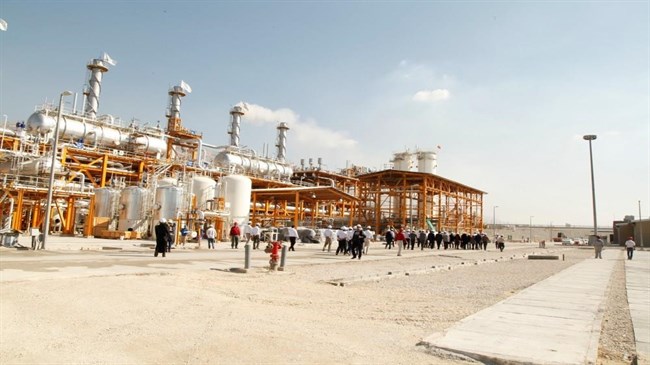
Iran celebrates 50th year of gas industry

Category: News

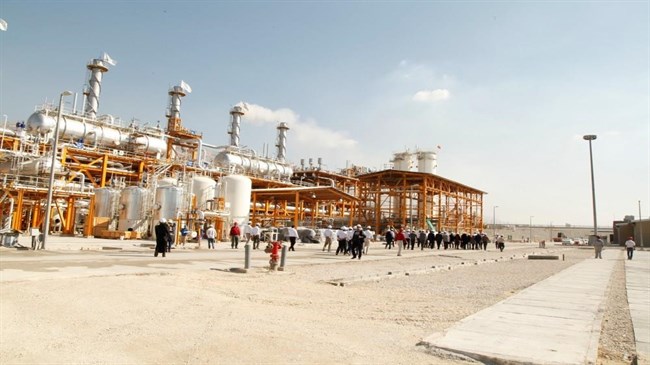
Iran has now been producing gas commercially for exactly 50 years, and output today has reached 255 billion cubic meters per year which is 70 percent of the country's primary energy demand.

When it started, in 1976, it managed 6.9 mcm/d and the figure had risen ten times by 1982 to finally reach 700 mcm/d as of now — 100 times more than 40 years ago. However, Iran — for all its world-beating 34 trillion cubic meters gas reserves — is still a net gas importer, naturalgaseurope.com wrote.

Last year, global gas output reached 3.6 trillion cubic meters, of which 1 tcm were exported. Iran's share of output and net exports was 7.2 percent and zero respectively. It exported 8.4 bcm to Turkey and imported up to 9 bcm from Turkmenistan.

From the start of oil extraction 108 years ago until August 1, 1967, all associated gas was flared. For the first time, Iran built an 1100-km pipeline from the south to the north and started exporting gas to the Soviet Union in 1972. But after seven years, during which Iran exported 72 bcm — the deal was cancelled.

In 1974, Iran also reached an agreement to export gas to the European Union through Soviet Union infrastructure for 20 years, but this plan was never realized.

The country is again preparing to take share in global gas markets, including the EU. Iran plans to invest $310 billion in the gas sector, of which $137 billion would be upstream, by 2026.

Director of National Iranian Gas Company for International Affairs Azizollah Ramazani outlined the country's plans to export gas on July 25, all of it going by pipeline and mostly to its neighbors for the next five years and reaching 68 bcm per year.

Iran is preparing to increase gas output by 125 bcm per year to 385 bcm per year by 2021. The figure would reach 475 bcm by 2025, enabling Iran to boost exports.

For now, Iran has already signed deals with Turkey, Iraq, Pakistan and Oman to export a total 46 bcm per year, but only delivers to Turkey, while the country plans to export a limited amount of gas (5-7 mcm per day) to Iraq in August.
 

www.mbncompany.com


mbnco-mbncompany-gas industy-mbnco-www.mbncompany.commbnco-mbncompany-gas industy-mbnco-www.mbncompany.com

Information of news
  • Views: 824
  • Author: mbncom
  • Date:

President: Iran to boost gas output by 140 mcm/d by next March

Category: News

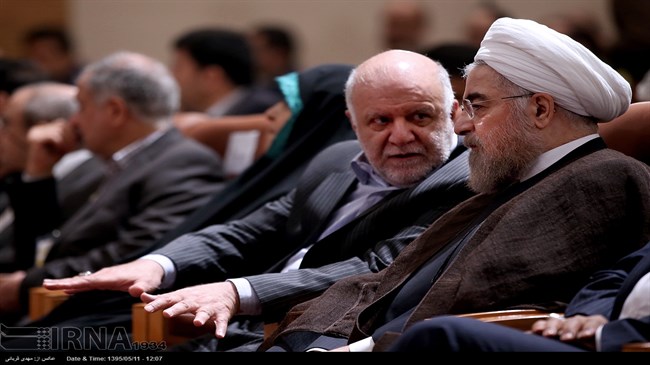
Iran's President Hassan Rouhani said the government plans to increase the country’s gas output by 140 million cubic meters per day (mcm/d) by the end of the current Iranian year (March 20, 2017).

Addressing a conference on the 50th anniversary of the establishment of National Iranian Gas Company (NIGC) in Tehran, the president said with completing the development projects of phases 14-17 in the South Pars gas field during the last year, the country’s gas output soared by 140 million cubic meters per day, president.ir reported.

He added that after the completion of phases 18-21 in the current Iranian year, the gas output will increase by the same volume.

Rouhani underscored the need for developing Iran’s joint oil and gas fields with the neighboring countries, Trend's correspondent reported from the event.

Speaking about measures taken to develop South Pars gas field joint with Qatar over the past three years, he called for completing all phases of the giant field.

Explaining that the South Pars gas field provides 50 percent of the country’s gas requirements, he urged for its further development as Qatar continues to produce more gas at the field.

The president noted that the joint oil and gas fields are of high importance for the country and Iran should be equipped with the modern technologies in order to be capable of getting the most of the gas resources.

Rouhani also said his government plans to boost gas export to 200 million cubic meters per day.

The president hailed the achievements of the implementation of the Joint Comprehensive Plan of Action (JCPOA), saying as a result of the nuclear deal the country’s oil and condensate exports reached about 2.5 million barrels per day.


www.mbncompany.com


mbncompany-mbnco-test and measurement-president-iran-rouhani-dr.rouhanimbncompany-mbnco-test and measurement-president-iran-rouhani-dr.rouhani

Information of news
  • Views: 539
  • Author: mbncom
  • Date:

Economic gains from nanotechnology up 20-fold

Category: News

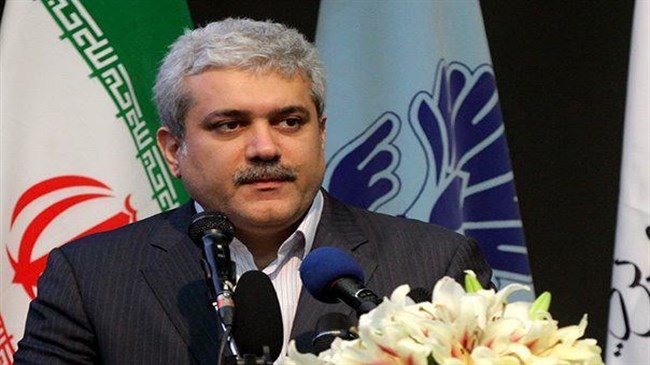
Iran has witnessed a 20-fold growth in economic gains from nanotechnologies in the past four years, announced the country's vice-president for science and technology in Tehran on Sunday.

Sorena Sattari underscored that Iran has entered from the scientific boom to economic one in the fields of nanotechnologies, IRNA reported.

Despite Iran's economic hardships, he said, the country's nanotechnology has seen an annual growth of 120 percent during the said period.

Sattari reiterated that some 35 percent of total Iranian nano products have been exported while the rest has been sold in the domestic market in the year to mid-March 2016.

He noted that that Iranian nano-products valued at $4.31 million were exported to more than 20 countries including Iraq, Uzbekistan, Turkmenistan, Afghanistan, Russia, South Korea last year.

Leader of the Islamic Revolution Ayatollah Seyyed Ali Khamenei has reiterated that Iran should continue to make further progress in the field of nanotechnology and biotechnology thus establishing a role model for progress for other sectors.

The Leader considers 'accurate planning' and 'stability in management' as among the factors that can contribute to continued progress in nanotechnology.


www.mbncompany.com


mbnco-mbncompany-test and measurementsmbnco-mbncompany-test and measurements

Information of news
  • Views: 844
  • Author: mbncom
  • Date:

WB: $30b of Iran's frozen assets released

Category: News

The World Bank said a landmark nuclear deal that Iran signed with the P5+1 last year has already enabled the country to gain access to as much as $30 billion of its assets that had been frozen as a result of the sanctions.

The nuclear deal, known as the Joint Comprehensive Plan of Action (JCPOA), came into effect in January. It envisages the removal of certain nuclear-related sanctions against Iran in return for steps by the country to limit certain aspects of its nuclear energy activities, Press TV reported.

A central theme in the JCPOA — which Iran sealed with the five permanent members of the Security Council plus Germany last year — was providing Iran access to its frozen assets among other things.

The Iranian government had already said it expects at least $30 billion of its assets to be unblocked after the sanctions are removed.

The bulk of the country's assets had been frozen in bank accounts that were connected to its oil sales to its major Asian clients including India, South Korea, China and Japan.

The World Bank in its Quarterly Economic Brief titled 'Whither Oil Prices? ' has further emphasized that falling oil prices have hurt the Iranian economy but less than other oil producers in the region.

The reason is that compared to other oil producers, the Iranian economy is more diversified, and therefore less dependent on oil revenues. Oil accounts for about 30 percent of government revenues, the Bank added, according to Trend news agency.

Market figures are already showing that Iran's oil exports — that had been a key subject of the sanctions for multiple years — are already rising to record levels within only a short time after the removal of the sanctions in January.


www.mbncompany.com


mbncompany.com-mbnco-test and meaasurement-iranmbncompany.com-mbnco-test and meaasurement-iran


Information of news
  • Views: 722
  • Author: mbncom
  • Date:

Iran spurs Japan on $10b investment plan

Category: News

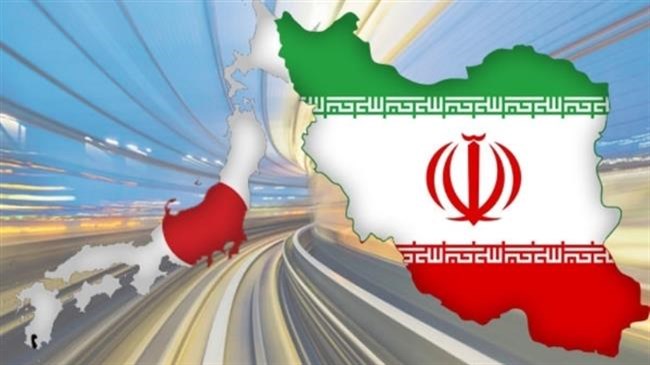
A senior Iranian official called on Japan to move faster on rolling out a $10-billion credit package for investment in Iran.

Japan signed a bilateral investment treaty and an agreement for a $10 billion debt guarantee for Iran in February after Tehran reached a nuclear accord with the US, EU, China and Russia, Press TV reported.

"It is expected that the $10-billion credit line which Japan intends to allocate to various sectors of the Iranian economy will be put into effect sooner," said Amir-Hossein Zamaninia, Iran's deputy oil minister for commerce and international affairs, on Saturday.

Petroleum and other energy sectors are viewed as a key target of Japanese investment, with the debt guarantee permitting its companies to invest without significant risk.

Tokyo lifted sanctions on Tehran in February to allow Japanese companies to invest in Iran's oil and gas sector after the nuclear agreement was reached.

Zamaninia lauded Japan as a 'good partner' for Iran, saying the Asian country planned "an active presence in Iran's petroleum industry" after the lifting of the sanctions.

"The Japanese intend to invest in various oil industry sectors including petrochemicals and LNG," he told IRNA.

For the debt guarantee, Iran is about to use export credits by Nippon Export and Investment Insurance or special loans arranged by the Japan Bank for International Cooperation.

Iran will also provide financing in Japanese yen which is very important for facilitating investment, as international transactions in the US dollar with the Islamic Republic is still prohibited under remaining American sanctions.

"The Japanese are currently assessing the situation to decide how to invest in Iran's oil industry," Zamaninia said.

Japan's oil imports from Iran have been recovering from the lowest levels in 2011 when they nearly halved after Tehran came under stiff Western sanctions.

Earlier this month, Japanese oil refiner TonenGeneral Sekiyu bought its first oil from Iran since becoming independent from US oil major Exxon Mobil Corp, it was reported on Friday.

Japan has reportedly imported 192,180 barrels per day of Iranian crude between January and May this year — up 1.9 percent from the same period a year ago.

Japanese buyers are said to be interested in hiking purchases of Iranian oil on a spot basis but Zamaniania said they mostly look to buying Iranian condensate and light crude.

"Tokyo currently has limits on the use of crude oil, so they are not looking to increase crude oil imports, rather they have been demanding increasing the purchase of gas condensate," he said.

The Japanese have a well-established background in Iran's petrochemicals, having built the Bandar Imam complex in Mahshahr, Khuzestan Province. They have also shown interest in Iran's LNG projects.

Iran had granted preferential rights to Japan's state-owned Inpex Corp. to develop South Azadegan oilfield but the company withdrew from the project in 2010 due to US pressure.


www.mbncompany.com


www.mbncompany.com-mbnco-iran-japan-test and measurementwww.mbncompany.com-mbnco-iran-japan-test and measurement

Information of news
  • Views: 802
  • Author: mbncom
  • Date:

Iran invites Italians to finance infrastructure projects

Category: News

Iran plans to cooperate with Italy on developing infrastructural projects in which Italian companies will merely take charge of financing the projects, announced deputy road and urban development minister.

"In implementing any project, our condition is that Italian companies should put the same project on tender for Iranian contractors and operators," Asghar Fakhriyeh Kashan said, reported Fars News Agency.

He underlined that Italian companies can only take part in financing Iran's infrastructural projects.

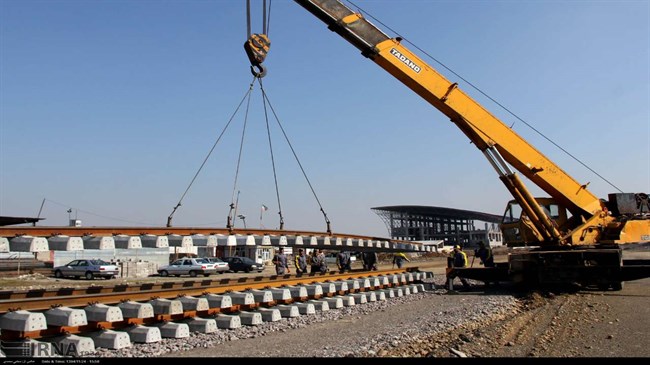
Pointing to cooperation with Italian firms on railway construction, he said, "One such projects is the Qom-Arak high-speed train project which will eventually be linked to Tehran-Qom-Isfahan railway network."

Fakhriyeh Kashan pointed to Tehran-Hamadan railway project, and said, "We have started feasibility studies on this project and if the results are favorable, we will sign a relevant agreement with Italian companies."

In mid-July, Minister of Roads and Urban Development Abbas Akhoundi and his Italian counterpart Graziano Delrio in a meeting in Rome signed a cooperation deal on high-speed railway projects in Iran.

The two sides signed a joint statement to begin a 146-kilometer high-speed train project between Qom and Arak in March 2017 and a 260-kilometer high-speed train project between Tehran and Hamadan in May 2017.

iran-italy-mbnco-www.mbncompany.com-testiran-italy-mbnco-www.mbncompany.com-test

Information of news
  • Views: 1185
  • Author: mbncom
  • Date:

China's Sinopec to develop Yadavaran oilfield

Category: News

Sinopec Company of China will take up second phase of the Yadavaran joint field development project, said executive manager of the Development Project of Yadavaran oilfield.

According to Mehr News Agency, Hadi Nazarpour described the latest status of Yadavaran development project and said, "A daily average of 100,000 barrels of oil are currently being produced from the joint field."

He underlined that Iraq begun production at Yadavaran four months ago, asserting, "Since the launch of production, Iran has managed to recover a total of 53 million barrels of oil from the field shared with the neighboring country."

The contract to develop Yadavaran was inked in 2008 with China Petroleum and Chemical Corporation (Sinopec), said the official noting, "Three development phases were envisaged for the joint oilfield with the first and second phases aiming to increase output to 58,000 and 180,000 barrels per day, respectively."

Nazarpour said new estimates have revealed that the in-situ oil reserves in Yadavaran stand at 31 billion barrels against the earlier estimate of 12 billion barrels. "The new figure has led to the possibility of defining phases 4 and 5 of the development plans for the joint field."

Touching upon the latest status of talks with Sinopec on the development of Phase 2 of Yadavaran, he added, "For the time being, the Major Development Plan (MDP) has been finalized and the Chinese firm will implement the project."

He stressed, "The second phase aims to increase production to 180,000 barrels per day once it becomes operational in the next four years."

He said Iran expects to extract 35,000 barrels of crude oil from west Karoun oilfields before the end of the incumbent administration's tenure.


china-iran-oil-mbn co-www.mbncompany.comchina-iran-oil-mbn co-www.mbncompany.com

Information of news
  • Views: 636
  • Author: mbncom
  • Date:

South Korea to invest in Hormuzgan projects

Category: News

South Korean investors are eager to invest in Iranian oil terminals, solar power plants, synthetic cycle power plants and port facilities in Hormuzgan Province.

Governor General of Hormuzgan Province Jassem Jadori said that investors will extend $96 million to the province's mining sector for the first time, Shana reported.

Jadori said a memorandum of understanding (MoU) was signed to this effect by the private sector and South Korean investors based on which a joint Iranian-Korean company will be registered in the next two months to follow up South Korean investment in Hormuzgan Province.

Meanwhile, representatives of Hyosung Corporation, a South Korean industrial conglomerate, visited Mahshahr Special Petrochemical Economic Zone in Khuzestan Province.

A delegation from Hyosung Corporation toured Fajr Petrochemical Company (FPC) on Saturday to explore business and investment opportunities in the economic zone, Shana reported.

During the one-day visit, the South Korean delegation held talks with the head of the FPC on feedstock supply, production, production procedures and cost of products.

Both sides agreed to sign a cooperation document to develop joint projects in the near future.

Hyosung is engaged in textile, industrial materials, chemical, heavy industry, construction, trading and financial businesses. Its textile business manufactures spandex yarns, polyester yarns and nylon yarns. Its industrial materials business provides tire cords, steel cords, carpets and others. Its chemical business mainly provides propane propylene (PP), polyethylene terephthalate (PET) bottles, nylon films and polyester films.


mbnco-Korea-Iran-test and measurementsmbnco-Korea-Iran-test and measurements

Information of news
  • Views: 785
  • Author: mbncom
  • Date:

Six-month crude steel production crosses 8.8m tons

Category: News

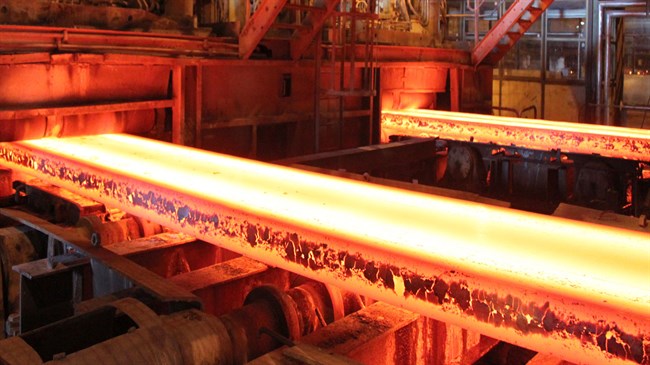
Iran produced 8.806 million tons of crude steel in the first six months of the current year, indicating a growth of 5.18 percent rise compared with the figure for the same period of 2015, which was 8.372 million tons.

According to recent statistics released by World Steel Association (WSA), China topped the list of crude steel producers during the period with an output of 399.56 million tons.

Japan, India and the United States with 52.04 million tons, 46.384 million tons and 40.064 million tons respectively were listed in second, third and fourth places, the report further said.

In June, Iran produced 1.59 million tons of crude steel showing a decline of 3.34 percent against the figure for May, which was 1.645 million tons.

Global steel production in June amounted to 135.72 million tons, which shows a 2.66-percent decline against the figure for May which was 139.439 million tons.

WSA is the international trade body of the iron and steel industry. The association represents approximately 170 steel producers, including 17 of the world's 20 largest steel companies, national and regional steel industry associations and steel research institutes.

Its members account for around 85 percent of world steel production.


mbnco-mbncompany.com-test and measurement--steel complexesmbnco-mbncompany.com-test and measurement--steel complexes

Information of news
  • Views: 939
  • Author: mbncom
  • Date:

European automakers renew cooperation with Iran

Category: News

European automakers have started cooperation with Iranian car makers following the removal of sanctions in January.

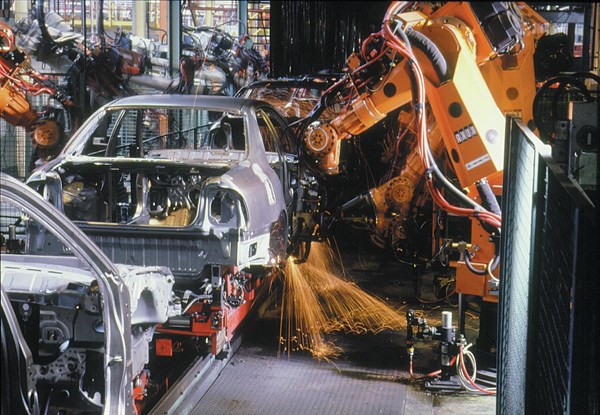
French automaker Peugeot-Citroen (PSA) signed a preliminary agreement to invest over €300 million ($330 million) to manufacture and sell the company's Citroen cars in Iran, the French automaker announced on Thursday, dw.com reported.

The preliminary agreement is the automaker's latest and biggest step in its return to the Iranian market. "Our aim is to provide our Iranian customers with modern vehicles that meet the highest comfort, safety and technology standards," PSA Chief Executive Carlos Tavares said in a statement.

The joint venture with SAIPA — the carmaker's partner in Iran prior to the sanctions — will grant each company a 50-percent stake. PSA will manufacture the cars at a plant in Kashan, Isfahan Province, and hopes to have the first batch of Citroens completed by 2018.

The SAIPA-PSA venture aims to produce 150,000 cars per year in five years and will include three Citroen models which have been specifically designed for the Iranian market, PSA said.

The preliminary agreement follows a deal PSA made last month with its former partner Iran Khodro. The €400-million agreement would see the partners build 200,000 Peugeot vehicles per year by 2018.

PSA was one of the first Western carmakers to announce a return to the country when numerous economic sanctions against Iran were lifted in January, following a landmark nuclear deal with P5+1 group.


Iran Khodro, Mercedes-Benz ties


Also, Managing-Director of Iran Khodro said on Friday that a cooperation contract between his company and Mercedes-Benz is nearly finalized and will be signed within two months.

Speaking at the general meeting of Iran Khodro shareholders, Hashem Yekkeh Zare said that based on the new contract, the two automakers will set up two joint companies.

He said that one of the joint companies will be a production site while the other one will be involved in sales and after-sales services.

In the production site, Iran Khodro will have a 51-percent share and Mercedes-Benz will hold 49 percent share, Yekkeh Zare said, adding that in the second joint company, Iran Khodro will have a 49-percent shares, while 51 percent of the shares will go to Mercedes Benz.


mbnco-mbncompany.com-test and measurementsmbnco-mbncompany.com-test and measurements

Related Posts :

    Contact Us :

    Headquarter: Unit:15-No:12-Gandhi 19-Gandhi Blv-Tehran-Iran
    Postal Code: 1517874438
    Telephones: (+98-21)44237763 (+98-21)88668972 (+98-21)88663258
    Fax NO: (+98-21)89770683
    E-mail : Info@mbncompany.com
    Laboratory and instrumentation section: mbnasir.co@gmail.com
    Electrical section: mbnco@outlook.com
    After sales section: support@mbncompany.com

    Google Map :


    سئو | کاشت مو | صندلی پلاستیکی | بادکنک آرایی