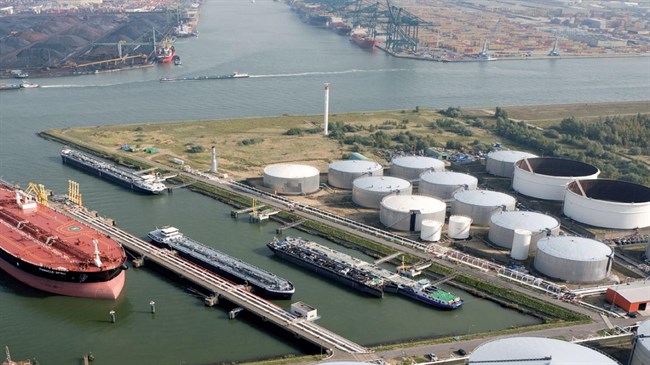
The Persian Gulf's biggest oil terminal, located on Iran's Kharg Island, is appealing for greater Japanese trade.
Officials said they plan to reward Japan for its support during the years of sanctions with priority in deals and investment.
Ships loaded at Kharg Island currently have to travel to the United Arab Emirates to refuel, but authorities have decided to upgrade the facility to let tankers refuel and load simultaneously, Kyodo wrote.
"We are ready to refuel Japanese oil tankers as the first priority in Kharg during loading. This can remove the risk of the refueling of fully loaded tankers in the UAE, on top of frugality in time and reducing extra expenses, including parking," said Gholamhossein Gerami, operations and export manager at Kharg oil terminal.
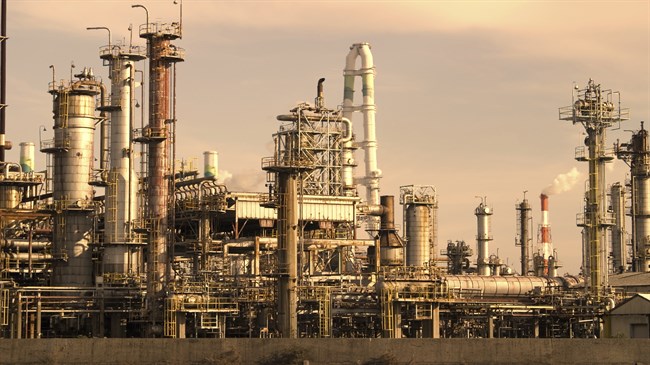
Iran's oil terminals and oilfields can be spotted by their high towers emitting orange flames from burned natural gas — a byproduct of the extraction of oil. Iran hopes in future to divert the gas to other purposes, using Japanese technology.
"Natural gas coming from oilfields can be refined and sold as a new petrochemical product — an area for Japanese investors to have more participation in Iran's oil fields," Germai said.
Kharg has six major facilities, including the oil and petrochemical refinery, and its population of 15,000 has helped make it the largest oil terminal in Persian Gulf.
The terminal became operational in the early 1960s and now handles more than 90 percent of Iran’s crude oil exports.
Pirooz Mousavi, who heads the nation's oil terminals, said Iran has invested more than $1.5 billion over the past decade in upgrades to the Kharg oil terminal and, after sanctions were lifted, it hit its record of loading 8 million barrels of crude oil into nine tankers in less than 48 hours at Kharg.
Now that sanctions have been lifted, Iran hopes to increase crude oil production and to export more than 2.5 million barrels per day.
"Japanese companies will have a firm position in the future of oil business with Iran and nothing can make a gap between Iran and Japan," Mousavi said.
Kharg oil terminal has two main docks — one in the east for small ships and tankers and one in the west, suitable for supertankers including the largest types.
Oil terminal officials say Japanese supertankers always berth at the west dock and, during the time of sanctions, Japan was the only country to use this dock to transfer oil with its own tankers.
"We never forget our friends from the time of sanctions," Mousavi said. "As we expect the increase in Japan for Iran's crude oil we feel more commitment to be a better host for Japan. Iran is interested in having Japan as the first priority for investing in oil terminals rather than others."
He added that Japan has a lot to offer in a wide range of areas.
"Iran is seeking Japan's experience and high technology to protect the sea environment and both countries can start the cooperation by investing in refining oil sludge," he said.
Oil terminal figures show that China, India and Japan are now the top three buyers of Iran's crude oil, several months after sanctions were lifted. Under sanctions, Japan was in fourth place after South Korea.
Iran plans to present various projects for its energy sector in the near future in a bid to lure investment from foreign companies. However, several factors may weigh on investment decisions.
A multibillion-yen petrochemical project by Iran-Japan Petrochemical Co. came to an end in 1991 without ever getting off the ground due to the prolonged Iran-Iraq war.
The Japanese government is ready for a new approach. It lifted sanctions on Iran in January and signed a bilateral investment pact in February in a bid to help Japanese companies do business there amid intensifying competition for access to Iran.
Also in February, the government-backed Japan Bank for International Cooperation and Nippon Export and Investment Insurance pledged a credit line of up to $10 billion.
"Iran is grateful to Japan for the allocation of the $10 billion credit line and we are sure that this action by Japan will lead to the blossoming of the two countries' financial ties," Deputy Foreign Minister Abbas Araqchi said.