MBN-Company
MBN-Company
MBN-Company
MBN-Company
MBN-Company
MBN-Company
MBN-Company
MBN-Company
Information of news
  • Views: 734
  • Author: mbncom
  • Date:

German exports to Iran soar after removal of sanctions

Category: News

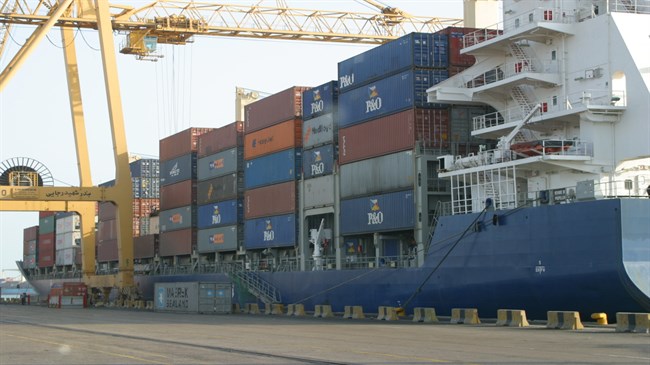
German exports to Iran, mostly machines and equipment, jumped in the first half of the year following the removal of international sanctions against the Islamic Republic, official trade data showed on Monday.

Exports from Germany to Iran surged by 15 percent year-on-year in the first six months of 2016 to €1.13 billion ($1.3 billion), reported Reuters quoting the Federal Statistics Office.

This compares with a rise of 1.4 percent in overall German exports in the same period and a fall of 14 percent in German exports to Iran in 2015.

"There is a huge demand in Iran for plant and equipment", said Michael Tockuss, head of the German-Iranian Chamber of Commerce, adding that chemical products and electrical engineering were also doing well.

"And there is growing demand for technology from the renewable energy sector, mainly wind power stations," Tockuss said, noting the reluctance of banks to finance bigger deals between German and Iranian businesses was slowly eroding.

He said exports to Iran would further pick up in the coming months and are expected to rise by as much as 25 percent in through 2016 and by 30 percent in 2017.

"The sanctions against Iran were built up over several years and it now will take some years to reverse them and establish new business ties," he added.

In another positive sign, German exports to Russia fell only 3.5 percent to €10.1 billion in the January-June period after having plunged by 25 percent to €21 billion in 2015.

This indicates that the impact of international sanctions imposed against Russia over the conflict in Ukraine is bottoming out.


germany-export to iran-BAFA Approval-mbnco-mbncompany.comgermany-export to iran-BAFA Approval-mbnco-mbncompany.com

Information of news
  • Views: 657
  • Author: mbncom
  • Date:

Steroid treatments may boost preemies' risk of eye problems

Category: News

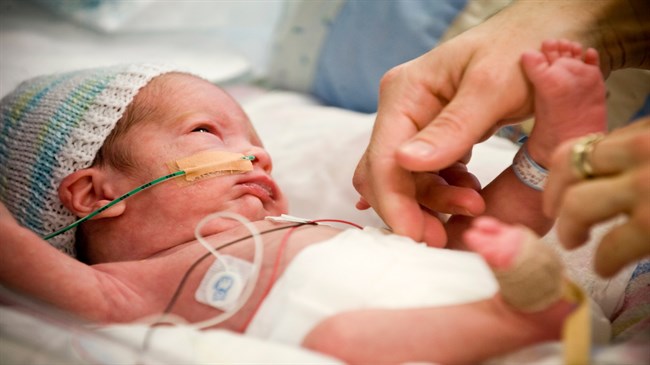
Steroids used to help premature babies' lungs work may increase their risk of eye problems, a new study suggested.

Doctors often give corticosteroids to babies whose birth weight is very low to improve lung function, but it's long been suspected that the drugs may have harmful side effects, UPI wrote.

"Clinicians need to use their best judgment to balance the positive effects from steroids on developing lungs with potential negative effects on developing eyes in very premature infants," said lead investigator Dr. Tammy Movsas.

For the new study, the researchers analyzed data from nearly 1,500 infants who weighed less than 500 grams at birth.

Although the study couldn't prove cause-and-effect, the risk of an eye condition called retinopathy of prematurity (ROP) was 60 percent higher for babies treated with steroids, the researchers found.

And babies' risk of developing an advanced case of ROP was 70 percent higher if they were on the drugs, the findings showed.

Movsas called the increased ROP risk modest, but significant.

The study was published recently in the Journal of the American Association for Pediatric Ophthalmology and Strabismus.

"This study has potential clinical significance since children with a history of ROP are not only at increased risk for visual impairments from the ROP itself, but are also at increased risk for developing other ocular disorders later in life," Movsas said.

Movsas is medical director of the Midland County (Mich.) Department of Public Health and a clinical associate professor of pediatrics and human development at Michigan State University.


www.mbncompany.com


mbnco-kids-health-treatment -www.mbncompany.commbnco-kids-health-treatment -www.mbncompany.com

Information of news
  • Views: 542
  • Author: mbncom
  • Date:

Iran pitches huge gas reserves for Asia markets

Category: News

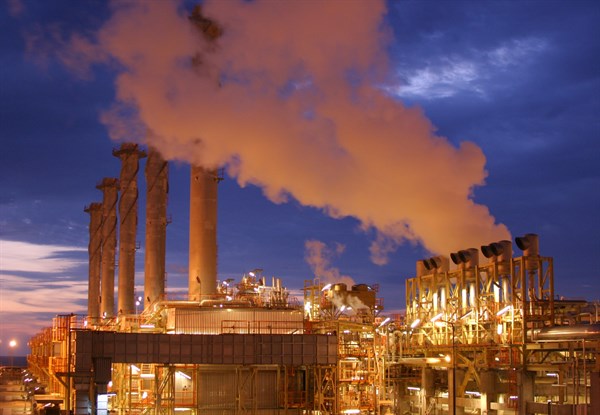
Iran is pitching its massive gas sector for trade with Asia where it sees a better market for exports than Europe.


Deputy Oil Minister for Trade and International Affairs Amir Hossein Zamani-Nia told Kyodo news agency in an interview on Sunday that gas prices are more attractive in East Asia than in Europe and Iran hopes to eventually export natural gas to East Asia, including Japan.

He also held out the prospect of Iran and Japan forming a long-term partnership for the supply of Iranian LNG to the Asian country. "Japan has a great potential of becoming a major partner for Iran in developing its gas industry," he said.

In early August, Japan's State Minister of Economy, Trade and Industry Daishiro Yamagiwa visited Tehran accompanied by executives from major trading houses such as Mitsubishi Corp., Mitsui and Co. and Itochu, as well as plant-engineering giant JGC and major banks.

Tehran supplied 10 percent of Japan's oil imports before sanctions cut them to five percent. Japan wants to raise the purchases to the previous level.

"Given that Iran's oil and natural gas reserves are one of the world's biggest, there is a possibility that Iran will play a part if Japan seeks to diversify its supply sources," Kyodo quoted a Japanese gas and oil industry source as saying on Sunday.

Zamani-Nia said Japanese companies are interested in reengaging in Iran's energy sector, particularly in the gas industry, adding he believes that Japan's current policy seems to be less geared towards crude oil.


www.mbncompany.com


iran gas-MBN Co-mbncompany.comiran gas-MBN Co-mbncompany.com

Information of news
  • Views: 794
  • Author: mbncom
  • Date:

IME weekly trade nears $268m

Category: News

Iran Mercantile Exchange (IME) announced that commodities valued at about $268 million and weighing over 661,029 tons were traded in its domestic trading and exports halls in the past working week (August 13-18).

The exchange said its domestic and exports halls traded in over 145,250 tons of oil and petrochemical products, including 94,500 tons of bitumen, 37,450 tons of polymer products, 11,490 tons of chemical products, 1,320 tons of sulfur, 450 tons of insulation and 40 tons of argon with the total value of $76 million during the period, Fars News Agency reported.

In addition, its agricultural trading hall also dealt in 31,950 tons of sugar, 78,742 tons of feed barley, 160 tons of rice and 9,730 tons of maize last week.

Also, the exchange conducted transactions in 305,922 tons of metal and mineral products, including 187,632 tons of steel products, 7,260 tons of copper, 110 tons of molybdenum concentrate and 920 tons of aluminum with the total value of $112 million in the last week.

The IME was set up on September 20, 2007 in accordance with Article 95 of the new law of Securities Market of the Islamic Republic of Iran following the merger of agricultural and metal exchanges of Tehran. The merger marked a new chapter in Iran capital market providing endless trading opportunities for customers both at home and abroad.

Economic and industrial sectors benefit from the exchange. The IME currently offers various services, including:

Performing as the first market providing access to the initial offering of the listed commodities in the IME,

Price discovery and price making for Iran's over-the-counter (OTC), secondary markets and end users,

Providing venue for government sales and procurement purchases,

Providing trading platform and user interface,

Providing clearing and settlement services,

Risk management,

Technology services,

Training market participants.


mbnco-mbncompanymbnco-mbncompany

Information of news
  • Views: 916
  • Author: mbncom
  • Date:

Iran, Exim Bank of China sign cooperation deal

Category: News

Iran and China inked an MoU on financing economic and infrastructural projects and expanding bilateral cooperation.

The MoU was signed on the sidelines of 16th Joint Economic Commission meeting by Iran's Deputy Minister of Economic Affairs and Finance Mohammad Khazaei and the Deputy Director of the Export-Import Bank of China (Exim Bank) Sun Ping, IRNA reported.

The MoU envisages cooperation in road, port, transportation, telecommunications, industrial park, oil and gas, healthcare sector, agriculture and tourism projects.

The memorandum has provisions for low-interest preferential loans with long-term payback periods.

The 16th Iran-China Joint Economic Commission session was attended Minister of Economic Affairs and Finance Ali Tayyebnia and the head of the Iranian side in the joint commission on Tuesday evening.

Tayyebnia underlined that the 16th Iran-China Joint Economic Commission can play an important role in developing strategic ties between the two countries.

The minister said that the activities of Iran-China Joint Economic Commission began at a time when political relations between the two countries were at a very satisfactory level.

Tayyebnia added that due to good grounds for cooperation in the economic field it is hoped that such relations will also keep developing.

"There are still some problems in the two countries' banking relations, but in view of the good and constructive statements we hope that the existing problems will be resolved soon," Tayyebnia said.

He described China as one of biggest trade partners of Iran in recent years, and said, "Trade balance between the two countries has always shown an upward trend."

The 15th Iran-China Joint Economic Commission meeting was held three years ago.


www.mbncompany.com


Iran, Exim Bank of China sign cooperation deal

Information of news
  • Views: 654
  • Author: mbncom
  • Date:

Iran four-month petchem output up 41% year-on-year

Category: News

Iran's petrochemical output in the four 4 months from March 20 this year rose by 41 percent against the figure for the same period last year, said deputy minister of Industry, Mine and Trade.

Mohsen Salehinia said that the rise in the production of petrochemicals and higher exports indicate that the industry is climbing out of recession, Shana reported.

"After the Joint Comprehensive Plan of Action (JCPOA), economic growth, and greater oil, gas and petrochemical production are evident," the official noted.

He said small- and mid-sized enterprises have received state facilities to enhance production and the industrial sector is expected to be revived by March 20, 2017.


MoU with Pertamina


Meanwhile on Tuesday, Iran's Petrochemical Commercial Company (PCC) signed a memorandum of understanding (MoU) with Indonesia's state-run Pertamina on petrochemical cooperation.

PCC officials met Pertamina executives in Tehran to ink the cooperation deal and discuss petrochemical cooperation.

During the meeting, the Indonesian side announced willingness to directly import liquefied petroleum gas (LPG), gas condensate and bitumen from PCC.

In return, PCC indicated interest in buying aromatics from Pertamina.

An executive team made up of representatives from the two companies will be formed for planning ways to enhance commercial activities between the two firms and implement the agreements reached by them.


www.mbncompany.com


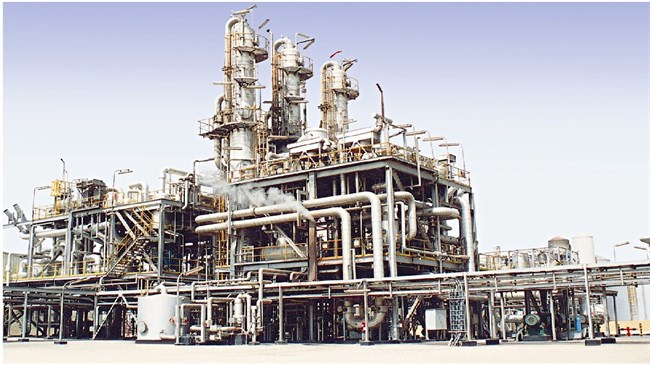
iran petrochemical-mbnco-mbncompany.comiran petrochemical-mbnco-mbncompany.com

Information of news
  • Views: 782
  • Author: mbncom
  • Date:

Minister: Boeing reps in Iran for jet sales

Category: News

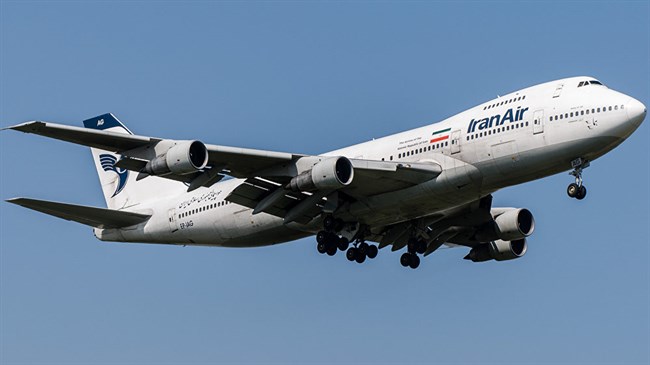
Boeing representatives are currently in Tehran, discussing the US plane maker's planned sale of commercial aircraft to Iran, Minister of Roads and Urban Development Abbas Akhoundi said on Saturday.

“Right now, Boeing representatives including three financial, legal and technical groups are in Tehran and negotiating” the sale of jetliners to Iran, Akhoundi said in remarks carried out by Tasnim News Agency.

Those negotiations with Airbus have concluded and the two sides were waiting for the US Department of the Treasury's Office of Foreign Assets Control (OFAC) to issue a license for the purchase to go ahead, he added.

The two aviation rivals have signed initial accords with the flag carrier Iran Air to sell about 200 aircraft worth more than $50 billion to the country which is seeking to renovate its aging fleet after decades of sanctions.

However, they are facing stiff opposition from pro-Israeli members of US Congress who are seeking to block the planned sales. The lawmakers plan to debate a raft of measures, including one that would prohibit the US Treasury from licensing the sales.

US President Barack Obama and his allies are expected to oppose the legislation, but if the bills are written into law, they would prevent other firms from selling aircraft to Iran as well.

US equipment allegedly accounts for more than 10% of the content used in almost all modern jets, requiring export licenses from the American government for any contract to be implemented.

Akhoundi expected deliveries by Airbus to start in the Iranian month of Aban which begins on October 22 if OFAC issues a license within the next two or three weeks.

“As for Airbus, all technical, contractual and financial negotiations have finished and we are waiting for OFAC’s license in which case all work will be wrapped up in time,” he said.

“Everything depends on this license and politicians are saying that OFAC’s licenses for Airbus and Boeing are interrelated,” Akhoundi added in remarks quoted by the Tasnim News Agency.

As regards Airbus, most of the technical specifications have ended and only the time of the authorization remains to be announced by OFAC, the minister said.

Iran Air agreed in January to buy 118 jets worth $27 billion at list prices from Airbus. Another MoU was signed in June, calling for Boeing to sell a total of 80 aircraft to Iran and help the country lease a further 29 in a deal worth $25 billion.

Boeing has proposed to sell its 737, 777 and 787 models and promised after-sales support, according to Iranian officials who have said the country needs as many as 500 jets for its fleet.

Iran’s current civil aviation fleet consists of 248 aircraft with an average age of 20 years, of which 100 are grounded.

Some media reports have said US Treasury might be putting off its decision on the sales until after the Nov. 8 presidential election in the US, where both Democratic Party candidate Hillary Clinton and Republican candidate Donald Trump are stalwart supporters of Israel.

Amid those speculations, Iranian carriers have begun talks with Canada's Bombardier and Brazil’s Embraer as well as Japan's Mitsubishi Aircraft for its regional passenger jet currently under development. 

China’s single-aisle C919 airliner which rolled off the assembly line last November is another option, but neither choice is without hurdles.

While none of the companies has an aircraft for delivery in its inventory, both rely on the US and Europe for key parts in their manufacturing.


www.mbncompany.com


mbnco-mbncompany.commbnco-mbncompany.com
Information of news
  • Views: 693
  • Author: mbncom
  • Date:

Iran plans $185b investments in energy sector

Category: News

Iran is planning to attract some $185 billion to the oil and gas sector through a new model of oil contracts, Trend quoted Iran's deputy oil minister for international affairs as saying.

Amir Hossein Zamaninia further said that attracting foreign investments mainly depends on political and economic conditions, while Iran believes that Iran Petroleum Contracts (IPC) is very attractive from the standpoint of investment environment of the country, domestic stability, security and high profits.

"Profits from investments in petrochemical projects in Iran exceed 25 percent," he added.

Iran had earlier presented new models of contracts for developing 49 oil and gas fields in the country. IPC type of oil contracts was developed with an aim to increase attractiveness of oil projects for foreign investors. IPC offers contractors different stages of exploration, development and production.

The first IPC is expected to be signed in the coming months. IPC is considered to be a cornerstone of the country's plan to raise crude production to the pre-sanctions level of four million barrels per day.

Iran's Cabinet recently passed a regulation governing the general conditions, structure and terms of the IPC Regulation. Parties to the IPC will be the National Iranian Oil Company (NIOC) and a consortium of oil companies (Contractor).

The regulation envisages three types of IPC including contracts for exploration, development and production, developing existing discoveries and improvement of oil extraction at existing fields.

Iran's oil industry will require $200 billion in investment to develop in the coming years, mostly from outside the country, Oil Minister Bijan Namdar Zanganeh said earlier.

"We need $200 billion of investment...to reach our development goals," Zanganeh said. "We will receive $15 billion-$20 billion from the National Development Fund, but internal resources are not enough for our needs," he added.

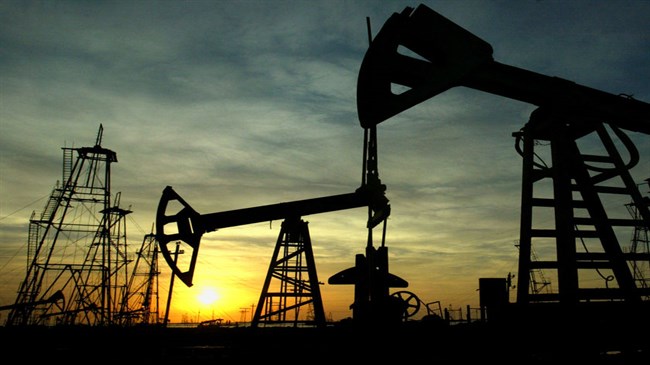
Iran holds the world's fourth-largest proved crude oil reserves and the world's second-largest natural gas reserves. Despite its abundant reserves, Iran's crude oil production has substantially declined, and natural gas production growth has been slower than expected over the past few years.

International sanctions have profoundly affected Iran's energy sector and have prompted a number of cancellations or delays in upstream oil and gas projects.

The country reportedly needs to attract $501 billion by 2025 for its upstream, midstream and downstream oil and gas projects.


www.mbncompany.com


mbnco-mbncompany.com-oil-energy-iranmbnco-mbncompany.com-oil-energy-iran

Information of news
  • Views: 743
  • Author: mbncom
  • Date:

Iran expects new oil deals to attract $25bn

Category: News

Iran says it is determined to press ahead with the implementation of its next oil sector projects through the new format of contracts with official saying that the new contracts could bring an investment of about $25 billion for the country’s oil projects within the next two years.

Ali Kardor, the managing director of the National Iranian Oil Company (NIOC), has been quoted by the media as saying that the new generation of oil contracts is “the only solution for the development of Iran’s oil industry”. 

Kardor emphasized that Iran’s oil projects are so attractive to global investors that about a dozen deals have already been signed with companies to study the country’s oil reservoirs. 

The same deals, he added, will help the NIOC to identify the development targets in which the companies may be interested the most.

Kardor further stressed that Iran has prioritized at least 12 reservoirs to be developed through the new format of contracts in the first phase of project awards that will be carried out within the next few months.

He said the NIOC has identified about 34 companies that can team up with Iranian companies over the exploration and development of Iran’s upcoming projects. 

Last week, the new format of Iran’s oil sector contracts was approved in a cabinet meeting chaired by President Hassan Rouhani.

Based on the new format of contracts, foreign companies will team up with Iranian partners for production of oil and gas from a list of targets that will be announced within the next months.   

The projects will have different stages of exploration, development and production and the contractors will be paid with a share of the output.

Iran’s Petroleum Minister Bijan Zangeneh said in mid-June that the first deals through the new format of contracts will be awarded by October. 

Zangeneh further emphasized that Iran expects the upcoming awards to help increase its crude production by 600,000 to 700,000 barrels a day over five years.


www.mbncompany.com


mbnco-mbncompanymbnco-mbncompany

Information of news
  • Views: 684
  • Author: mbncom
  • Date:

Four-month exports cross $16b

Category: News

Iran exported goods worth $16.308 billion in the first four months of the current Iranian year (started March 20) indicating an increase of 21 percent compared to the figure for the same period last year, which was $13.477 billion, said the head of Trade Promotion Organization of Iran on Tuesday.

Valiollah Afkhami Rad further said that imports of goods during the same stood at $12.865, showing a decline of seven percent against the figure for the same period last year which was $13.833 billion, reported IRNA.

The figures point to a positive trade balance of $3.443 billion balance, he said, adding that petrochemical products topped the list of exported items during the four-month period.

Afkhami Rad hoped that exports will rise to $50 billion in the year to mid-March 2017.

Following changes to export targets, Iran can now trade directly with most of the countries said the official.

He asked small-scaled companies to unite in holdings or consortiums to export larger amount of goods.

According to Afkhami Rad, the Ministry of Industry, Mine and Trade is determined to support such companies.


www.mbncompany.com


mbnco-mbncompany.commbnco-mbncompany.com


Related Posts :

    Contact Us :

    Headquarter: Unit:15-No:12-Gandhi 19-Gandhi Blv-Tehran-Iran
    Postal Code: 1517874438
    Telephones: (+98-21)44237763 (+98-21)88668972 (+98-21)88663258
    Fax NO: (+98-21)89770683
    E-mail : Info@mbncompany.com
    Laboratory and instrumentation section: mbnasir.co@gmail.com
    Electrical section: mbnco@outlook.com
    After sales section: support@mbncompany.com

    Google Map :


    سئو | کاشت مو | صندلی پلاستیکی | بادکنک آرایی