MBN-Company
MBN-Company
MBN-Company
MBN-Company
MBN-Company
MBN-Company
MBN-Company
MBN-Company
Information of news
  • Views: 868
  • Author: mbncom
  • Date:

IME weekly trade exceeds $263m

Category: News

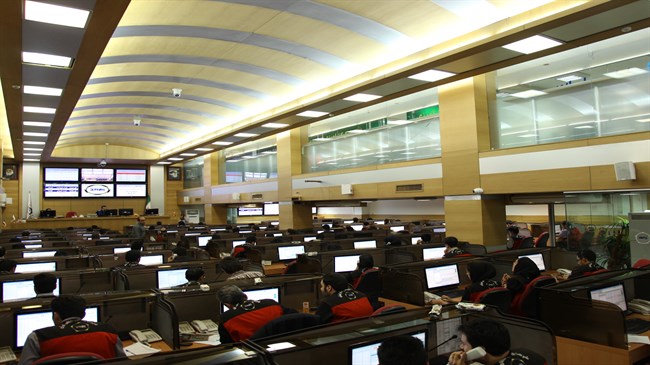
ran Mercantile Exchange (IME) announced that commodities valued at about $263.7 million and weighing over 606,599 tons were traded in its domestic trading and exports halls in the past working week (September 24-29).

The exchange said its domestic and exports halls traded in over 309,691 tons of oil and petrochemical products, including 16,892 tons of bitumen, 51,608 tons of polymer products, 15,962 tons of chemical products, 7,380 tons of sulfur, 2,498 tons of insulation and 100 tons of argon with a total value of $127.2 million during the period, Fars News Agency reported.

In addition, its agricultural trading hall dealt in 3,775 tons of sugar, 43,071 tons of feed barley, 160 tons of rice and 6,000 tons of maize last week.

Also, the exchange transacted in 244,957 tons of metal and mineral products, including 239,329 tons of steel products, 5,430 tons of copper, 130 tons of molybdenum concentrate and 2,020 tons of aluminum valued at $119.1 million in the past week.

The IME was set up on September 20, 2007 in accordance with Article 95 of the new law of Securities Market of the Islamic Republic of Iran following the merger of agricultural and metal exchanges of Tehran. The merger marked a new chapter in Iran capital market providing endless trading opportunities for customers both at home and abroad.


iran-ime-IRAN-mbn co-mbncompany.com-bourse-iran stock exchangeiran-ime-IRAN-mbn co-mbncompany.com-bourse-iran stock exchange


www.mbncompany.com


Information of news
  • Views: 689
  • Author: mbncom
  • Date:

Asia's August Iran oil imports jump 81% from a year ago

Category: News

Imports of Iranian oil by four major buyers in Asia in August jumped 81 percent from a year earlier, the biggest percentage gain since April 2014, as the producer recoups market share from rivals Saudi Arabia and Iraq.


Economic sanctions against Iran were lifted in January, and it has been battling since then to regain market share lost during the previous four years that the sanctions were in force, Reuters reported.

The No. 3 OPEC producer increased crude oil exports last month to more than 2 million barrels per day (mbd), according to a source with knowledge of its tanker loading schedule, closing in on Tehran's pre-sanctions shipment levels of five years ago.

The top four Asian buyers, South Korea, Japan, China and India, imported 1.84 mbd in August, government and ship-tracking data showed. That would be the highest in at least five-and-a-half years.

Japan's Trade Ministry on Friday released official data showing its imports rose 31.4 percent from a year earlier to 235,612 bpd last month.

India's imports nearly tripled from a year earlier to 575,900 bpd — the highest in at least 15 years.

Imports by South Korea more than doubled, while Chinese imports also jumped 48 percent.


Import-Export-Iran-Oil-Economic-South Korea-Trade-EquipmentImport-Export-Iran-Oil-Economic-South Korea-Trade-Equipment


www.mbncomany.com


Information of news
  • Views: 2342
  • Author: mbncom
  • Date:

Iran's steel exports up by 70 percent in four months

Category: News

Managing Director of the National Iranian Steel Company (NISCO) Abdolmajid Sharifi announced that Iran exported 2 million tons of steel during the first quarter of the current Iranian year, saying that it had 70% growth compared to the previous year, IRNA reported.

With a production rate of 16,700,000 tons of raw steel, Iran had one-percent share of the world production in the last Iranian year.

For the first time in the history of the Iranian steel industry, Iran exported 4,100,000 tons of steel last year, thus breaking all of its own previous records.

The World Steel Association (WSA) reported on Sept. 25 that Iran produced 11.451 million tons of crude steel in the first eight months of 2016, with five percent rise from 10.894 million tons in the same period in the previous year.

It is while the world’s steel production fell 0.9 percent to 1.065 billion tons in the mentioned time compared to the first eight months of 2015.

The WSA’s latest report also put Iran’s crude steel output at 1.35 million tons in August 2016, showing eight percent growth from 1.249 million tons in August 2015.

The country’s steel production stood at 16.110 million tons in 2015, indicating 1.4 percent fall from 2014.

As a major steel producer in the region, Iran boosted its steel mills across the country in recent years, as central Isfahan and southwestern Khuzestan provinces remain the major steel producers.

According to WSA, Iran was the biggest producer of crude steel in the Middle East in 2013. The country’s rank was 14th in the world in 2014.

Based on Iran Steel Comprehensive Plan, the production capacity is to reach 55 million tons by the Iranian calendar year 1404 (2025-2026), upgrading its ranking to seventh in world.


Iran-Material_Medical_Steel_Company_Russia_Export_ImportIran-Material_Medical_Steel_Company_Russia_Export_Import


www.mbncompany.com


Information of news
  • Views: 797
  • Author: mbncom
  • Date:

Iran introduces credit cards

Category: News

Iran has introduced credit cards for the first time in a move ostensibly aimed at encouraging public spending.

The credit cards will be available to applicants in three denominations of 100 million rials ($3,000), 300 million rials ($10,000) and 500 million rials ($15,000). They can be used for on-line purchases, reported Press TV.

The cards have been devised on the basis of Murabahah Islamic financing structure.  Murabahah by definition involves the purchase of a commodity by the bank, on behalf of the customer, to be sold to the customer on a cost-plus-profit basis.

The profit rate set by the Central Bank of Iran (CBI) for Iran's Murabahah credit cards is 18 percent. The customers can repay the amount through the cards in 36 installments.

Reports said only two banks — Melli Bank and Ayandeh Bank — have started issuing the credit cards.

According to IRNA, Ayandeh Bank issued over 12,000 credit cards on the first day.

The government has for months put the promotion of credit cards on its agenda.

Communications and Information Technology Minister Mahmoud Vaezi said in August that the country was preparing to introduce credit card services processed by global payment operator MasterCard for the first time.

Credit and debit cards, accepted in more than 210 countries where MasterCard is valid, will be distributed at financial branches of the Iran Post Company, Vaezi emphasized.

Along the same lines, the CBI announced in March that it is preparing the grounds for the use of credit cards provided by Asian banks such as Japan Credit Bureau (JBC) as well as China UnionPay (CUP).


mbncompany.com-mbn co-cerdit cards-banks-central bankmbncompany.com-mbn co-cerdit cards-banks-central bank


www.mbncompany.com


Information of news
  • Views: 703
  • Author: mbncom
  • Date:

Fajr refinery exports over 3m barrels of gas condensates

Category: News

Export of gas condensates from Fajr Jam refinery in the six months to September 21 exceeded three million barrels.

Announcing this, Deputy Head of Fajr Jam Gas Refining Company for Export Terminals Affairs Jamshid Khajezadeh told Shana that a considerable growth has been observed in export of gas condensates since the lifting of Western sanctions on Iran.

He added that during March-September this year, gas condensates were exported in 15 consignments which conformed with environmental standards.

Gas condensates produced in Fajr Jam refinery, he pointed out, were transferred via two 56-km pipeline to Siraf Port and were loaded and exported on 40,000-ton ships.

He added that four 40,000 cubic meter gas condensates storage tanks are in Siraf port and ships load the condensates several kilometers off from the coast.

He noted that 50 gas condensate consignments are loaded each year in Siraf port which are exported mostly to Asian states such as Japan, the UAE and South Korea.

The company was initially designed to process 85 million cubic meters per day of natural gas and in 2000, with the implementation of the development project, the figure rose to 110 million cubic meters per day.

mbnco-fajr petrochemicalmbnco-fajr petrochemical


www.mbncompany.com


Information of news
  • Views: 722
  • Author: mbncom
  • Date:

First Boeing jet joins Iran airline

Category: News

Iranian Naft Airlines, a homebound charter airline providing passenger and cargo services to Iran’s Ministry of Oil, said it received the first Boeing jet.

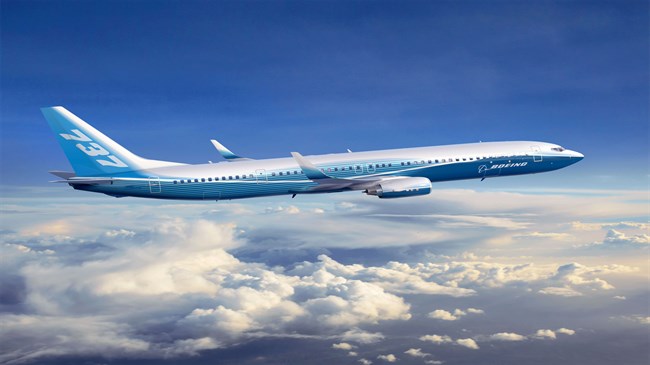
The aircraft, one of the four Boeing 737 single-aisle jetliners bought from the US aviation company, was delivered to Naft Airlines on Sunday, its Managing Director Nurollah Rezai Niyaraki said on Monday, reported Shana.

“After the JCPOA (Joint Comprehensive Plan of Action), an agreement was signed with the Boeing Company for purchase of four 737s and on Sunday, one of the ordered aircraft was delivered to Iranian Naft Airlines,” he said.

The aircraft took off at 1700 local time on its first flight from Tehran to Ahvaz on Sunday, the official said.

“According to the timeline, the remaining three Boeing 737s will gradually join the Iranian Naft Airlines fleet at specific dates” by the end of the current Iranian year on March 20, 2017, Rezai Niyaraki added.

According to reports, the aircraft, with a capacity to carry up to 148 passengers, had been leased to Iran under the complete crew, maintenance, and insurance (ACMI) arrangement.

In June, Boeing signed a memorandum of agreement with Iran Air to sell a total of 80 aircraft and lease a further 29 to the company in a potential deal worth about $25 billion.


Naft Airlines appears to be the first Iranian company to have its deal cleared by the US Treasury’s Office of Foreign Assets Control (OFAC).

Iranian airlines have some 60 Boeing airplanes in service, but most of them were purchased before the 1979 Islamic Revolution and are in a dire need of repair or retirement.


mbnco-mbncompany-mbn-oil-iran-naft airlinr-boeingmbnco-mbncompany-mbn-oil-iran-naft airlinr-boeing

Information of news
  • Views: 769
  • Author: mbncom
  • Date:

Iran Parliament endorses IPC

Category: News

Iran's Parliament has given the green light to the government to put into effect the new oil contract model called Iran Petroleum Contract (IPC).

The new formula, which has drawn criticism from some politicians and experts, was reviewed by a parliamentary panel but not put to vote by the house.

"After examining the new contract model, the parliamentary board charged with verifying the conformity of government bills with the laws declared it did not contradict the regulations," Shana quoted MP Asadollah Qareh-Khani as saying.

Parliament Speaker Ali Larijani, however, informed the government about the qualms of the critics, said the lawmaker who is also the spokesman of Parliament's Energy Commission.

The new oil contract model has been modified several times to satisfy those who say it has serious flaws.

"The government, in its third draft, took into account the concerns of the critics and sympathizers of the establishment; and the board on conformity declared the new oil contract to be in compliance with the law," Qareh-Khani said.

The new Iran Petroleum Contract, described as a hybrid model, will replace the buyback contract. It is being touted as a risk service contract which includes integrated exploration, development and production.

Iran has been working on the IPC for the past two years to lure investment to its oil and gas sector. Officials have said the duration of the contract is 20 years. It includes the fee per barrel that is paid as profit to the companies.

Deputy Oil Minister Ali Kardor said on Saturday that oil and gas contracts worth about $10 billion have been drawn up for signing before March 20, 2017.

Three oil and gas fields will be put on tender for development soon, said the official who is also the managing director of the National Iranian Oil Company (NIOC).

Kardor recently said the first tender since the lifting of sanctions on Iran will take place between Oct. 14 and Oct. 21, with South Azadegan being the priority for development.


www.mbncompany.com


mbn co-mbncompany.com-iranmbn co-mbncompany.com-iran

Information of news
  • Views: 741
  • Author: mbncom
  • Date:

Black hole hidden within its own exhaust

Category: News

Supermassive black holes, millions to billions of times the mass of our Sun, are found at the centers of galaxies. Many of these galactic behemoths are hidden within a thick doughnut-shape ring of dust and gas known as a torus. Previous observations suggest these cloaking, tire-like structures are formed from the native material found near the center of a galaxy.

New data from the Atacama Large Millimeter/submillimeter Array (ALMA), however, reveal that the black hole at the center of a galaxy named NGC 1068 is actually the source of its own dusty torus of dust and gas, forged from material flung out of the black hole's accretion disk, phys.org reported.

This newly discovered cosmic fountain of cold gas and dust could reshape our understanding of how black holes impact their host galaxy and potentially the intergalactic medium.

"Think of a black hole as an engine. It's fueled by material falling in on it from a flattened disk of dust and gas," said Jack Gallimore, an astronomer at Bucknell University in Lewisburg, Pennsylvania, and lead author on a paper published in Astrophysical Journal Letters. "But like any engine, a black hole can also emit exhaust." That exhaust, astronomers discovered, is the likely source of the torus of material that effectively obscures the region around the galaxy's supermassive black hole from optical telescopes.

NGC 1068 (also known as Messier 77) is a barred spiral galaxy approximately 47 million light-years from Earth in the direction of the constellation Cetus. At its center is an active galactic nucleus, a supermassive black hole that is being fed by a thin, rotating disk of gas and dust known as an accretion disk. As material in the disk spirals toward the central black hole, it becomes superheated and blazes bright with ultraviolet radiation. The outer reaches of the disk, however, are considerably cooler and glow more appreciably in infrared light and the millimeter-wavelength light that ALMA can detect.
Using ALMA, an international team of astronomers peered deep into this region and discovered a sprinkling of cool clouds of carbon monoxide lifting off the outer portion of the accretion disk. The energy from the hot inner disk partially ionizes these clouds, enabling them to adhere to powerful magnetic field lines that wrap around the disk.

Like water being flung out of a rapidly rotating garden sprinkler, the clouds rising above the accretion disk get accelerated centrifugally along the magnetic field lines to very high speeds — approximately 400 to 800 kilometers per second (nearly 2 million miles per hour). This is up to nearly three times faster than the rotational speed of the outer accretion disk, fast enough to send the clouds hurtling further out into the galaxy.

"These clouds are traveling so fast that they reach 'escape velocity' and are jettisoned in a cone-like spray from both sides of the disk," said Gallimore. "With ALMA, we can for the first time see that it is the gas that is thrown out that hides the black hole, not the gas falling in." This suggests that the general theory of an active black hole is oversimplified, he concludes.

With future ALMA observations, the astronomers hope to work out a fuel budget for this black hole engine: How much mass per year goes into the black hole and how much is ejected as exhaust.

"These are fundamental quantities for understanding black holes that we really don't have a good handle on at this time," concluded Gallimore


www.mbncompany.com

mbncompany.com-black holes-galaxy-iran-mbn combncompany.com-black holes-galaxy-iran-mbn co

Information of news
  • Views: 780
  • Author: mbncom
  • Date:

Iran crude exports hit five-year high

Category: News

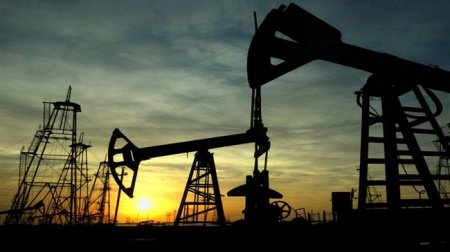
Iran's August crude oil exports jumped 15 percent from July to more than two million barrels per day (mbd), according to a source with knowledge of its tanker loading schedule, closing in on Tehran's pre-sanctions shipment levels of five years ago.

The No. 3 OPEC producer has more than doubled its crude exports, excluding the ultra light oil condensate, since December. Economic sanctions against Iran were lifted in January, and it has been working since then to regain market share lost to other Middle East producers over the previous four years, Reuters reported on Friday.

The strong demand for Iran's crude in Asia and Europe has enabled it to raise its oil output to just over 3.8 mbd as of this month — still shy of the four million bpd level Tehran says is a precondition for discussing output limits with Saudi Arabia and Russia.

Members of the Organization of the Petroleum Exporting Countries (OPEC) and Russia are expected to meet during the International Energy Forum in Algeria over September 26-28 to discuss a possible output freeze to stabilize oil prices that are still down.

"The only way for producers to maximize their revenues in a low oil price environment to meet budget requirements is to raise production," said Victor Shum, an oil analyst at consultancy IHS. "So there is unlikely to be any supply deal ... in late September," he said.

"We can expect Iran to continue to raise production."

August crude exports from Iran excluding condensate roughly doubled from a year ago to 2.11 mbd, the source said, based on data compiled from tanker loading schedules.

The crude exports have climbed from 1.9 mbd in June and 1.83 mbd in July, the schedules showed.

Iran's August exports are the highest since January 2012, boosted by record purchases from the world's third-largest oil importer India and a 48-percent jump that brought European sales to 630,000 bpd, tanker loadings for last month also showed.

Other sources tracking Iran's shipping data or are familiar with its tanker loadings have slightly different figures for Iran's crude exports in August, but still show a near doubling since January.

Details on condensate loadings for August remain unclear. However, if shipments of the ultra light oil were steady with this year's average of nearly 310,000 bpd, the total crude and condensate exports last month would be this year's highest at 2.41 mbd, still short of average pre-sanctions exports of 2.5 mbd to 2.6 mbd in 2011, according to figures from the US Energy Information Administration.

Iran's crude exports excluding condensate to Asia in August were 1.48 mbd, up from 1.40 mbd in July and roughly steady to this year's previous peak in April.

Loadings headed for India reached a likely record of nearly 600,000 bpd last month, according to data stretching back at least 15 years, up 150,000 bpd from July, and topping 564,000 bpd loaded for China.

Japanese loadings were nearly 230,000 bpd, compared with about 92,000 bpd for South Korea.

Iranian oil was also loaded for Turkey, Greece, and Spain, and exports to Italy more than doubled from the previous month to 87,000 bpd, according to the schedules.

To further boost exports, Iran expects to complete the building of a terminal by yearend for a new grade.


www.mbncompany.com


mbn co-oil-iranmbn co-oil-iran

Information of news
  • Views: 742
  • Author: mbncom
  • Date:

Iran says small EU banks ready to work

Category: News

Iran said a certain number of small European banks have agreed to work with the country several months after the removal of the sanctions.

Parviz Aqili, head of the private Middle East Bank in Tehran, has told AFP that the banks that are now preparing to work in Iran are from Italy, Austria, Switzerland, Germany, Turkey and Belgium.

Aqili did not name the banks but AFP quoted a Tehran-based banking expert as saying that some of them include Raiffeisen Bank and Erste Bank from Austria, Mediobanca and Banco Popolare of Italy, Germany's EIH, KfW and AKA banks, Belgium's KBC, ING of the Netherlands and Turkey's Halk.

"These banks have established working relations with Iranian banks to open letters of credit for fairly small sums of $10 million, $20 million or $50 million," said the expert who has not been named.

However, they lack the resources to finance big projects like the deal struck between Iran and European aircraft manufacturer Airbus for 118 airplanes, or oil and gas development projects, the expert said.

Aqili further underlined that major Western banks are still reluctant to do business with the Islamic Republic for fear of US retribution.

Iran has been persistently urging European countries to take the required measures to encourage their banks to facilitate transactions with Tehran now that the sanctions have been removed.

However, the plea appears to have fallen on deaf ears so far.

Analysts have already emphasized that the banks remain wary of the impacts of the remaining American sanctions against Iran, specifically those that address banking transactions with the country.

Reports earlier said they wanted a promise that the US would not prosecute or punish them for transactions involving Iran — a step the US has so far been reluctant to take.

In May, US Secretary of State John Kerry told a meeting of top EU bankers that they would not be penalized for conducting or facilitating business with Iran.

However, European banks have already stated that Kerry's assurances are not enough and a series of confusions that remain over transactions with Iran need to be cleared by

Washington.


www.mbncompany.com


iran-EU banks-mbncompany.comiran-EU banks-mbncompany.com

Related Posts :

    Contact Us :

    Headquarter: Unit:15-No:12-Gandhi 19-Gandhi Blv-Tehran-Iran
    Postal Code: 1517874438
    Telephones: (+98-21)44237763 (+98-21)88668972 (+98-21)88663258
    Fax NO: (+98-21)89770683
    E-mail : Info@mbncompany.com
    Laboratory and instrumentation section: mbnasir.co@gmail.com
    Electrical section: mbnco@outlook.com
    After sales section: support@mbncompany.com

    Google Map :


    سئو | کاشت مو | صندلی پلاستیکی | بادکنک آرایی