MBN-Company
MBN-Company
MBN-Company
MBN-Company
MBN-Company
MBN-Company
MBN-Company
MBN-Company
Information of news
  • Views: 710
  • Author: mbncom
  • Date:

Official: Europeans to finance 85% of Airbus contracts

Category: News

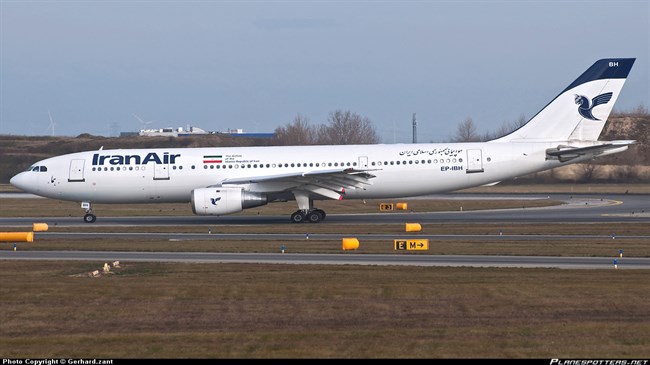
Managing Director of Iran Air Farhad Parvaresh said 80 to 85 percent of the contracts for the delivery of Airbus A350 XWB to Iran, which is the most advanced plane manufactured by the aviation giant, will be financed by the Europeans.

Parvaresh noted that based on the contract, 16 more Airbus planes of the type landed in Tehran on Saturday will be delivered by 2021, IRNA reported.

He said in case the conditions were not ripe for the delivery of the Airbuses they will be substituted with A350 or other models, adding that 118 planes will be delivered to Iran on the basis of an agreement with Airbus of which 45 are of 320 and 321 models which will be gradually delivered by 2019.

Meanwhile, he said Boeing seeks doing business with Iran.

Parvaresh added that within the next 10 years many airplanes will be excluded from the Iranian fleet and 30 to 40 percent of the expected 118 planes will replace the excluded

planes and the remaining planes will be used for the development of the fleet.

Source:Irandaily

تجهیزات آزمایشگاهی-مدیران بهینه ساز نصیر-MBN Co-mbncompany-mbn-شرکت مدیران نصیر-تحقیقاتی-دلارتجهیزات آزمایشگاهی-مدیران بهینه ساز نصیر-MBN Co-mbncompany-mbn-شرکت مدیران نصیر-تحقیقاتی-دلار

Information of news
  • Views: 1124
  • Author: mbncom
  • Date:

Gold rally shows fatigue as iron ore jumps

Category: News

Commodities ended the week mixed as industrial metals, agricultural products and iron ore rose while gold’s 15 percent rally this year started to fade.

Iron ore, a key steelmaking ingredient, had its best weekly move since last April as steel mills restocked inventories, the Financial Times reported.

Benchmark 62 percent ore for immediate delivery into China rose $3.8, or eight percent, to $47.00 a ton, according to the Steel Index, a price reporting agency.

Aluminium rose three percent for the week to trade at $1,547 a ton on the London Metal Exchange, while zinc, a metal used to galvanize steel, was up 1.7 percent to $1,728 a ton.

Investors have pushed the zinc price up on bets that more mined supply will start to shut on the back of low prices.

Net long positions on the LME rose to their highest level since mid-June last week, according to Commerzbank.

Gold, however, ended the week down at $1,230 a troy ounce, a drop of 0.6 percent over the five trading days, as investors took profits from a rally that has driven the price up 15 percent this year.

The precious metal has benefited from haven demand among investors amid negative central bank interest rates.

While gold-backed exchange traded funds have seen strong inflows so far this year, Asian physical demand has failed to materialize.

“The floor price for gold has probably risen and the bear is back in hibernation but it is way too soon to be talking about a new bull market,” said Tom Kendall, a precious metals analyst at ICBC Standard Bank in London.

Oil had a volatile week as traders tussled with conflicting signs from some of the biggest producers in OPEC and Russia, the largest crude producer outside the group.

Saudi Arabia agreed a provisional production freeze with Russia a sign the near 70 percent price slide of the past 18 months could finally provoke a co-ordinated response.

Iran and Iraq both offered verbal support to co-ordinated action but stopped short of agreeing to freeze their own output.

Iran is raising production after the removal of western sanctions on its oil industry while Iraq’s output has risen over the past year as postwar investment in the sector starts to come to fruition.

Brent crude oil, the international benchmark, hit a two-week high of $34.46 a barrel on Thursday but fell four percent on Friday to finish roughly flat on the week near $33 a barrel.

Weather and logistical concerns also supported agricultural commodities, with wheat adding one percent on the week on warmer than normal weather in the US and corn and soyabeans firming on the back of shipment delays at Brazilian ports.


ْSource:Irandaily


تجهیزات آزمایشگاهی-مدیران بهینه ساز نصیر-MBN Co-mbncompany-mbn-شرکت مدیران نصیر-تحقیقاتی-دلارتجهیزات آزمایشگاهی-مدیران بهینه ساز نصیر-MBN Co-mbncompany-mbn-شرکت مدیران نصیر-تحقیقاتی-دلار

Information of news
  • Views: 813
  • Author: mbncom
  • Date:

Scientists develop cancer vaccine

Category: News

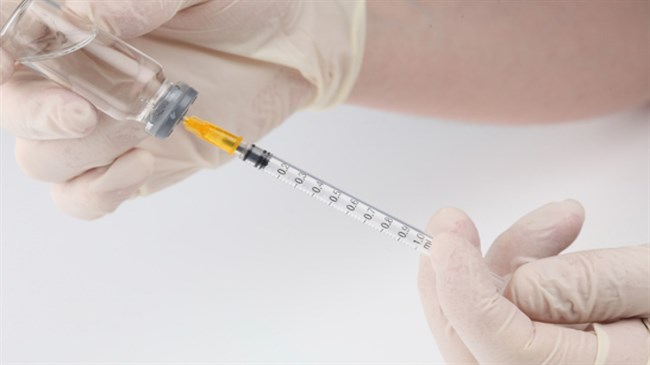
A revolutionary new cancer treatment that remembers the disease and acts like a watchman to prevent it ever returning is being developed by scientists.

Researchers are engineering immune cells so that they not only boost the body’s own natural defenses to fight tumors, but stand guard for a lifetime — acting  effectively like a vaccine, the Telegraph reported.

Scientists say it is like having a living drug, which is constantly vigilant to the return of cancer and quickly removes it from the body.

A new study, presented at the American Association for the Advancement of Science annual meeting in Washington, has proven for the first time that engineered memory T-cells can persist in the body for at least 14 years.

Professor Chiara Bonini, a hematologist at San Raffaele Scientific Institute and Vita e Salute San Raffaele University in Milan, said: “T-cells are a living drug, and in particular they have the potential to persist in our body for our whole lives.

“Imagine when you are given a vaccine as a kid and you are protected against flu or whatever for all of your life. Why is that? It’s because when a T-cell encounters the antigen and gets activated, it kills the pathogen but also persists as a memory cell.

“Imagine translating this to cancer immunotherapy, to have memory T-cells that remember the cancer and are ready for when it comes back.”

In a trial at a Milan hospital, 10 patients who had bone marrow transplants were also given immune-boosting therapy which included the memory T-cells. They were found to be there 14 years later.

Immunotherapies, which harness the body’s own immune system, look set to replace cell-damaging chemotherapies. But one of the biggest challenges is to make these changes last long enough that the cancer cannot come back.

The Milan study proved for the first time scientists have shown that these cells can survive in the body well beyond the original cancer treatment.

Professor Bonini and colleagues are now working on a new wave of immune cells that can use sensor molecules known as antigen receptors to track down and wipe out a wide variety of types of cancer. When the cells are combined with the memory cells, it should produce a treatment which effectively vaccinates the body against cancer.

“When a T-cell encounters the antigen and gets activated, it kills the pathogen but also persists as a memory cell,” she said. “Some of these memory T-cells will persist through the entire life of the organism, and so if you encounter the same pathogen — say if the same strain of flu comes back 10 years later — then you have memory T cells that remember it from 10 years earlier and kill it quickly so you don’t even know you’re infected.”

Daniel Davis, professor of immunology at the University of Manchester, said it was an important advance in cancer treatment.

“The implication is that infusing genetically modified versions of these particular T-cells, the stem memory T-cells, could provide a long-lasting immune response against a person’s cancer,” he said.

“Immunotherapy has great potential to revolutionize cancer treatments and this study shows which type of T-cells might be especially useful to manipulate for long-lasting protection.

“This research area is hot — no question about that. Our detailed knowledge of T-cells is paying off here with important new ideas for tackling cancer.”

In a separate presentation at the AAAS, a team of US scientists showed that their T-cell immunotherapy treatment for leukemia had an unprecedented success rate of 94 percent in patients who had been given only months to live.

US scientists said they had achieved extraordinary results in early clinical trials.

Professor Stanley Riddell, of the Fred Hutchinson Cancer Research Center in Seattle, said balancing the different types of immune cells and then equipping them with cancer-sensing molecules had saved the lives of leukemia patients for whom all other treatments had failed.

His team treated 26 patients whose acute lymphoblastic leukemia was so advanced they had only two to five months to live. After 18 months, 24 of the patients were in complete remission.

“These are in patients that have failed everything,”  Riddell said. “This is extraordinary. This is unprecedented in medicine to be honest, to get response rates in this range from very advanced patients.”


Source:Irandaily


تجهیزات آزمایشگاهی-مدیران بهینه ساز نصیر-MBN Co-mbncompany-mbn-شرکت مدیران نصیر-تحقیقاتی-cancerتجهیزات آزمایشگاهی-مدیران بهینه ساز نصیر-MBN Co-mbncompany-mbn-شرکت مدیران نصیر-تحقیقاتی-cancer

Information of news
  • Views: 1007
  • Author: mbncom
  • Date:

Iran eyes to boost petchem output

Category: News

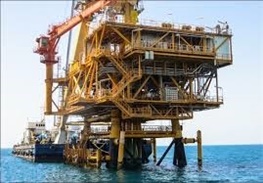
Iran's National Petrochemical Company (NPC) seeks to increase the country's petrochemical production capacity to 130 million tons per year.

The Planning and Development Bureau of NPC announced that the company plans to raise petrochemical output of the country to 123 million tons per year by the end of the 6th Five-Year Development Plan (2021), Shana reported.

Besides, the country targets export of 93 mt/y of petrochemicals annually which will fetch it $61 billion by March 20, 2021.

The bureau also announced that 21 petrochemical projects have been introduced to Chinese credit line that is valued at $16.76 billion while another 19 projects are to be financed by the National Development Fund of Iran (NIFI) for $5.875 billion of finances.

Besides, 20 other projects, valued at $5.96 billion, are lined up to get National Development Fund finances and 9 projects, valued at $2.72 billion, will be financed by alternative resources.

Iran has defined dozens of petrochemical projects which will triple its annual production capacity from the current 60 mt/y to 180 mt/y.

Source:Irandaily


تجهیزات آزمایشگاهی-مدیران بهینه ساز نصیر-MBN Co-mbncompany-mbn-شرکت مدیران نصیر-تحقیقاتی-دلار

Information of news
  • Views: 2784
  • Author: mbncom
  • Date:

Pluto’s moon Charon may have hosted a vast ocean

Category: News

A newly released image of Charon, Pluto’s largest moon, reveals a heavily fractured surface that may have formed when a subsurface ocean froze and expanded to split an exterior shell of ice. High-resolution images show that much of the moon’s northern hemisphere is cracked, nowhere more dramatically than in an equator-straddling series of chasms that includes Serenity Chasma (shown in the 175-km-by-386-km close-up seen at right above, and color coded for elevation at bottom right). Altogether, the low-latitude system of cracks and valleys is the longest known anywhere in our solar system (about four times the length and in some places almost five times the depth of Earth’s Grand Canyon), the researchers report. Because Charon’s modern-day surface is mostly water ice, it makes sense that the 1212-km-diameter moon once had a subsurface ocean kept liquid by heat from the radioactive decay of elements in its core, as well as by the heat generated from collisions of smaller bits when the moon first accumulated. Later, surface waters exposed to space were the first to freeze. As the moon aged its icy shell got thicker. Eventually, possibly a few hundred million years after the moon formed, the deepest parts of the ocean froze, swelling to crack surface ice—which may have been 10 km thick or more—just as ice cubes in a freezer often do. The image released yesterday, obtained just 100 minutes before the New Horizons craft swooped past Charon last 14 July, was taken from a range of about 78,700 km.

Posted in: 

تجهیزات آزمایشگاهی-مدیران بهینه ساز نصیر-MBN Co-mbncompany-mbn-شرکت مدیران نصیر-تحقیقاتی-دلارتجهیزات آزمایشگاهی-مدیران بهینه ساز نصیر-MBN Co-mbncompany-mbn-شرکت مدیران نصیر-تحقیقاتی-دلار

Information of news
  • Views: 859
  • Author: mbncom
  • Date:

Japan keen on Azadegan, upstream projects in Iran

Category: News

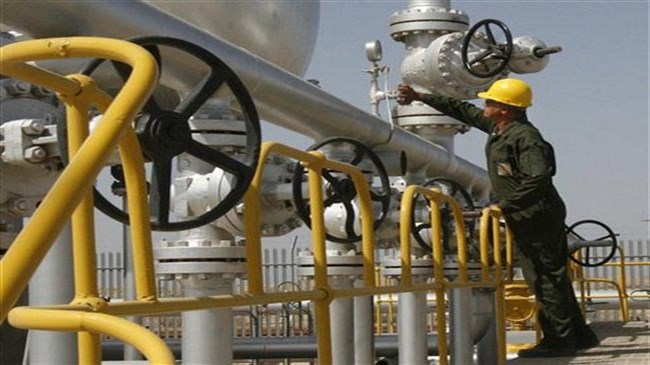
The Japanese government is interested in upstream projects in Iran, including the Azadegan oilfield, and intends to provide financial support for Japanese companies once commercial decisions for participating in the projects are made, a senior government official said.

"With Iran holding one of the largest oil and gas reserves in the world, we recognize that upstream developments would be extremely good opportunity for Japanese companies," Yuki Sadamitsu, director of the oil and gas division at the Ministry of Economy, Trade and Industry said in an interview with Platts.

"As the government, we are interested in upstream opportunities including Azadegan in Iran," Sadamitsu said.

Iran has said it plans to start putting out tenders in April-May for dozens of oil and gas developments using its redesigned upstream contracts model.

In its Tehran seminar in November, Iran introduced a total of 70 oil and gas projects for foreign participation, including 52 development and 18 exploration projects. The development projects comprised 29 oilfields and 23 gas fields.

The Iranian oil development projects include the giant onshore South Azadegan field, offshore Soroosh and Norooz fields as well as enhanced oil recovery projects at the major but aging onshore Ahvaz-Bangestan, Mansuri-Bangestan and Ab-Teymour fields.

Asked to comment about Japan's potential interests for participating in projects in Iran, Sadamitsu said the government has kept its options open for exploration, development and enhanced oil recovery projects, leaving it to the Japanese companies to make commercial decisions.

Iran is targeting an eventual 2 million bpd of new crude production capacity from the 50-plus upstream development projects it has planned to introduce to potential international investors under the modified contracts.


Iranian crude imports


Asked to comment about the outlook for Japan's crude imports from Iran in 2016, Sadamitsu said: "It is possible they will increase."

"Though it would depend how much Iran can offer on competitive terms," said Sadamitsu, stressing that Japanese refiners and trading houses are extremely cost-cautious.

"If Iran offers good terms, there are plenty of chances for the increase as [companies] are more sensitive to price and quality," Sadamitsu said.

Japan's crude imports from Iran plummeted in recent years due to sanctions imposed in 2012. They averaged 170,360 bpd in 2015, compared with 313,480 bpd in 2011.

On February 5, Japan signed a bilateral investment treaty with Iran, following its lifting of key oil, gas sanctions against Iran on January 22.

This followed the lifting of western sanctions against Iran on January 16.

Inpex, Japan's largest upstream company, had a 10 percent stake in the Azadegan oilfield but withdrew in 2010.

Source:Irandaily

[thumb=|The Japanese government is interested in upstream projects in Iran, including the Azadegan oilfield, and intends to provide financial support for Japanese companies once commercial decisions for participating in the projects are made, a senior government official said. "With Iran holding one of the largest oil and gas reserves in the world, we recognize that upstream developments would be extremely good opportunity for Japanese companies," Yuki Sadamitsu, director of the oil and gas division at the Ministry of Economy, Trade and Industry said in an interview with Platts. "As the government, we are interested in upstream opportunities including Azadegan in Iran," Sadamitsu said. Iran has said it plans to start putting out tenders in April-May for dozens of oil and gas developments using its redesigned upstream contracts model. In its Tehran seminar in November, Iran introduced a total of 70 oil and gas projects for foreign participation, including 52 development and 18 exploration projects. The development projects comprised 29 oilfields and 23 gas fields. The Iranian oil development projects include the giant onshore South Azadegan field, offshore Soroosh and Norooz fields as well as enhanced oil recovery projects at the major but aging onshore Ahvaz-Bangestan, Mansuri-Bangestan and Ab-Teymour fields. Asked to comment about Japan's potential interests for participating in projects in Iran, Sadamitsu said the government has kept its options open for exploration, development and enhanced oil recovery projects, leaving it to the Japanese companies to make commercial decisions. Iran is targeting an eventual 2 million bpd of new crude production capacity from the 50-plus upstream development projects it has planned to introduce to potential international investors under the modified contracts. Iranian crude imports Asked to comment about the outlook for Japan's crude imports from Iran in 2016, Sadamitsu said: "It is possible they will increase." "Though it would depend how much Iran can offer on competitive terms," said Sadamitsu, stressing that Japanese refiners and trading houses are extremely cost-cautious. "If Iran offers good terms, there are plenty of chances for the increase as [companies] are more sensitive to price and quality," Sadamitsu said. Japan's crude imports from Iran plummeted in recent years due to sanctions imposed in 2012. They averaged 170,360 bpd in 2015, compared with 313,480 bpd in 2011. On February 5, Japan signed a bilateral investment treaty with Iran, following its lifting of key oil, gas sanctions against Iran on January 22. This followed the lifting of western sanctions against Iran on January 16. Inpex, Japan's largest upstream company, had a 10 percent stake in the Azadegan oilfield but withdrew in 2010.-Japan]http://en.mbncompany.com/uploads/posts/2016-02/1455951002_image_650_365.jpg[/thumb]

Information of news
  • Views: 718
  • Author: mbncom
  • Date:

Type 1 diabetics have sleeping insulin cells

Category: News

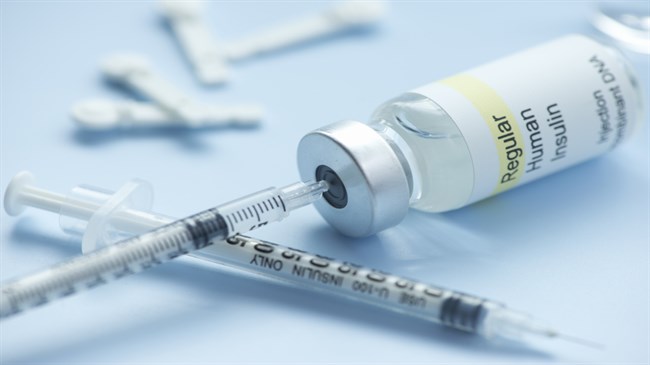
Type 1 diabetics have been offered new hope after scientists discovered that many of their insulin-producing cells are not dead, only dormant.

Diabetes is a condition where the body stops producing enough insulin to regulate sugar levels in the blood, the Telegraph reported.

Scientists thought that people developed type 1 after the number of insulin producing cells dropped by around 90 percent.

But a new study suggests that is only the case for very young people. After the age of six, many of the cells are still present, they have just stopped functioning.

Researchers at the University of Exeter believe it may be possible to awaken the dormant cells and reverse the disease.

Around 400,000 people have been diagnosed with type 1 diabetes in Britain, and most did not develop the disease until after the age of six.

 “This is incredibly exciting, and could open the doors to new treatments for young people who develop diabetes,” said Professor Noel Morgan of Exeter University Medical School.

 “It was previously thought that teenagers with type 1 diabetes had lost around 90 percent of their beta cells but, by looking in their pancreas, we have discovered that this is not true.

 “In fact, those diagnosed in their teens still have many beta cells left — this suggests that the cells are dormant, but not dead. If we can find a way to reactivate these cells so that they resume insulin release, we may be able to slow or even reverse progression of this terrible disease."

The British team worked with scientists at the University of Oslo to look at nearly 400 pancreas samples from people with type 1 diabetes.

The samples showed the first evidence that children, who are diagnosed with type 1 diabetes at the age of six years or under, develop a more aggressive form of the disease.

A condition known as insulitis, representing an inflammatory process, kills off nearly all the insulin-producing beta cells in the pancreas of the young children.

But the progression of the disease is radically different in those diagnosed as teenagers or beyond, who retain unexpectedly large numbers of beta cells at diagnosis — up to 50 percent are still present, although they are no longer working as they should.

If the amount of glucose in the blood is too high it can seriously damage the body's organs over time.

To survive, people with type 1 diabetes must test their blood-sugar levels throughout the day by either pricking their fingers to draw blood or using a continuous glucose monitor, and then administer insulin through multiple daily injections.

But now that scientists know that the insulin producing cells are not lost, just inactive, they can start looking for ways to switch them back on.

Earlier this year, MIT and Harvard University showed they could switch off type one diabetes for six months in animals by transfusions of millions of insulin producing cells.

The new research means doctors are closer than ever to ending the need for daily injections.


mbncompany-mbnco-mbn-lab equipment-diabets-engineering-medicalmbncompany-mbnco-mbn-lab equipment-diabets-engineering-medical

Information of news
  • Views: 798
  • Author: mbncom
  • Date:

Germany invited to take up transfer of technology

Category: News

Iran's deputy labor minister and head of the Organization for Technical and Vocational Training has underlined the need for expanding ties with Germany in the transfer of technology.

Mohammad Amin Sazgarnejad, who was speaking in a meeting with German Ambassador to Tehran Michael Freiherr von Ungern-Sternberg, recalled that Iran and Germany have long had good collaboration in vocational training, Mehr News Agency reported.

He hoped that the relations between the two sides will improve in the post-JCPOA era particularly in the fields of technology and training.

The official further listed possible areas of cooperation including the dispatch of Iranian trainers to Germany, presence of German trainers in Iran, defining professional career and skill standards as well as creation of specialized vocational training centers in Iran by German industries.

The deputy minister stressed the need for long-term presence of qualified personnel in teacher training centers.  "Providing young people with new skills to reduce unemployment and create job stability can be part of strategic plans of international organizations, the European Union (EU) as well as Germany."

The official also referred to vocational training for Afghan refugees in Iran and hoped that the German ambassador will take up the involvement of German companies in joint projects which can encourage Afghans to return to and reconstruct their homeland.

Freiherr von Ungern-Sternberg welcomed the expansion of ties between the two countries adding, "German firms have voiced willingness to return to Iran."

He noted, "Valuable means are available for joint cooperation including Iran-Germany chamber of commerce. Its activities will cover transfer of technology in addition to selling products in Iran."

He pointed to the dual educational system in Germany noting, "In line with economic activities, German firms are required to establish technical and vocational training centers which suit local conditions in Iran."

The German ambassador noted that fortunately, the proper grounds and capacities for the participation of German companies in Iran are being created "with regard to Afghan refugees and Germany could conduct joint projects with Iran".

Source:Irandaily


Lab Equipment-mbncompany-mbn co.-mbn-oil-germany-iranLab Equipment-mbncompany-mbn co.-mbn-oil-germany-iran

Information of news
  • Views: 823
  • Author: mbncom
  • Date:

German banks, firms to open branches in Iran

Category: News

A number of German banks and companies are expected to open branches in Iran, said Bavaria's Economy Minister Ilse Aigner on Tuesday.

In a meeting in Munich with Head of Iran-Germany Chamber of Commerce Mohammad Khansari, Aigner said her office is assisting private sectors in the two countries to resolve outstanding issues in this respect, Fars News Agency reported.

During the meeting, the two sides agreed that insurance and banking are the two main challenges to bilateral trade and that the best option is to open bank branches in Iran to facilitate transactions.

To this end, Khansari said several French and Italian banks have already taken necessary steps to set up branches in Iran, and that Tehran has reached preliminary agreement with a number of German banks to this effect.

According to the Governor of the Central Bank of Iran Valiollah Seif the agreement was reached during German Vice Chancellor and Federal Minister of Economic Affairs Sigmar Gabriel's visit to Iran in July 2015.

He told reporters upon arrival in Tehran that he had brought the best German companies which had very good relations with Iran for years and sought to maintain those ties even under the sanctions regime.

Source:Irandaily


Germany-mbncompany-mbnco-mbn-mbn co-equipment-iranGermany-mbncompany-mbnco-mbn-mbn co-equipment-iran

Information of news
  • Views: 774
  • Author: mbncom
  • Date:

Oil prices jump as Russian, Saudi Arabian oil ministers meet

Category: News

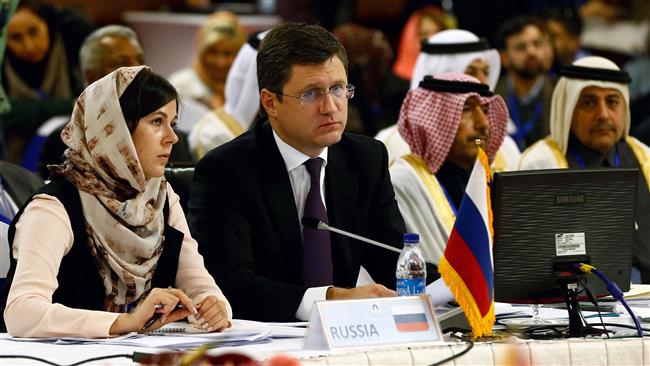
Crude oil sees an upsurge in prices as Russian Energy Minister Alexander Novak and his Saudi counterpart Ali al-Naimi meet in the Qatari capital.


The two ministers met Tuesday in Doha to discuss the global oil market glut which has sent prices spiraling downward over the recent past.

The oil ministers of Venezuela and Qatar also attended the talks, a Qatari official told reporters.

Crude prices rose earlier in the day, with Brent breaking past $34 a barrel on expectations that the two countries will discuss the global oversupply issue.

At around 0600 GMT, European benchmark Brent crude for April delivery was trading $1.30, or 3.89 percent, higher at $34.69.

Its US counterpart West Texas Intermediate for March delivery was up $1.30, or 4.42 percent, at $30.74 compared to its Friday close. There was no settlement in the New York Mercantile Exchange on Monday due to a US public holiday.

Oil prices have been depressed since last peaking in mid-2014, due to oversupply, sluggish demand and slowing economies. They are currently down about 70 percent from June 2014 levels.

Bloomberg News said earlier that Saudi Arabia's oil minister was expected to speak privately with his Russian counterpart in Doha.

The agenda for Tuesday's meeting was unclear, and sources declined to provide further details on it.

The news has been seen as a push for the oil market, which has also been buffeted by weak demand and a strong dollar.

Saudi Arabia has insisted that it will not cut production to tackle the global glut unless major producers outside the 13-nation Organization of Petroleum Exporting Countries (OPEC) -- including Russia -- play along.

Prices last week touched a near 13-year low but sprang back more than 10 percent Friday as rumors of the talks emerged.

The oil rise also boosted stock and share values on Tuesday, with Asian markets extending their rally amid hopes that major oil exporters could agree on action to ease the supply surplus, and authorities would step in to enhance growth in major economies.

Gains on European markets further gave investors confidence to buy again as Shanghai surged more than three percent on speculation that China is preparing stimulus measures to augment the world's number two economy.


Source :Irandaily

mbncompany-oil-mbn co-mbn-russia-saudia arabia-oil pricembncompany-oil-mbn co-mbn-russia-saudia arabia-oil price

Related Posts :

    Contact Us :

    Headquarter: Unit:15-No:12-Gandhi 19-Gandhi Blv-Tehran-Iran
    Postal Code: 1517874438
    Telephones: (+98-21)44237763 (+98-21)88668972 (+98-21)88663258
    Fax NO: (+98-21)89770683
    E-mail : Info@mbncompany.com
    Laboratory and instrumentation section: mbnasir.co@gmail.com
    Electrical section: mbnco@outlook.com
    After sales section: support@mbncompany.com

    Google Map :


    سئو | کاشت مو | صندلی پلاستیکی | بادکنک آرایی