MBN-Company
MBN-Company
MBN-Company
MBN-Company
MBN-Company
MBN-Company
MBN-Company
MBN-Company
Information of news
  • Views: 2522
  • Author: mbncom
  • Date:

‘Germany’s VW close to Iran auto deal’

Category: News

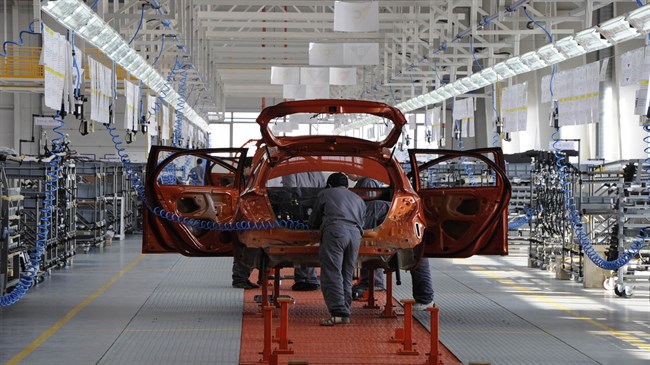
Iran said on Sunday that Germany’s auto giant Volkswagen is expected to seal a deal with an Iranian partner in the near future to invest in the country’s car industry.

Iran’s Ambassador to Berlin Ali Majedi said Volkswagen has been looking into the Iranian car industry for the past year and are closer than ever to a final investment decision. 

Majedi said the company’s management have been specifically studying the capabilities of several local carmakers and are now trying to choose between only two companies. 

He did not name the companies but some reports say they could be Kerman Motor and Mammut Group. 

Volkswagen announced last September that it is grooming its Skoda brand for the Iranian market. 

"Iran is a very interesting market with great opportunities," VW brand R&D chief Heinz-Jakob Neusser said at the time.

VW will conclude an assessment of the country's auto market by the end of the year, Reuters quoted him as saying.

Neusser said it is still too early to say which product VW could use to go in with “but of course we see the potential".

Reuters further quoted a company source as saying that VW was considering a move into Iran with the mass-market Skoda and Seat brands.

Volkswagen’s last venture in Iran involved its production of the Gol compact with Iran’s Kerman Khodro before withdrawing under US pressures.

Other German automakers including Mercedes have already started talks to form partnerships with Iran Khodro – the leading Iranian car giant.

The media in Tehran reported in mid-March that a commercial deal between Iran Khodro and Mercedes is imminent. 

In January, the German carmaker said it had signed letters of intent with local partners Iran Khodro Diesel and Mammut Group to arrange a "comprehensive re-entry" into the country.

The areas of cooperation include a joint venture for local production of Mercedes-Benz trucks and powertrain components plus the establishment of a sales company for Mercedes-Benz trucks and components, it said then.

Daimler also plans to return as a shareholder in the former engine joint venture Iranian Diesel Engine Manufacturing Co. (IDEM), based in Tabriz.

Leading carmakers are seeing a pent-up demand for cars in Iran, a country of more than 80 million people, which is emerging from years of sanctions


mbncompany-mbncompany.commbncompany-mbncompany.com

Information of news
  • Views: 846
  • Author: mbncom
  • Date:

Ambassador: South Korea revs up efforts to restore Iran ties

Category: News

South Korea is revving up efforts to restore economic ties with Iran as the resource-abundant Middle East state is generating fresh business opportunities following the lifting of international sanctions earlier this year, its top envoy to Tehran said Wednesday.

In a meeting with reporters in Seoul, Kim Seung-ho said that South Korean government officials and businesses are striving to regain some of the lost ground in the increasingly competitive Iranian market with a population of 80 million, Yonhap reported.

"International attention is focused on Iran as it boasts rich resources and a large population. Thus, many countries are scrambling to gain the upper hand in the market after the sanctions were scrapped," the envoy told reporters.

"The Korean government and businesses are also striving to restore ties with Iran with a sense of crisis and anxiety as competition heats up to capitalize on the business opportunities in Iran."

Lobbies of major hotels in Tehran are crowded with foreign tourists, with exhibition centers brimming with businessmen scurrying to court their Iranian partners, Kim added, noting the country's transition into a highly lucrative business destination.

As China, Japan, Russia, Germany and other countries have beefed up diplomacy with Iran to advance economic interests, South Korea has also made a flurry of diplomatic efforts to enhance cooperation.

South Korea's top diplomat Yun Byung-se visited the country in November — for the first time in 14 years as a foreign minister. Less than three months later, Trade Minister Joo Hyung-hwan also visited Tehran with a large business delegation.

"The two countries are also in talks over President Park Geun-hye's trip to Iran," Kim said. He did not elaborate on when Park will travel to the country.

Trade between Korea and Iran dipped to $8.6 billion in 2014 — less than half the volume recorded in 2011.

Touching on Iran's deep historical and cultural background, the ambassador highlighted the importance of developing a 'multifaceted' bilateral relationship — rather than focusing wholly on the economic dimension.

"Rather than pursuing a unitary business-centric partnership, I think developing the various facets of our partnership is important given that Iran has great potential in terms of human resources, and its cultural and historical assets," he said.


www.en.mbncompany.com-mbn co-Korea-iranwww.en.mbncompany.com-mbn co-Korea-iran

Information of news
  • Views: 1032
  • Author: mbncom
  • Date:

Tehran, Hanoi to forge ICT ties

Category: News

Iran and Vietnam have expressed readiness to cooperate on information and communications technologies (ICT).

Iranian Minister of Communications and Information Technology Mahmoud Vaezi said that the two countries will cooperate in ten different areas of ICT, including electronic governance or e-governance, internet and cyber security, software and electronic commerce, Press TV reported.

Vaezi was speaking following a meeting with visiting Vietnamese Minister of Information and Communications Nguyen Bac Son.

He referred to an earlier decision by the Iranian president and his Vietnamese counterpart to boost trade and said the two countries are set to cooperate on joint investments in areas of interest.

On Monday, Iranian President Hassan Rouhani said Tehran and Hanoi had decided to increase trade nearly six-fold to $2 billion within five years.

Speaking in a press conference with Vietnam's President Truong Tan Sang in Tehran, Rouhani said that the Islamic Republic and Vietnam are to forge closer cooperation in the fight against terrorism.

The Vietnamese president arrived in Tehran on Sunday for an official three-day visit at the invitation of his Iranian counterpart.

Heading a politico-economic delegation, Tan Sang discussed with Iranian officials ways to expand ties between Tehran and Hanoi particularly in the fields of economy, banking and energy.

Trade transactions between Iran and Vietnam reached $300 million in 2013 from $80 million in 2010.


mbncomany.com-mbn co.mbncomany.com-mbn co.

Information of news
  • Views: 810
  • Author: mbncom
  • Date:

Happy Norouz and New Iranian Year

Category: News

Happy Norouz and New Iranian Year


Originating in Iran’s ancient history, Norouz is celebrated by more than 300 million people worldwide on March 21, the day of the spring Equinox, which marks the sun’s crossing of the Equator and the start of spring in the Northern Hemisphere. Norouz is as one of the oldest and most cherished festivities celebrated for at least 3,000years.

Norouz is a messenger of peace, friendship, benevolence for the humankind and admiration for the nature not only for Iranians, but for several nations and tribes who adorn this ancient festivity and celebrate it. Norouz is an opportunity for rethinking, restarting and remaking.
Norouz is the spiritual heritage of humankind and the Iranians will be most delighted if the world nations enjoy this heritage and take advantage of it. Norouz is the message of peace and friendship by the Iranians for the whole world.
Norouz is a strong testimony to Iranian rich civilization, national characteristics and history. It proves how a nation with its irreversible determination to endure, and even flourish, through periods of devastation, political chaos, hardship and oppression.
For centuries, Persians have applied the Norouz spirit to every dark challenge that has come their way. This spirit has made Norouz far more than just a New Year celebration over the course of history.
Norouz is a relic of ancient times. A memory of old tales and epics, a celebration of rebirth and rejuvenation. Spring has arrived and the previous year with all its events, good or bad, has passed. Renewed hope anticipates new achievements.
In harmony with rebirth of nature, the Persian New Year Celebration, or Norouz, always begins on the first day of spring, March 21th of each year. Norouz ceremonies are symbolic representations of two ancient concepts - the End and Rebirth.
Norouz in Persian means 'New day'. It is the beginning of the year for the peoples of Iran (Greater Iran, including: Afghanistan, Arran (Republic of Azerbaijan) and Central Asian Republics).
It begins precisely with the beginning of spring on vernal equinox, on or about March 21. Tradition takes Norouz as far back as 15,000 years--before the last ice age.
It is not exactly known when and how the festival of Norouz emerged. Some historians believe that natural changes in weathers gave rise to the festivities. Some consider it a national festival, while others regard it as a religious ritual.
According to Zoroastrians, the month of Farvardin (the first month of the Iranian solar calendar) refers to Faravashis, or spirits, which return to the material world during the last 10 days of the year. Thus, they honor the 10-day period in order to appease the spirits of their deceased ancestors. The Iranian tradition of visiting cemeteries on the last Thursday of the year may have originated from this belief.
According to lexicographer Mirza Ali Akbar Dehkhoda, ancient Iranians celebrated a feast called Farvardegan (Farvardyan) that lasted 10 days. Farvardegan was performed at the end of the year and was apparently a mourning ceremony and not a celebration welcoming the rebirth of nature. In ancient times the feast started on the first day of Farvardin (March 21) but it is unclear how long it did last. In royal courts, the festivities continued for one month.
The festival, according to some documents, was observed until the fifth of Farvardin, and then the special celebrations followed until the end of the month. Possibly, in the first five days, the festivities were of a public and national nature, while during the rest of the month it assumed a private and royal character.
Undoubtedly, the Norouz celebrations are an ancient, national Iranian custom, but details of it prior to the Achaemenid era are unknown. There is no mention of it in Avesta - the holy book of Zoroastrians.
In the ancient times, Iran was the cradle of civilizations for thousands of years and regarded as one of the most powerful countries in the world. As time passed, the Empire of Persia disintegrated gradually due to the invasions by the enemies of this land.
As a matter of fact, many glorious cultural, historical, festivals and customs have faded away and only traces of them have remained and several centuries of our homeland history is still in a “state of oblivion, darkness and ambiguity.”
Currently, after several thousands of years, Iranians and the people of nine other countries enthusiastically celebrate the Norouz festival, irrespective of their age, language, gender, race, nationality or social status as this festivity knows no boundary.
The oldest archaeological record for the Norouz celebration comes from the Achaemenid period over 2500 years ago. They created the first major empire in the region and built the Persepolis complex in southern Iran. This magnificent palace/temple complex was destroyed by Alexander the Great.
Throughout their often stormy history, Persians have endured hard times of civil wars, devastations, and political chaos. They have celebrated the height of human civilization and scientific and military achievements through the spirit of Norouz.

Such a unifying spirit has often made Norouz the target of much animosity by foreign invaders and anti-national forces throughout the history of Iran.
King Jamshid is said to be the person who introduced Norouz celebrations. Some 12 centuries later, in 487 B.C.E., Darius the Great of the Achaemenian dynasty celebrated the Norouz at his newly built Persepolis in Iran. On that day, the first rays of the rising sun fell on the observatory in the great hall of audience at 06-30 a.m., an event which repeats itself once every 1400 years. The Persepolis was the place the Achaemenian king received on Norouz, his peoples from all over the vast empire. The walls of the great royal palace depict the scenes of the celebrations.
We know the Iranians under the Parthian dynasty celebrated the occasion but we do not know the details. It should have, more or less, followed the Achaemenian pattern. During the Sasanian time, preparations began at least 25 days before Norouz.
Twelve pillars of mud-bricks, each dedicated to one month of the year, were erected in the royal court. Various vegetable seeds--wheat, barley, lentils, beans, and others--were sown on top of the pillars. They grew into luxurious greens by the New Year Day.
The great king held his public audience and the High Priest of the empire was the first to greet him. Government officials followed next. Each person offered a gift and received a present. The audience lasted for five days, each day for the people of a certain profession. Then on the sixth day, called the Greater Norouz, the king held his special audience. He received members of the Royal family and courtiers. Also a general amnesty was declared for convicts of minor crimes. The pillars were removed on the 16th day and the festival came to a close. The occasion was celebrated, on a lower level, by all peoples throughout the empire.
During the first two centuries of Islam in Persia, the festivities were not observed with much earnest due to sociopolitical transformation. Gradually, greedy Omayyad caliphs, intending to boost their income through gifts, revived the custom.
Nonetheless, Iranians have always been enthusiastic about preserving this custom, especially when they were under foreign domination.
Omayyad rulers, known for their tribal fanaticism, left no stone unturned to annihilate the traditions and cultural heritage of conquered lands.
According to the historian George Zeidan, Persians would pay 5,000 to 10,000 silver coins for permission to celebrate Norouz during the reign of the Omayyads. Iranians made strenuous efforts to celebrate the occasion even though they had to pay a high price. Omayyad rulers greedy for wealth and power sought to strengthen their hegemony, apparently only resorting to Islam as a shield to protect their interests.
The festival was so glorious and sacred that even the most ruthless rulers used to grant general amnesty to captives and prisoners. The dignity of Norouz is captured as Ahura Mazda on its splendid glory says: “On the day of Farvardin, even the infernal-dwellers return to this world to visit their families.”
A major part of the New Year rituals is setting a special table with seven specific items present, Haft Sin (Haft chin, seven crops before Islam). In the ancient times each of the items corresponded to one of the seven creations and the seven holly immortals protecting them.
Today they are changed and modified but some have kept their symbolism. All the seven items start with the letter S; this was not the order in ancient times. Wheat or barley representing new growth is still present. Fish the most easily obtainable animal and water are present. Lit candles are a symbol of fire. Mirrors are used today, origin unknown.
These were expensive items in ancient times and were made from polished metal. It is unlikely that all households would have one. Zoroastrians today place the lit candle in front of the mirror. Wine was always present. Today it is replaced by vinegar since alcohol is banned in Islam.
Egg a universal symbol of fertility corresponding to the mother earth is still present. Garlic is used to warn off bad omen. Samano a thick brownish paste is present today. It is a nutritious meal and could have been part of the feasts. Coins symbolizing wealth and prosperity, fruits and special meals are present as well.
Ferdowsi the great Iranian epic poet described this auspicious event in Shahnameh:
On Jamshid as the people jewels streamed,
They cried upon him that New Year beamed
On Farvardin Hormuz in this bright New Year
Bodies were freed from pain all hearts from fear
New Year new king the world thus rendered bright
He sat resplendent on the throne in light
The International Day of Norouz was registered on the UNESCO List of the Intangible Cultural Heritage of Humanity on February 23, 2010.
We at Iran Review.Org would like to express our best wishes for the New Year and the advent of spring and Norouz to all Iranians, subscribers, and visitors of our site and all the peace-loving people around the world. On this International Day of Norouz, we express hope that all people can use the occasion to reflect on the beauty of nature, the promise of spring and the power of culture to build peace. 
Enjoy the Video: http://www.iranreview.org/content/Videos/Iranian_New_Year.htm
(Iran Review)


Information of news
  • Views: 922
  • Author: mbncom
  • Date:

Happy Iranian New Year 2015

Category: News


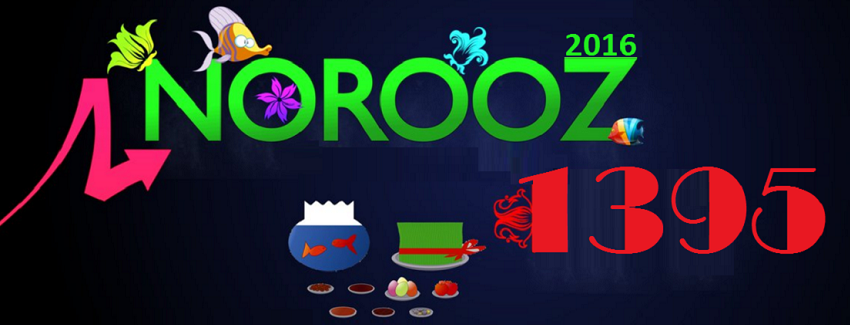
MBN Co. hope all the best in Iranin New Year 1395


Iranian New Year-Happy New Year 1395Iranian New Year-Happy New Year 1395


Information of news
  • Views: 788
  • Author: mbncom
  • Date:

Hyundai Motor to resume export of auto parts to Iran in April

Category: News

Hyundai Motor Group is gearing up for the reentry into the reopened Iranian market by exporting the semi-knock-down (SKD) products.

The automotive group said Tuesday that its two auto-making arms –Hyundai and Kia – will supply its complete knock-down (CKD) products to Iranian automobile companies, The Korea Herald reported.

Market watchers forecast the automaker’s export resumption will begin in April for the second quarter.

Before the Iranian sanctions, Hyundai Motor Group had sold around 20,000 units to Iran cars annually. The automaker stopped its exports of cars and auto parts in 2012 due to the sanctions.

The nation’s second largest conglomerate resumed selling cars in Iran last year, albeit on a small scale. However, the recent changes involving Iran’s modification of its nuclear centrifuges are expected to affect the market.


mbncompanybn co.com-mmbncompanybn co.com-m

Information of news
  • Views: 722
  • Author: mbncom
  • Date:

Foreign tourists spent billions in Iran last year

Category: News

A senior Iranian official says millions of foreign tourists spent nearly eight billion dollars in the country last year.

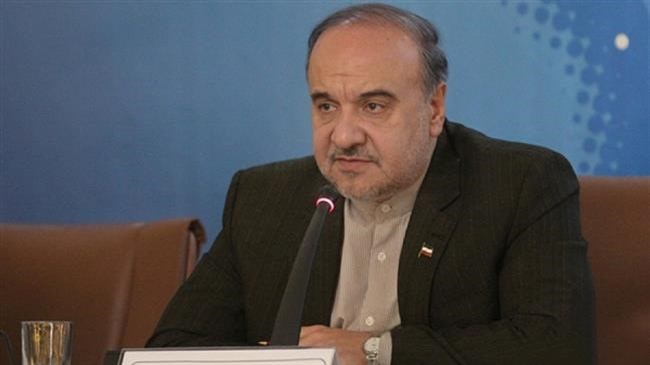
Masoud Soltanifar, head of Iran's Cultural Heritage, Handicrafts and Tourism Organization, told reporters on Monday that some five million foreign tourists visited Iran last year, spending at least 7.5 billion dollars.

“Currently, the country’s income from tourism industry accounts for half a percent of the global revenue,” Soltanifar said, adding that the government seeks to increase the figure to two percent by 2025, IRNA reported.

The senior official, who is also a deputy to the Iranian president, noted that Iran ranks 47th on the list of countries with highest tourist number, saying that given its tourist destinations, the country needs to attract some 20 million foreign visitors by 2025.

A New York Times report last month said tour operators in America have been speaking of a surge in bookings by many Americans who, undeterred by a State Department warning about travel risks to Iran, are keen on visiting the country.

Iranian officials told the Associated Press last fall that the country’s tourism sector aims to attract $30 billion by 2025.

Iran hosts some of the world’s oldest cultural monuments, including 19 UNESCO World Heritage Sites, and its varied terrain ranges from desert locales to ski resorts.

Iran tourism, however, reportedly suffers some deficiencies such as shortage of enough hotels and some financial restrictions for foreign money transfers.

Officials say hotel groups from Germany, Greece, South Korea and Singapore traveled to Iran last year for talks on hotel construction.

Europe’s largest hotel group Accor has already built two four-star hotels at Imam Khomeini International Airport outside the capital, Tehran.


Also, the UAE-based Rotana plans to open a five-star 600-room hotel in Tehran and another in the city of Mashhad, which attracts millions of pilgrims each year.


تجهیزات آزمایشگاهی-مدیران بهینه ساز نصیر-MBN Co-mbncompany-mbn-شرکت مدیران نصیر-تحقیقاتی-دلارتجهیزات آزمایشگاهی-مدیران بهینه ساز نصیر-MBN Co-mbncompany-mbn-شرکت مدیران نصیر-تحقیقاتی-دلار

Information of news
  • Views: 667
  • Author: mbncom
  • Date:

Iran, New Zealand FMs urge enhanced economic relations

Category: News

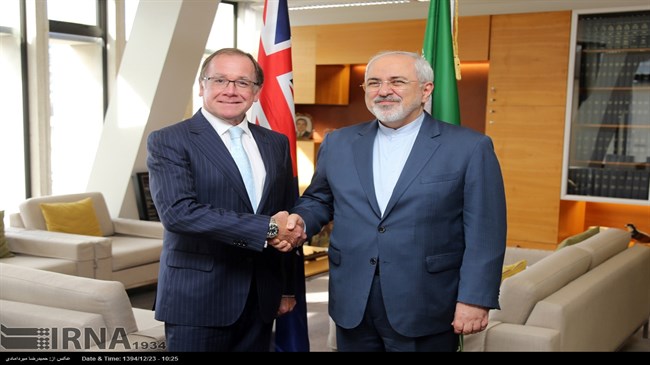
The foreign ministers of Iran and New Zealand on Sunday emphasized the importance of expanding bilateral relations, particularly in the economic sector.

Iranian Foreign Minister Mohammad Javad Zarif, who had arrived in New Zealand a day earlier on the fifth leg of his Asia-Pacific tour, held a meeting with his New Zealand counterpart Murray McCully in Wellington, Press TV reported.

Zarif said Tehran is ready to take major steps to expand ties with Wellington in all fields, while McCully, for his part, said Iran plays a leading role in finding ways to settle regional issues.

In another meeting with Iranian nationals residing in New Zealand on Sunday, Zarif called on the nationals to make use of opportunities created after the removal of sanctions against the country.

Zarif said it was actually the Iranian people who made the sanctions fail, adding, "Resistance and wisdom of the nation proved that no Iranian individual should be threatened."

On February 19, New Zealand lifted its sanctions against Iran following the implementation of Tehran's nuclear agreement with world powers, dubbed the Joint Comprehensive Plan of Action (JCPOA).

On January 16, Iran and the P5+1 group of countries – the United States, France, Britain, Russia and China plus Germany – started to implement the JCPOA which was reached between the two sides on July 14, 2015, following two-and-a-half years of intensive talks.

After the JCPOA went into effect, all nuclear-related sanctions imposed on Iran by the European Union, the Security Council and the US were lifted. Iran, in return, has put some limitations on its nuclear activities.


تجهیزات آزمایشگاهی-مدیران بهینه ساز نصیر-MBN Co-mbncompany.com-mbn-شرکت مدیران نصیر-تحقیقاتی-تجهیزات آزمایشگاهی-مدیران بهینه ساز نصیر-MBN Co-mbncompany.com-mbn-شرکت مدیران نصیر-تحقیقاتی-

Information of news
  • Views: 683
  • Author: mbncom
  • Date:

Official: Iran can export $10b of electricity

Category: News

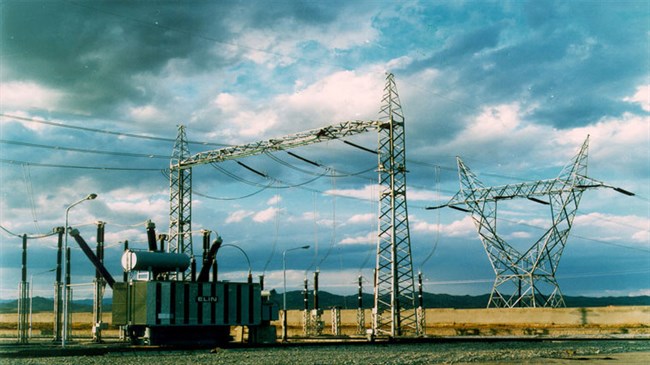
Iran has the capacity to export worth $10 billion electricity per year in short term, Chairman of Iran Electrical Industry Syndicate Alireza Kolahi said.

In the long run, the country can materialize the export of worth $30 billion electric power a year, he added, Shana news agency reported on Friday.

He called for an investment of 150 trillion rials ($5 billion), as well as paying a debt of 300 trillion rials ($10 billion) by the Ministry of Energy.

Energy Minister Hamid Chitchian said in September that the ministry owes 155 trillion rials ($5 billion) for electricity and 50 trillion rials ($1.7 billion) for hydroelectric power plants to the private sector and contract partners.


تجهیزات آزمایشگاهی-مدیران بهینه ساز نصیر-MBN Co-en.mbncompany.com-mbn-شرکت مدیران نصیر-تحقیقاتیتجهیزات آزمایشگاهی-مدیران بهینه ساز نصیر-MBN Co-en.mbncompany.com-mbn-شرکت مدیران نصیر-تحقیقاتی

Information of news
  • Views: 755
  • Author: mbncom
  • Date:

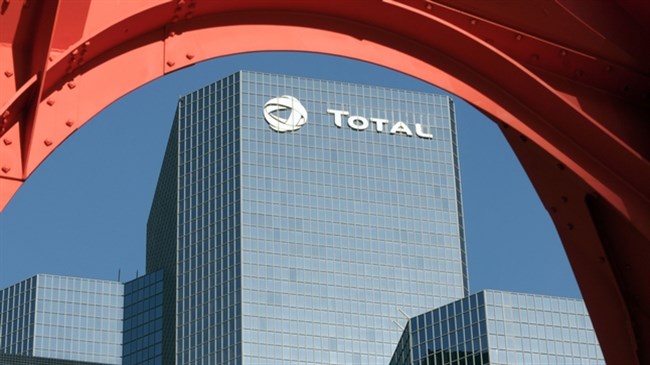
Iran, Total agree to build petrochemical plant

Category: News

Iran's National Petrochemical Company (NPC) and the French energy giant Total signed a memorandum of understanding (MoU) to build a petrochemical complex in Iran.

The MoU was inked during the visit of a high-profile delegation from Total to Iran last week, Shana reported.

Accordingly, Total has agreed to initiate appraisal studies for construction of the project in Iran.

The complex will include a steam-cracker unit that will be built in coastal regions based on the world's latest standards to be fed by ethane, naphtha, liquefied petroleum gas (LPG) and other liquid feedstock.

Once completed the complex will supply domestic and well as international markets with petrochemical products.

تجهیزات آزمایشگاهی-مدیران بهینه ساز نصیر-MBN Co-mbncompany.com-mbn-شرکت مدیران نصیر-تحقیقاتیتجهیزات آزمایشگاهی-مدیران بهینه ساز نصیر-MBN Co-mbncompany.com-mbn-شرکت مدیران نصیر-تحقیقاتی

Related Posts :

    Contact Us :

    Headquarter: Unit:15-No:12-Gandhi 19-Gandhi Blv-Tehran-Iran
    Postal Code: 1517874438
    Telephones: (+98-21)44237763 (+98-21)88668972 (+98-21)88663258
    Fax NO: (+98-21)89770683
    E-mail : Info@mbncompany.com
    Laboratory and instrumentation section: mbnasir.co@gmail.com
    Electrical section: mbnco@outlook.com
    After sales section: support@mbncompany.com

    Google Map :


    سئو | کاشت مو | صندلی پلاستیکی | بادکنک آرایی