MBN-Company
MBN-Company
MBN-Company
MBN-Company
MBN-Company
MBN-Company
MBN-Company
MBN-Company
Information of news
  • Views: 1124
  • Author: mbncom
  • Date:

Gold rally shows fatigue as iron ore jumps

Category: News

Commodities ended the week mixed as industrial metals, agricultural products and iron ore rose while gold’s 15 percent rally this year started to fade.

Iron ore, a key steelmaking ingredient, had its best weekly move since last April as steel mills restocked inventories, the Financial Times reported.

Benchmark 62 percent ore for immediate delivery into China rose $3.8, or eight percent, to $47.00 a ton, according to the Steel Index, a price reporting agency.

Aluminium rose three percent for the week to trade at $1,547 a ton on the London Metal Exchange, while zinc, a metal used to galvanize steel, was up 1.7 percent to $1,728 a ton.

Investors have pushed the zinc price up on bets that more mined supply will start to shut on the back of low prices.

Net long positions on the LME rose to their highest level since mid-June last week, according to Commerzbank.

Gold, however, ended the week down at $1,230 a troy ounce, a drop of 0.6 percent over the five trading days, as investors took profits from a rally that has driven the price up 15 percent this year.

The precious metal has benefited from haven demand among investors amid negative central bank interest rates.

While gold-backed exchange traded funds have seen strong inflows so far this year, Asian physical demand has failed to materialize.

“The floor price for gold has probably risen and the bear is back in hibernation but it is way too soon to be talking about a new bull market,” said Tom Kendall, a precious metals analyst at ICBC Standard Bank in London.

Oil had a volatile week as traders tussled with conflicting signs from some of the biggest producers in OPEC and Russia, the largest crude producer outside the group.

Saudi Arabia agreed a provisional production freeze with Russia a sign the near 70 percent price slide of the past 18 months could finally provoke a co-ordinated response.

Iran and Iraq both offered verbal support to co-ordinated action but stopped short of agreeing to freeze their own output.

Iran is raising production after the removal of western sanctions on its oil industry while Iraq’s output has risen over the past year as postwar investment in the sector starts to come to fruition.

Brent crude oil, the international benchmark, hit a two-week high of $34.46 a barrel on Thursday but fell four percent on Friday to finish roughly flat on the week near $33 a barrel.

Weather and logistical concerns also supported agricultural commodities, with wheat adding one percent on the week on warmer than normal weather in the US and corn and soyabeans firming on the back of shipment delays at Brazilian ports.


ْSource:Irandaily

 

تجهیزات آزمایشگاهی-مدیران بهینه ساز نصیر-MBN Co-mbncompany-mbn-شرکت مدیران نصیر-تحقیقاتی-دلارتجهیزات آزمایشگاهی-مدیران بهینه ساز نصیر-MBN Co-mbncompany-mbn-شرکت مدیران نصیر-تحقیقاتی-دلار

Information of news
  • Views: 813
  • Author: mbncom
  • Date:

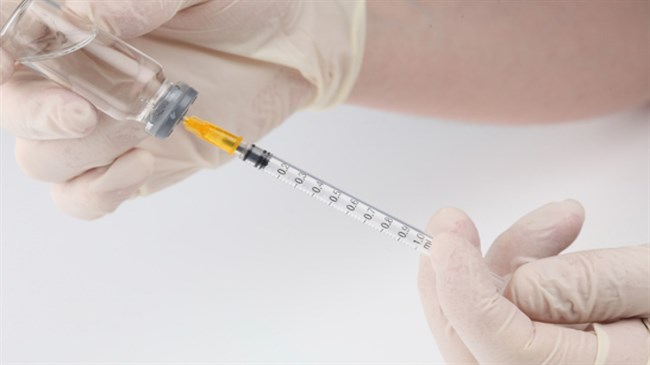
Scientists develop cancer vaccine

Category: News

A revolutionary new cancer treatment that remembers the disease and acts like a watchman to prevent it ever returning is being developed by scientists.

Researchers are engineering immune cells so that they not only boost the body’s own natural defenses to fight tumors, but stand guard for a lifetime — acting  effectively like a vaccine, the Telegraph reported.

Scientists say it is like having a living drug, which is constantly vigilant to the return of cancer and quickly removes it from the body.

A new study, presented at the American Association for the Advancement of Science annual meeting in Washington, has proven for the first time that engineered memory T-cells can persist in the body for at least 14 years.

Professor Chiara Bonini, a hematologist at San Raffaele Scientific Institute and Vita e Salute San Raffaele University in Milan, said: “T-cells are a living drug, and in particular they have the potential to persist in our body for our whole lives.

“Imagine when you are given a vaccine as a kid and you are protected against flu or whatever for all of your life. Why is that? It’s because when a T-cell encounters the antigen and gets activated, it kills the pathogen but also persists as a memory cell.

“Imagine translating this to cancer immunotherapy, to have memory T-cells that remember the cancer and are ready for when it comes back.”

In a trial at a Milan hospital, 10 patients who had bone marrow transplants were also given immune-boosting therapy which included the memory T-cells. They were found to be there 14 years later.

Immunotherapies, which harness the body’s own immune system, look set to replace cell-damaging chemotherapies. But one of the biggest challenges is to make these changes last long enough that the cancer cannot come back.

The Milan study proved for the first time scientists have shown that these cells can survive in the body well beyond the original cancer treatment.

Professor Bonini and colleagues are now working on a new wave of immune cells that can use sensor molecules known as antigen receptors to track down and wipe out a wide variety of types of cancer. When the cells are combined with the memory cells, it should produce a treatment which effectively vaccinates the body against cancer.

“When a T-cell encounters the antigen and gets activated, it kills the pathogen but also persists as a memory cell,” she said. “Some of these memory T-cells will persist through the entire life of the organism, and so if you encounter the same pathogen — say if the same strain of flu comes back 10 years later — then you have memory T cells that remember it from 10 years earlier and kill it quickly so you don’t even know you’re infected.”

Daniel Davis, professor of immunology at the University of Manchester, said it was an important advance in cancer treatment.

“The implication is that infusing genetically modified versions of these particular T-cells, the stem memory T-cells, could provide a long-lasting immune response against a person’s cancer,” he said.

“Immunotherapy has great potential to revolutionize cancer treatments and this study shows which type of T-cells might be especially useful to manipulate for long-lasting protection.

“This research area is hot — no question about that. Our detailed knowledge of T-cells is paying off here with important new ideas for tackling cancer.”

In a separate presentation at the AAAS, a team of US scientists showed that their T-cell immunotherapy treatment for leukemia had an unprecedented success rate of 94 percent in patients who had been given only months to live.

US scientists said they had achieved extraordinary results in early clinical trials.

Professor Stanley Riddell, of the Fred Hutchinson Cancer Research Center in Seattle, said balancing the different types of immune cells and then equipping them with cancer-sensing molecules had saved the lives of leukemia patients for whom all other treatments had failed.

His team treated 26 patients whose acute lymphoblastic leukemia was so advanced they had only two to five months to live. After 18 months, 24 of the patients were in complete remission.

“These are in patients that have failed everything,”  Riddell said. “This is extraordinary. This is unprecedented in medicine to be honest, to get response rates in this range from very advanced patients.”


Source:Irandaily


تجهیزات آزمایشگاهی-مدیران بهینه ساز نصیر-MBN Co-mbncompany-mbn-شرکت مدیران نصیر-تحقیقاتی-cancerتجهیزات آزمایشگاهی-مدیران بهینه ساز نصیر-MBN Co-mbncompany-mbn-شرکت مدیران نصیر-تحقیقاتی-cancer

Information of news
  • Views: 1007
  • Author: mbncom
  • Date:

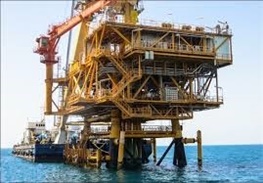
Iran eyes to boost petchem output

Category: News

Iran's National Petrochemical Company (NPC) seeks to increase the country's petrochemical production capacity to 130 million tons per year.

The Planning and Development Bureau of NPC announced that the company plans to raise petrochemical output of the country to 123 million tons per year by the end of the 6th Five-Year Development Plan (2021), Shana reported.

Besides, the country targets export of 93 mt/y of petrochemicals annually which will fetch it $61 billion by March 20, 2021.

The bureau also announced that 21 petrochemical projects have been introduced to Chinese credit line that is valued at $16.76 billion while another 19 projects are to be financed by the National Development Fund of Iran (NIFI) for $5.875 billion of finances.

Besides, 20 other projects, valued at $5.96 billion, are lined up to get National Development Fund finances and 9 projects, valued at $2.72 billion, will be financed by alternative resources.

Iran has defined dozens of petrochemical projects which will triple its annual production capacity from the current 60 mt/y to 180 mt/y.

Source:Irandaily


تجهیزات آزمایشگاهی-مدیران بهینه ساز نصیر-MBN Co-mbncompany-mbn-شرکت مدیران نصیر-تحقیقاتی-دلار

Related Posts :

    Contact Us :

    Headquarter: Unit:15-No:12-Gandhi 19-Gandhi Blv-Tehran-Iran
    Postal Code: 1517874438
    Telephones: (+98-21)44237763 (+98-21)88668972 (+98-21)88663258
    Fax NO: (+98-21)89770683
    E-mail : Info@mbncompany.com
    Laboratory and instrumentation section: mbnasir.co@gmail.com
    Electrical section: mbnco@outlook.com
    After sales section: support@mbncompany.com

    Google Map :


    سئو | کاشت مو | صندلی پلاستیکی | بادکنک آرایی