MBN-Company
MBN-Company
MBN-Company
MBN-Company
MBN-Company
MBN-Company
MBN-Company
MBN-Company
Information of news
  • Views: 702
  • Author: mbncom
  • Date:

Europe preparing for biggest Iran oil imports

Category: News

Europe is poised to receive the most Iranian crude in about five years this month in a sign that the Persian Gulf nation may be regaining its share of a market it had lost to sanctions.


Arrivals on supertankers will reach 622,581 barrels a day in January — the biggest flows for a single month since at least November 2011, according to ship-tracking and European Union data compiled by Bloomberg.

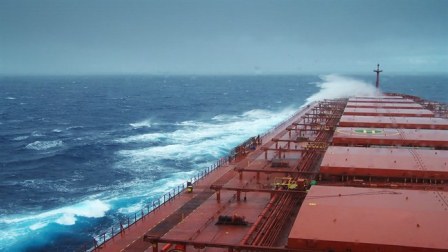
Supertankers from Iran's state-owned oil fleet are sailing to Europe for the first time since sanctions were eased last year, as one of the world's biggest crude shippers moves to step up deliveries.

The National Iranian Tanker Company (NITC) currently has two giant vessels called 'Snow' and 'Huge' steaming towards the storage and trading port of Rotterdam after loading at Kharg Island earlier this month, Financial Times reported.

While European refiners have been taking small cargoes of Iranian crude since the loosening of sanctions linked to the nuclear deal with Tehran last year. These are the first vessels operated by the NITC rather than independent shippers.

Each of the very large crude carriers (VLCCs) are capable of carrying more than two million barrels of oil.

Sirous Kianersi, NITC managing director, said last week that there had been a 'resolution' of the insurance and international certification issues that had delayed the Iranian oil shipper from sending its own vessels to European ports.

Before 2012, when coordinated Western sanctions on Iran's oil exports came into force, NITC was one of the world's largest tanker operators with about 65 vessels.

The two tankers are currently off Africa having rounded the Cape of Good Hope last week, according to satellite tanker tracking. The 'Huge' vessel is southwest of Liberia while 'Snow' is off Angola. Both are expected to reach Rotterdam early next month.

Nasrollah Sardashti, the commercial director for NITC, said last spring that his tankers could be sailing to Europe by June, but has had to wait an additional six months for shipments to restart.

"We are back in full force now to gain our markets share in tanker shipping," Sardashti told oil price agency Platts this week, which first reported the vessels' journey.

Shipments from Iran are closely watched, with Tehran adding more than one million barrels a day to international markets in 2016 after the nuclear deal, contributing to a glut that drove prices to a 13-year low below $30 a barrel.

Ship-tracking data show France to have been the biggest European buyer since sanctions were lifted, accounting for a third of all deliveries.

The OPEC members, of which Iran is the third-largest producer, agreed supply cuts late last year to try to reverse a two-year downturn in prices. But Iran is largely exempt from the cuts after it agreed an output target above where most industry observers pegged its output, partly because of its time under sanctions.

Iran's output growth is expected to slow in 2017, however, with more investment needed to add additional volume.

Brent crude, the international benchmark, has risen 20 percent since OPEC agreed to cut supply alongside other big producers like Russia, but the rally has stalled in 2017 in the face of signs from the US shale industry that prices are now high enough for them to boost output.
 

Iran-Import-export-Industry-Oil-Gas-Europe-Crude-Brent-Sanction-Supertanker


www.mbncompany.com


Information of news
  • Views: 687
  • Author: mbncom
  • Date:

Iran attains self-sufficiency in petchem

Category: News

Iran has achieved self-sufficiency in two strategic petrochemical products which are widely used in producing a variety of industrial foams and related materials.


Managing Director of Karoun Petrochemical Complex Alireza Sediqizadeh said that the complex was already producing methylene diphenyl diisocyanate (MDI) and toluene diisocyanate (TDI).

Sediqizadeh added that both products were so far only produced by global petrochemical giants such as Shell and BASF.

He underlined that Karoun Petrochemical Complex had enabled Iran to challenge both companies in international markets, adding that the country had become the first in the region to produce MDI and TDI.

He added that the product was widely used in the production of sponge and foam variations, specifically those used in the production of auto parts, insulation and furniture.

The official further said that the first phase of Karoun Complex development project envisaged the production of a similar volume of TDI. The product is used in manufacturing of polyurethane foams which are used in carpet, transpiration, and automobile industries.

The petrochemical industry is the largest source of Iran's foreign earnings after oil. Last year, Iranian companies exported about $12.8 billion of petrochemical products.

Iran has significantly expanded the range and volume of its petrochemical products over the past few years. The country is the second largest producer and exporter of petrochemicals in the Middle East after Saudi Arabia.

Iran currently produces 60 million tons of petrochemicals a year. This capacity will increase by 8.5 million tons by March 2017 when a number of new projects become operational.


Iran-Import-Export-Oil-Gas-Petrochemical-Trade-Industry-Economy-MBNIran-Import-Export-Oil-Gas-Petrochemical-Trade-Industry-Economy-MBN


www.mbncompany.com


Information of news
  • Views: 810
  • Author: mbncom
  • Date:

IRISL launching new container service to France

Category: News

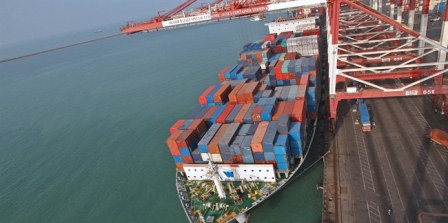
Islamic Republic of Iran Shipping Lines (IRISL) is planning to launch a new service connecting the French port of Le Havre with Iranian, Middle East and Asian ports.


Prior to the international embargo and sanctions, Iranian container ships called at Le Havre every week between 2006 and 2009 linking the main Iranian ports, seatrade-maritime.com reported.

The service will begin in February and will be operated by HDASCO Line (Hafez Darya Arya Shipping Company), also named HDS lines, which is a container carrier under the IRISL Group.

The new service times are: 19 days between Le Havre and Bandar Abbas for example. It will call at the following ports: Bandar Abbas, Asaluyeh, Bandar Imam Khomeini, Busher and Khorramshahr in Iran and the port of Um Qasr in Iraq.

The service will also call at the ports of Malta, Khor Fakkam, Jebel Ali, Xingang, Busan, Qingdao, Shanghai, Ningbo, Yantian and Port Kelang.

"This is a great opportunity offered to the French importers and exporters who wish to develop trade with Iran," said Jean-Marc Peltier, liner department manager.

"This country, which has around 80 million inhabitants, is a high-potential market, particularly in the chemistry, agro-food (flour, milk) cosmetics, electrical appliances, retail and of course automotive trade as well as oil and gas industry.

"While world trade with traditional Asian partners is slowing down, promising perspectives with the Iranian market are most welcome."

Le Havre calls are every Tuesday at the Terminal de France and handled by the Générale de Manutention Portuaire.


Iran-Import-Export-Trade-Port-French-Sanctions-Asia-Automotive-World-Embargo-MBN-equipment


www.mbncompany.com


Information of news
  • Views: 784
  • Author: mbncom
  • Date:

Iran, Italy agree to share technological expertise

Category: News

Iran and Italy have agreed to expand cooperation in the transfer of technology, announced a senior industrial official.


Managing Director of Iran's Industry Property Office Mehdi Mirsalehi told reporters on Sunday that Iran has launched a joint project with Italy and the United Nations Industrial Development Organization (UNIDO) to this end.


He said, "Two representatives from Italy's Ministry of Industry attended the joint Iran-UNIDO meetings."

Misrsalehi underlined that the project aims to support small- and medium-sized industries of Iran in the form of technology transfer from Italy to Iran.

He noted that the project can lead to boosting trade between the two countries' small- and medium-sized enterprises and cooperation in international markets.

In remarks in early November, Deputy Head of the Commercial Development Section at the Italian Embassy in Iran Tony Giardini said Italians are ready to invest in Iran's petrochemical industry.

Iranian and Italian oil and gas industries share firm bonds as is testified by the designing of two refineries in Italy for using Iranian crude oil and they are the customers of National Iranian Oil Company (NIOC), he added.

He said since the Joint Comprehensive Plan of Action (JCPOA) has been implemented, dozens of Italian economic activists have visited Iran in groups to study Iranian oil and gas industries and the big market available for it. He added that stronger cooperation is expected to come about between major Iranian and Italian companies.

Also referring to investments by Italian companies in Iranian petrochemical industries, the diplomat said certain Italian investors had immediately after the enforcement of the JCPOA thought that they can sell their products in Iran but gradually they realized that Iranian economy is thirsty for investment.

"Iranian petrochemical industry, as a vanguard in economic growth, is in pressing need of investment and development."

Giardini said in addition to investment in Iranian petrochemical industry, certain Italian companies are willing to invest in Iranian small- and medium-sized downstream oil and gas industries, expanding cooperation with the Iranian party in the field.

He added that Italy has the technology in the small- and medium-sized industries and Italian companies want to enter talks with Iranians for sales of equipment as well as investment in the industry.

Giardini said Italian companies are also capable of producing and installing industrial machinery and are willing to renovate certain Iranian oil industries and put industry machinery at the disposal of the Iranian party under special condition.

After Germany, Italy is Iran's second major trade partner and cooperation between the two countries in the petrochemical industry will not be a hard accessible goal, said the diplomat, adding that Italian companies are able to help Iran with machinery and joint production.


Iran-Italy-Import-Export-Technology-Gas-Oil-Industry-Cooperation-Trade-Equipment-MBN


www.mbncompany.com


Information of news
  • Views: 715
  • Author: mbncom
  • Date:

California utilities want $1b to promote electric cars

Category: News

California’s utilities in the US are asking for more than $1 billion to spend on electric car-charging stations that will help the state meet its goal of getting 1.5 million zero-emissions vehicles on the road by 2025.


Edison International’s Southern California Edison utility asked state regulators for permission to collect $570 million from customers over five years to pay for, among other things, equipment installations that’ll support about 1,800 charging stations for electric trucks. PG&E Corp. requested $253 million for efforts including charging systems for electric buses and delivery trucks. Sempra Energy’s San Diego Gas and Electric utility said it was applying for $246 million for similar programs, according to Bloomberg.


California is moving forward with plans to cut greenhouse-gas emissions and fight global warming, despite President Donald Trump’s promises to kill similar efforts on the federal level. On Friday, about an hour after Trump took office, the state’s air regulators released a plan to cut emissions to 40 percent below 1990 levels by 2030.

The key aspect of this is all about greenhouse gas reduction,” Southern California Edison President Ron Nichols said of the utility’s request for funding. "We’ve got to start looking beyond the electric power supply."

The utility industry is looking to electric car-charging as one of the few areas of growth as the increased use of rooftop solar panels and energy-efficient appliances weakens power sales.

Last month, regulators approved a scaled-down version of PG&E’s plan to invest in charging stations. Edison was cleared last year to spend $22 million to support as many as 1,500 car-charging ports in its service area.


Iran-Import-Export-Oil-Gas-Equipment-Trade-Economy-MBN-Energy-California-US-International-Electic-Power


www.mbncompany.com


Information of news
  • Views: 702
  • Author: mbncom
  • Date:

Russia bags multibillion-dollar Iran power projects

Category: News

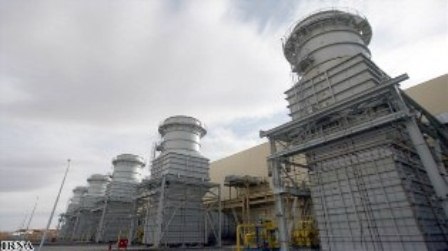
Russian companies are about to build a power plant and enhance the power generation capacity of another plant in Iran in a contract worth several billion dollars, said an Iranian deputy energy minister.


Alireza Daemi said on Wednesday that based on an agreement signed by the two sides, the Russians will improve the efficiency at Ramin Power Plant in Khuzestan Province to 50-55 percent from the current 36 percent.


Another Russian company will build a 1,400-MW power plant in Bandar Abbas, Hormuzgan Province, he added.

"The two contracts between Iran and Russia are worth several billion dollars and the details will be announced in the future," Daemi said.

According Mehr, Russia's Inter RAO will boost the efficiency of the Ramin plant, a 1,800-megawatt station built by the Russians during the era of the former Soviet Union.

A subsidiary of Russian state company Rostec, will carry out the construction of the power plant in Bandar Abbas.

The Kommersant daily has put the value of the new project at $1.1 billion which will come from a Russian credit line. According to the newspaper, the plant will have four 350-megawatt generators and a seawater desalination plant with a capacity of 200,000 cubic meters per day.


Iran- Import-Export-Trade-Russia-Oil-Gas-Power-Plant-Seawater-Equipment-MBN


www.mbncompany.com


Information of news
  • Views: 615
  • Author: mbncom
  • Date:

Minister confident oil prices will rise

Category: News

Oil Minister Bijan Namdar Zanganeh said that he was confident the OPEC and non-OPEC members would remain committed to the output cut deal agreed in November, noting that oil prices would rise further as a result.


"I am certain that the OPEC and non-OPEC members will cut oil output as committed. This will remove the oil surplus from the market, balance the demand and supply, and lift prices".

The Organization of the Petroleum Exporting Countries (OPEC) agreed on November 30, 2016 to cut output by 1.2 mbd to 32.5 mbd for the first six months of 2017, in addition to 558,000 bpd of cuts agreed to by independent producers such as Russia, Oman and Mexico.

An official of the International Energy Agency (IEA) said on Sunday that global oil prices will witness 'much more volatility' in 2017 even though markets may rebalance in the first half of the year if output cuts pledged by producers are implemented.

"I would expect that we will see a rebalancing of the markets within the first half of this year," said Fatih Birol, executive director of IEA, the Paris-based global energy watchdog.

"But what I want to say (is) that we are entering a period of much more volatility in the market ... the name of the game is volatility," he told Reuters Television in Abu Dhabi.

Oil prices fell on Friday and ended the week three percent lower on lingering doubts over the extent of OPEC cuts, with sentiment worsened by concerns over the economic health of the world's second-largest oil consumer, China, after it reported the steepest falls in overall exports since 2009.

Birol said although the OPEC agreement could signal higher oil prices, it would also encourage more production from the United States and elsewhere. Higher prices could also weaken global demand for oil, he added.

"I expect the US shale oil will go back to increasing production this year," Birol said.

He added that a recent trend of declining Chinese oil production due to low prices could be reversed if the market strengthened.

Data from the US Energy Information Administration showed crude production rose notably last week, particularly in 48 southern states. Overall production was 8.95 mbd last week — the most since April of last year.

OPEC and the independent producers are cutting supplies to remove a global glut and prop up prices, which at around $56 a barrel are half their level of mid-2014, hurting the revenue of exporting nations.

Birol said his main concern now was lack of investment in new oil supplies after low prices over the past two years forced the shutdown of many projects across the world.

"This year, if there are no major investments coming we may well see in a few years from now significant supply-demand gap with serious implications on the market."


Iran-Import-Export-Oil-minister-Gas-Investment-Energy-OPEC-MBN


www.mbncompany.com


Information of news
  • Views: 830
  • Author: mbncom
  • Date:

Nine-month steel output nears 14m tons

Category: News

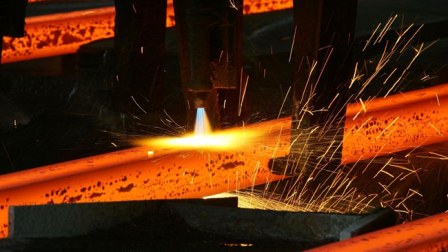
Iranian steelmakers produced 13.83 million tons of steel ingots in the nine months to December 20, 2016 which indicates a growth of 10 percent compared to the figure for the same period in 2015 which was 12.59 million tons.


According to Iranian Mines and Mining Industries Development and Renovation Organization (IMIDRO), the leading Iranian steel manufacturers were Mobarakeh Steel Complex, Saba Steel Company, Hormuzgan Steel Complex with total output of 5.51 million tons. The outputs of Khouzestan Steel Complex and Esfahan Steel Company during the period recorded 2.68 million tons and 1.71 million tons respectively.

The organization further reported that 13.44 million tons of steel products, including steel coil, beam, wide plate, round bar, hot rolled steel, pipe and galvanized steel, were produced in the nine-month period.

Iranian companies exported 1.52 million tons of steel products as well as 2.56 million tons of steel ingots during the period, the report added.

According to recent data released by World Steel Association (WSA), Iran produced 16.435 million tons of crude steel in the first 11 months of 2016, showing a rise of 10.97 percent against the figure for the same period of 2015, which was 14.81 million tons.

In November, Iran's estimated crude steel production was announced at 1.585 million tons showing a decline of 3.35 percent compared to the against the figure for October, which was 1.640 million tons.


Iran-Minister-Oil-Steel-Crude-Produce-Import-Export-Trade-MBN-Economy


www.mbncompany.com


Information of news
  • Views: 1416
  • Author: mbncom
  • Date:

Half of world's wealth, in pockets of just eight men

Category: News

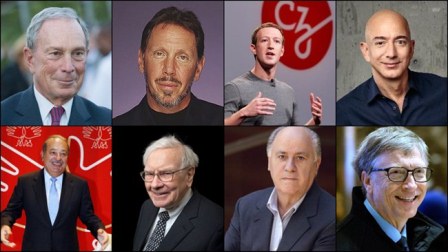
Just eight men own the same wealth as the 3.6 billion people who make up the poorest half of humanity, according to a major new report by an international confederation of 19 organizations working in more than 90 countries.


Oxfam International’s report, ‘An economy for the 99 percent’, which was released on January16, shows that the gap between rich and poor is “far greater than had been feared.”

The richest are accumulating wealth at such an astonishing rate that the world could see its first trillionaire in just 25 years. To put this figure in perspective — you would need to spend $1 million every day for 2,738 years to spend one trillion dollars.”

The report details how big business and the super-rich are fueling the inequality crisis by dodging taxes, driving down wages and using their power to influence politics, IPS reported.

New and better data on the distribution of global wealth — particularly in India and China — indicates that the poorest half of the world has less wealth than had been previously thought.”

Had this new data been available last year, the report adds, it would have shown that nine billionaires owned the same wealth as the poorest half of the planet, and not 62, as Oxfam calculated at the time.


Obscene!


On this, Winnie Byanyima, executive director of Oxfam International, said: “It is obscene for so much wealth to be held in the hands of so few when one in 10 people survive on less than $2 a day. Inequality is trapping hundreds of millions in poverty; it is fracturing our societies and undermining democracy.

Across the world, people are being left behind. Their wages are stagnating yet corporate bosses take home million dollar bonuses; their health and education services are cut while corporations and the super-rich dodge their taxes; their voices are ignored as governments sing to the tune of big business and a wealthy elite.”

Oxfam’s report shows “how our broken economies are funneling wealth to a rich elite at the expense of the poorest in society, the majority of who are women.”


Tax dodging


Oxfam's report also tackles the critical issue of tax dodging.

Corporate tax dodging, it informs, costs poor countries at least $100 billion every year.

This is enough money to provide an education for the 124 million children who aren’t in school and fund healthcare interventions that could prevent the deaths of at least six million children every year.”

The report outlines how the super-rich use a network of tax havens to avoid paying their fair share of tax and an army of wealth managers to secure returns on their investments that would not be available to ordinary savers.

Contrary to popular belief, many of the super-rich are not ‘self-made’. Oxfam analysis shows over half the world’s billionaires either inherited their wealth or accumulated it through industries, which are prone to corruption and cronyism.

.It also demonstrates how big business and the super-rich use their money and connections to ensure government policy works for them


Iran-Import-Export-MBN-World-Economy-Wealth-International-Organization


www.mbncompany.com


Information of news
  • Views: 701
  • Author: mbncom
  • Date:

WB forecasts 5.2 Percent GDP growth for Iran in 2017

Category: News

Recent World Bank report titled 'Global Economic Prospects', predicted gross domestic product growth for Iran at 5.2 percent in 2017.


The report put Iran's GDP growth at 4.6 percent in 2016, while forecasting 4.8 percent and 4.5 percent growth in 2018 and 2019, respectively.

Growth in Iran depends on successful negotiations of deals to bring in foreign investment to the country, but the forecast also reflects the government's intention to continue to expand oil production.


Yet GDP growth in Iran is estimated to have strengthened considerably last year, bolstered by large gains in oil production as well as automotive, trade and transport sectors, the report added.

An International Monetary Fund (IMF) mission visited Tehran from December 3 to 14, 2016 to discuss the annual review of the Iranian economy.

At the end of the visit, the mission made a statement about its preliminary findings.

"Higher oil production and exports, after the implementation of the Joint Comprehensive Plan of Action (JCPOA) should allow real GDP growth to rebound to 6.6 percent in 2016-17," the report added.

"Growth is projected to ease to 3½ percent in 2017-18 as oil production normalizes and non-oil sector growth remains modest," it added.

The report added the Central Bank of Iran needs to complete the unification of the exchange rate, which is behind schedule.

Tight banking sector supervision and regulation will help reduce high levels of nonperforming loans and increase low bank capital.

Global economic growth is forecast to accelerate moderately to 2.7 percent in 2017 after a post-crisis low last year as obstacles to activity recede among emerging market and developing economy commodity exporters, while domestic demand remains solid among emerging and developing commodity importers.

The outlook is clouded by uncertainty about policy direction in major economies. A protracted period of uncertainty could prolong the slow growth in investment that is holding back low, middle and high income countries.

"After years of disappointing global growth, we are encouraged to see stronger economic prospects on the horizon," World Bank Group President Jim Yong Kim said.

"Now is the time to take advantage of this momentum and increase investments in infrastructure and people. This is vital to accelerating the sustainable and inclusive economic growth required to end extreme poverty."


Iran-Import-Export-Domestic-Economic-World-Bank-International-GPD-MBN


www.mbncompany.com


Related Posts :

    Contact Us :

    Headquarter: Unit:15-No:12-Gandhi 19-Gandhi Blv-Tehran-Iran
    Postal Code: 1517874438
    Telephones: (+98-21)44237763 (+98-21)88668972 (+98-21)88663258
    Fax NO: (+98-21)89770683
    E-mail : Info@mbncompany.com
    Laboratory and instrumentation section: mbnasir.co@gmail.com
    Electrical section: mbnco@outlook.com
    After sales section: support@mbncompany.com

    Google Map :


    سئو | کاشت مو | صندلی پلاستیکی | بادکنک آرایی