Europe is poised to receive the most Iranian crude in about five years this month in a sign that the Persian Gulf nation may be regaining its share of a market it had lost to sanctions.
Arrivals on supertankers will reach 622,581 barrels a day in January — the biggest flows for a single month since at least November 2011, according to ship-tracking and European Union data compiled by Bloomberg.
Supertankers from Iran's state-owned oil fleet are sailing to Europe for the first time since sanctions were eased last year, as one of the world's biggest crude shippers moves to step up deliveries.
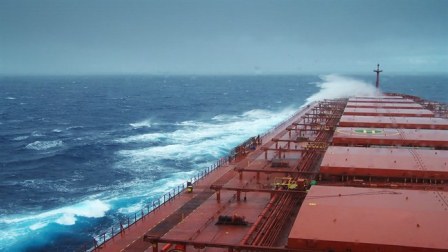
The National Iranian Tanker Company (NITC) currently has two giant vessels called 'Snow' and 'Huge' steaming towards the storage and trading port of Rotterdam after loading at Kharg Island earlier this month, Financial Times reported.
While European refiners have been taking small cargoes of Iranian crude since the loosening of sanctions linked to the nuclear deal with Tehran last year. These are the first vessels operated by the NITC rather than independent shippers.
Each of the very large crude carriers (VLCCs) are capable of carrying more than two million barrels of oil.
Sirous Kianersi, NITC managing director, said last week that there had been a 'resolution' of the insurance and international certification issues that had delayed the Iranian oil shipper from sending its own vessels to European ports.
Before 2012, when coordinated Western sanctions on Iran's oil exports came into force, NITC was one of the world's largest tanker operators with about 65 vessels.
The two tankers are currently off Africa having rounded the Cape of Good Hope last week, according to satellite tanker tracking. The 'Huge' vessel is southwest of Liberia while 'Snow' is off Angola. Both are expected to reach Rotterdam early next month.
Nasrollah Sardashti, the commercial director for NITC, said last spring that his tankers could be sailing to Europe by June, but has had to wait an additional six months for shipments to restart.
"We are back in full force now to gain our markets share in tanker shipping," Sardashti told oil price agency Platts this week, which first reported the vessels' journey.
Shipments from Iran are closely watched, with Tehran adding more than one million barrels a day to international markets in 2016 after the nuclear deal, contributing to a glut that drove prices to a 13-year low below $30 a barrel.
Ship-tracking data show France to have been the biggest European buyer since sanctions were lifted, accounting for a third of all deliveries.
The OPEC members, of which Iran is the third-largest producer, agreed supply cuts late last year to try to reverse a two-year downturn in prices. But Iran is largely exempt from the cuts after it agreed an output target above where most industry observers pegged its output, partly because of its time under sanctions.
Iran's output growth is expected to slow in 2017, however, with more investment needed to add additional volume.
Brent crude, the international benchmark, has risen 20 percent since OPEC agreed to cut supply alongside other big producers like Russia, but the rally has stalled in 2017 in the face of signs from the US shale industry that prices are now high enough for them to boost output.