MBN-Company
MBN-Company
MBN-Company
MBN-Company
MBN-Company
MBN-Company
MBN-Company
MBN-Company
Information of news
  • Views: 1258
  • Author: mbncom
  • Date:

Iran, China to build industrial park

Category: News

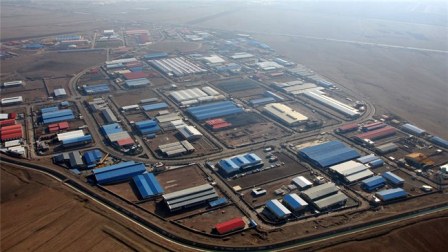
Iran and China will jointly build an industrial park in Iran's southern port city of Jask in Hormuzgan Province which is considered as important for expanding energy ties between the two countries.


Provincial Governor General Jasem Jaderi said that the industrial park will be built in an area of 2,000 hectares with the participation of Iran's private sector.

The industrial park, which is to be established at a cost of nearly $31 million, will be Iran's first joint industrial park, he pointed out.

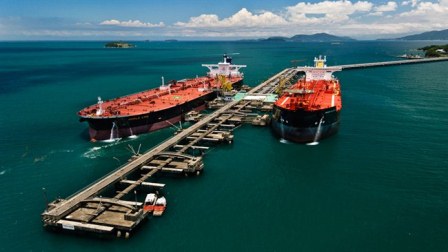
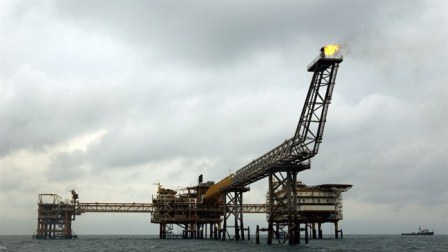
Jask is a vital port for Iran's oil industry since 20 million barrels of crude oil are stored there. Iranian administration plans to turn Jask into an economic and industrial center and the country's second hub for exporting crude oil.

In 2015, Iranian President Hassan Rouhani said an oil terminal export is being constructed in Jask Port, which will become a major industrial and economic center in Hormuzgan province in the near future, adding that the port should turn into Iran's second hub for exporting oil.

Tehran and Beijing have developed a broad and deep partnership centered on China's energy needs and Iran's abundant resources as well as significant non-energy economic ties, arms sales and defense cooperation.

Tehran plays an important role in China's One Belt One Road initiative, and is to become an important railway connection and remain an oil supplier to China.


Iran-China-Industrial-Park-Oil-Gas-Partnership-Import-Export-Trade-Equipment-MBN-


www.mbncompany.com


Information of news
  • Views: 733
  • Author: mbncom
  • Date:

Spanish investment leads in FDI inflows into Iran

Category: News

Spanish businessmen ranked the first in the list of main foreign investors in Iran during the period from December 2015 to December 2016.


Spanish investments amounted to $3.2 billion in the reported period. The runner-up was Germany with investments standing at $2.9 billion.

However, Spanish investments were directed to the implementation of one project, while German investors allocated funds for the implementation of 17 projects.

The total foreign direct investments (FDI) in Iran's economy stood at $11.8 billion within the framework of 113 projects.


Iran's Oil Minister Bijan Namdar Zanganeh earlier said that the largest amount of investment, to the tune of some $200 billion, is required in the oil industry which includes $130 billion in the upstream segment.

Iranian authorities have adopted a comprehensive strategy encompassing market-based reforms as reflected in the government's 20-Year Vision document and the sixth five-year development plan.

Real GDP growth is projected to reach 4.8 percent in 2017 due to the lifting of the sanctions and a more business-oriented environment, according to the World Bank.

Iran has struck a series of deals with foreign energy groups in recent weeks, including Total and Shell, and plans to award more contracts early in 2017 as Tehran's efforts to attract much-needed foreign investment gather pace.

Iran has the world's second-largest gas reserves and fourth-largest oil reserves, according to the US Energy Information Administration, but urgently needs outside capital and expertise to modernize its aging infrastructure.

The country aims to attract $200 billion in oil and gas investment over the next five years, after the 2015 agreement with the world's major powers to modify its nuclear program which led to the removal of international sanctions.

Total of France became the first Western oil major to make a renewed commitment when it signed a deal in November to develop the next phase of Iran's giant South Pars Gas Field together with China National Petroleum Corp.

UK-listed Shell followed earlier last month with a more tentative agreement for studies of the Azadegan and Yadavaran oilfields in southwest Iran as well as Kish gas fields in Persian Gulf.

Other companies to have struck agreements with Tehran last year include Gazprom, Rosneft and Lukoil of Russia, ONGC of India and DNO of Norway.

Iran has said dozens more applied to take part in a licensing round for up to 50 exploration and production blocs due to take place early in 2017.

Jason Rosychuk, a Dubai-based oil and gas specialist at Pinsent Masons, the law firm, said that, after a slow start, Tehran's investment drive was gaining momentum.

"The level of interest is high," he said. "All companies are taking a look."


Mines, industry sector


Iran's Minister of Industry, Mine and Trade Mohammadreza Nematzadeh said the incumbent government has so far attracted over $8.5 billion in foreign investment only in the mines and industries sector.

He highlighted that the investment was channeled for implementing 170 industrial and mineral projects of which 80 have come on stream.

"The implementation of JCPOA facilitated attraction of foreign investment over the past year," stressed Nematzadeh recalling that over $5.5 billion of the overall investment were made following the Joint Comprehensive Plan of Action (JCPOA).

The minister further pointed to the need to publicize investment capacities in Iran's mines and industries sector abroad since "foreign investors are not familiar with the country's potentials due a hiatus in ties as well as adverse propaganda".
 

Iran-Import-Export-Trade-Oil-Gas-Mine-Minister-Industry-Investment-MBN-Germany-


www.mbncompany.com


Information of news
  • Views: 681
  • Author: mbncom
  • Date:

Risks threatening global growth

Category: News

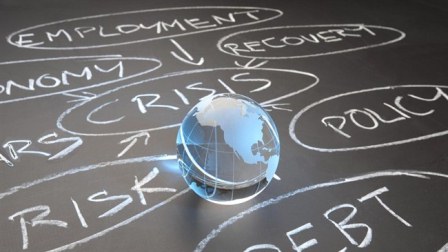
By Martin Wolf* What is going to happen to the world economy this year? Much the most plausible answer is that it is going to grow. As I argued in a column published at this time last year, the most astonishing fact about the world economy is that it has grown in every year since the early 1950s.

In 2017, it is virtually certain to grow again, possibly faster than in 2016, as (head of fulcrum Asset Management) Gavyn Davies has argued persuasively. So what might go wrong?


The presumption of economic growth is arguably the most important feature of the modern world. But consistent growth is a relatively recent phenomenon. Global output shrank in a fifth of all years between 1900 and 1947. One of the policy achievements since the second world war has been to make growth more stable, FT reported.


This is partly because the world has avoided blunders on the scale of the two world wars and the Great Depression. It is also, as the American economist Hyman Minsky argued, because of active management of the monetary system, greater willingness to run fiscal deficits during recessions and the increased size of government spending relative to economic output.

Behind the tendency towards economic growth lie two powerful forces: innovation at the frontier of the world economy, particularly in the US, and catch-up by laggard economies. The two are linked: The more the frontier economies innovate, the greater the room for catch-up. Take the most potent example of the past 40 years, China. On the possibly exaggerated official numbers, gross domestic product per head rose 23-fold between 1978 and 2015. Yet so poor had China been at the beginning of this colossal expansion that its average GDP per head was only a quarter of US levels in 2015. Indeed, it was only half that of Portugal. Catch-up growth remains possible for China. India has still greater room: its GDP per head was about a 10th of US levels in 2015.

The overwhelming probability is that the world economy will grow. Moreover, it is highly likely that it will grow by more than three percent (measured at purchasing power parity). It has grown by less than that very rarely since the early 1950s. Indeed, it has grown by less than two percent in only four years since then — 1975, 1981, 1982 and 2009. The first three were the result of oil price shocks, triggered by wars in the Middle East, and Federal Reserve disinflation. The last was the Great Recession after 2008’s financial crisis.

This is also consistent with the pattern since 1900. Three sorts of shocks seem to destabilize the world economy: Significant wars; inflation shocks; and financial crises. When asking what might create large downside risks for global economic growth, one has to assess tail risks of this nature. Many fall into the category of known unknowns.

For some years, analysts have convinced themselves that quantitative easing is sure to end up in hyperinflation. They are wrong. But a huge fiscal boost in the US, combined with pressure on the Fed not to tighten monetary policy, might generate inflation in the medium term and a disinflationary shock later still. But such a result of Trumponomics will not occur in 2017.

If we consider the possibility of globally significant financial crises, two possibilities stand out: The break-up of the eurozone and a crisis in China. Neither is inconceivable. Yet neither seems likely. The will to sustain the eurozone remains substantial. The Chinese government possesses the levers it needs to prevent a true financial meltdown. The risks in the eurozone and China are unquestionably real, but also small.


* Martin Wolf is chief economics commentator at the Financial Times, London.


Iran-Import-Export-MBN-Global-Financial-Economy


www.mbncompany.com


Information of news
  • Views: 781
  • Author: mbncom
  • Date:

Iran no longer wants Sukhoi planes

Category: News

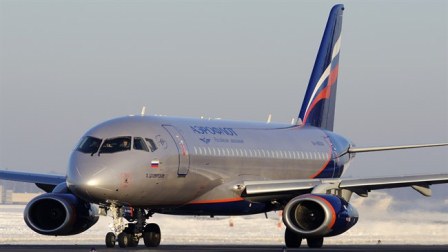
Iran announced that it is no longer interested in purchasing Russia's Sukhoi Superjet 100 passenger aircraft, due to technical problems.


Purchase of the aircraft is no longer on the agenda, said Secretary of Association of Iranian Airlines Maqsoud Asadi Samani.

He further said that the plane is not well-known to Iranian airline companies, adding that the superjet has a technical problem with its tail.

Asadi Samani added that only three Iranian private airline companies have been in talks with Russian aircraft manufacturer on leasing the plane.

He said that the companies may even withdraw from renting the aircraft if the technical problem proves to be serious.

Earlier Asadi Samani said that Iranian airlines are interested in purchasing the superjet, which was introduced to Iranian airliners on December 13, 2016.

Meanwhile, Russia's Deputy Prime Minister Dmitry Rogozin had said Moscow may deliver a big batch of Sukhoi Superjet 100 passenger aircraft to Iran by 2020.

Sukhoi Superjet 100 is a 75-seat and 95-seat passenger plane being produced since 2000 and was commissioned for flights services by airlines from 2008.

A total of 64 Sukhoi Superjet 100 aircraft are currently in service, according to Sukhoi Civil Aircraft (SCA) data. The largest aircraft operators are Aeroflot (26 airplanes), Mexico's Interjet (19) and Gazpromavia (10 jets).


Iran-Import-Export-Trade-Minister-Airline-Aircraft-Sukhoi-MBN


www.mbncompany.com


Information of news
  • Views: 690
  • Author: mbncom
  • Date:

Iran reports higher oil sales to BP, Shell

Category: News

Iran has increased its sales of crude oil as well as gas condensates to global energy giants Shell and BP.


Director for International Affairs of the National Iranian Oil Company (NIOC) Mohsen Qamsari was saying that Shell and BP had purchased two to three consignments of oil from Iran over the past few months.

Each consignment, Qamsari added, comprises around one million barrels of oil. The official added that the sales to the two companies had been conduct through spot contracts.

Qamsari further underlined that Iran expected to increase oil sales to Shell and BP in the near future through more spot contracts.

He added that talks were also underway with both companies on long-term sales deals.

Qamsari said that Iran's average 2016 oil exports stood at around two million barrels per day.

Iranian media reported that the country's current crude oil production was close to four million barrels per day — almost the same as before sanctions were imposed against the country in 2011.

Iran exports the bulk of its crude oil to Asian consumers including India, China, South Korea and Japan.

Figures released earlier this week showed that Iran's oil exports to Asian clients had doubled in November compared to the figure for the same period last year.

A report by Reuters to the same effect showed that the four major Asian consumers of Iran's oil had imported a total of 1.94 million barrels per day of oil from the country in November. The figure, the report added, was 117 percent higher than the amount for last year.


Iran-Oil-Gas-Crude-Import-Export-Equipment-MBN-BP-Shell

www.mbncompany.com


Information of news
  • Views: 778
  • Author: mbncom
  • Date:

EEU upholds proposal to start free trade zone talks with Iran

Category: News

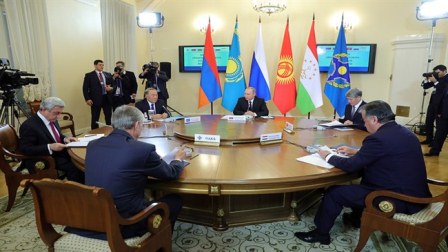
Presidents of Russia, Kazakhstan, Kyrgyzstan and Armenia have approved proposals on the need to start talks on creation of the free trade zone between the Eurasian Economic Union (EEU) and Iran, Egypt, India and Singapore, said the chairman of the Board of Eurasian Economic Commission.


Serzh Sargsyan told reporters, "The presidents of four countries have approved the proposal that it is necessary to launch negotiating process (on creation of free trade zone) with Iran, Egypt, India and Singapore. That means that already on the platform of the EuroAsian commission we will start an intensive process of preparation of signing agreements with those countries."

He added that the presidents had instructed their governments to create working groups that will take part in the negotiations as well as to appoint officials responsible for the talks.


Sargsyan recalled that currently talks on creation of free trade zones with Serbia are ongoing. Also talks on trade and economic relations have been launched with China, he added.

The head of the board said that the meeting of Supreme Eurasian Economic Council the Presidents of EEU discussed 25 issues.

The first group of issues concerned foreign economic activities of the Eurasian Union while the second related to the activities within the EEU.

In particular, he said the leaders adopted a declaration on formation of (digital agenda) of the EEU. "They also adopted documents on establishing a common electricity market within the Union."

According to Sargsyan, this will liberalize electricity sales between the countries. The parties also approved documents for liberalization of services and on establishment of transport market, he pointed out.

The leaders of the four countries have signed the new Customs Code of the Eurasian Economic Union, although Sargsyan said earlier that Kyrgyzstan had not signed the document.

In conclusion, he said that the presidents of the four countries have ordered the presentation of all the documents they signed at the meeting to Belarus President Alexander Lukashenko who was absent at the meeting.


Iran-Import-Export-Trade-Economy-EEU-Electricity-Russia


www.mbncompany.com


Information of news
  • Views: 632
  • Author: mbncom
  • Date:

EIA: Iran's nine-month oil output up almost 19%

Category: News

Iran's oil production increased by 18.8 percent to 3.92 million barrels per day (mbd) during January-September, the US Energy Information Agency reported.


According to the report, Iran's oil output, including gas condensates, stood at 4.170 mbd in September — about 20,000 bpd more than November and 870,000 bpd more than September 2015.


Iran's September oil production was the highest since the late 1980s, the report noted.

According to OPEC and International Energy Agency's reports, Iran's crude oil production was around 3.65 mbd in September.

Iran also says it produces about 560,000 bpd of gas condensates.

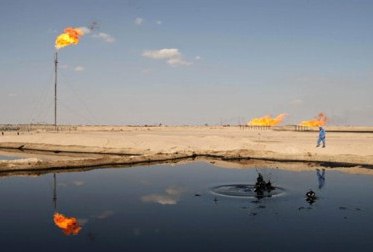
Iran has planned to add new production from fields along its border with Iraq. It aims to add 250,000 barrels a day of a new heavy export grade, called West Karoun, by the end of 2016 and raise output to 700,000 barrels a day within three years.

Longer-term output expansion will come from new contracts with foreign oil companies.

Iran hopes to receive the first bids as early as 2017 and aims to lift output to 5 mbd within two or three years — at least 1.3 mbd above what it was in 2010, the year before international sanctions were introduced.

Under an agreement with OPEC reached last month, Iran is allowed to produce 3.8 mbd through the first half of 2017, close to its pre-sanctions peak of around 4 mbd.


Iran-Economy-Trade-Import-Export-Oil-Gas-OPEC-Steel-Iron-MBN


www.mbncompany.com


Information of news
  • Views: 765
  • Author: mbncom
  • Date:

Tehran-Moscow ties will stabilize energy market: Russian expert

Category: News

A Russian expert believes that new agreements between his country and Iran will have impacts on the future stability of global energy market.


Igor Morozov, a member of the Council of the Federation Committee for Foreign Affairs, said that given the rich oil and gas reserves of the two countries, Moscow-Tehran cooperation in the oil and gas industries will have an effect on the future energy market.

Morozov, who was recently in Tehran to take part in the Iran-Russia Joint Economic Commission meeting, described last week's energy deal between Russia's Gazprom and National Iranian Oil Company (NIOC) as very important.

Based on the deal, Russia will study Iran's Cheshmeh-Khosh and Changuleh oilfields.

On the latest decision by Organization of the Petroleum Exporting Countries (OPEC) to lower production level, the Russian expert said the decision will raise oil prices and then stabilize it.

The expert further described the mid-December visit of the Russian delegation led by Energy Minister Alexander Novak to Iran as an indication of Moscow's determination to establish deeper trade ties with Tehran.


Iran-Gas-Oil-Steel-Metal-Russia-Energy-Market-Petroleum-Organization


www.mbncompany.com


Information of news
  • Views: 718
  • Author: mbncom
  • Date:

India's Essar Oil imports over 155,000 bpd of Iranian crude

Category: News

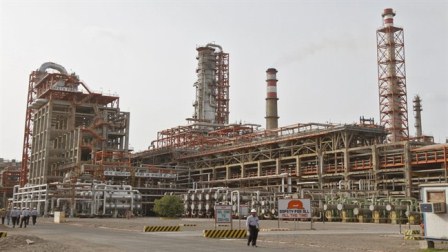
Essar Oil, a key Indian client of Iranian crude, shipped in about 155,200 barrels per day (bpd) of oil from Iran in November, according to tanker arrival data obtained from trade sources and ship-tracking services.


The figure shows an eye-caching growth of 3½-fold compared to the figure for the same month last year, which was about 34,500 bpd, reported Reuters.

According to the report, the company imported 250,320 bpd of crude oil from Iran in October.

Essar Oil took in 172,800 bpd of crude oil from Iran in the first 11 months of 2016, which indicates a rise of 68.8 percent compared to the for the same period in 2015 which was 102,500 bpd.

Iran was the main exporter of crude oil to the company during the 11-month period followed by Venezuela and Mexico with 149,500 bpd and 18,800 bpd respectively.

India's oil imports from Iran fell 19 percent in November from a record high the month earlier.

India's shipments from Tehran, were about 620,000 bpd oil in November. That was down from 765,500 bpd in October, but well above 138,100 bpd in November 2016.

The November drop came before OPEC members and other global producers agreed to cut output in a bid to bolster weak oil prices. Iran, a member of the Organization of Petroleum Exporting Countries (OPEC), had been initially hesitant to cut production, but as Saudi Arabia — OPEC's largest producer — agreed to take on the lion's share of reductions, the landmark deal was agreed at the end of last month.

Supplies from Iran to India more than doubled in January-November to 468,900 bpd from 205,900 bpd in the same period last year, the data showed.


Iran-Oil-Gas-Crude-Steel-Metal-India-Import-Export-Tehran-Petroleum-OPEC-MBN


www.mbncompany.com


Information of news
  • Views: 729
  • Author: mbncom
  • Date:

US allows more Iran exports, training Iranians

Category: News

The US Treasury Department amended transactions restrictions on Iran to permit exports of authorized medical devices and agricultural commodities.


A Treasury Office of Foreign Assets Control (OFAC) statement said the changes to the Iranian Transactions and Sanctions Regulations (ITSR) would be effective as of December 23, 2016.


"OFAC is adopting a final rule to amend the licensing provisions of the ITSR to expand the scope of medical devices and agricultural commodities generally authorized for export or re-export to Iran," said the statement.

The Treasury's new Iran regulations also include new or expanded authorizations for training Iranian healthcare professionals on using and maintaining medical devices.

It added that the changes would be implemented "in response to feedback from regulated public regarding improving patient safety, provide new or expanded authorizations relating to training, replacement parts, software and services related to the operation, maintenance, and repair of medical devices, and items that are broken or connected to product recalls or other safety concerns".

The move, as explained, could allow Americans to train Iranians and is already drawing praise as a sign that the administration of US President Barack Obama was 'breaking a taboo' toward Tehran.

"It's a pretty big deal moving forward," Tyler Cullis of the National Iranian American Council told Al-Monitor.

"It allows Iran to reach the full benefit of the medical devices that OFAC, up until this point, has allowed to be exported there," Erich Ferrari, a sanctions lawyer who represents medical device makers' interests before OFAC, also told Al-Monitor.

"A lot of these devices are more complicated, and there's just a dearth of non-US personnel available to provide that type of training."

He predicted that the Trump administration would have little incentive to overturn the new OFAC regulations on Iran.

"It's all in furtherance of humanitarian trade," he said. "And there's congressional will for this type of trade to be unimpeded."


Iran-Import-Export-Train-Trade-License-Product-OFAC-Trump-US-Medical-Research-MBN


www.mbncompany.com


Related Posts :

    Contact Us :

    Headquarter: Unit:15-No:12-Gandhi 19-Gandhi Blv-Tehran-Iran
    Postal Code: 1517874438
    Telephones: (+98-21)44237763 (+98-21)88668972 (+98-21)88663258
    Fax NO: (+98-21)89770683
    E-mail : Info@mbncompany.com
    Laboratory and instrumentation section: mbnasir.co@gmail.com
    Electrical section: mbnco@outlook.com
    After sales section: support@mbncompany.com

    Google Map :


    سئو | کاشت مو | صندلی پلاستیکی | بادکنک آرایی