MBN-Company
MBN-Company
MBN-Company
MBN-Company
MBN-Company
MBN-Company
MBN-Company
MBN-Company
Information of news
  • Views: 597
  • Author: mbncom
  • Date:

Foreign companies willing to invest in Iran's oil industry

Category: News

A number of foreign companies have voiced their willingness to help Iran implement its oil project, said a deputy oil minister.


 Amir Hossein Zamani-Nia further said, "Given the enthusiasm shown by foreign companies to be involved in Iran's oil sector, the industry will experience a great boom within the next two years."

Pointing to the ongoing negotiations with directors of foreign oil companies, he added, "There is intense competition across the world to attract foreign investment, but the assets are limited while competition for absorbing them is high."

In relevant remarks in late October, Iranian Petrochemical Commercial Company (IPCC) Executive Director Mehdi Sharifi Niknafs said Iranian petrochemical facilities are ready to present their products to Germany, Britain and Europe.

According to a directive by the Headquarters of Economy of Resistance, Iran National Oil Company should settle 10 contracts by mid-March 2018.

Noting that the first agreement with Total, CNPCI and Petropars has been signed to develop the Phase 11 of South Pars Joint Gas Field, Zamani-Nia said that if technical talks are conducted properly, negotiations on other sections will not take long.


Iran-Import-Export-Trade-Equipment-Oil-Minister-MBN-Deputy-


www.mbncompany.com


Information of news
  • Views: 609
  • Author: mbncom
  • Date:

Iran-France ties on the rise

Category: News

Since the nuclear agreement, the French press has begun to call Iran an “El Dorado” for French auto, energy, and high-tech firms.


In the face of ‎recently-imposed US sanctions on the Islamic Republic of Iran, France is expanding trade cooperation with Tehran after Iran’s 2015 historic nuclear deal. Since the nuclear agreement, the French press has begun to call Iran an “El Dorado” for French auto, energy, and high-tech firms.

These deals refers to sharp objective economic conflicts between the European Union (EU) and the United States, which underline the increasing strategic and military tensions between the two blocs. Washington has threatened to abandon the Iranian nuclear deal, undertaking a 90-day review of its policies toward Tehran.

Recently, the US Congress overwhelmingly passed a bill targeting Russia, North Korea, and Iran, accusing Iran of terrorism and involvement in regional wars, meanwhile, the Islamic Republic of Iran strongly denies any involvement in terrorism and itself is a chief victim of terrorism.

According to the World Socialist website, US sanctions are aimed not only at Iran but at other powers, including China and the EU, who are developing trade ties with Tehran. US sanctions on Moscow, Pyongyang and Tehran have been sharply censured by European powers, and Germany and France have threatened to take retaliatory sanctions against the United States.

As Iran concludes multi-billion-dollar deals with European firms, including Germany’s Volkswagen and Italy’s Ferrovie dello Stato, French capital is moving aggressively into Iran. This includes France’s auto companies, which are desperate to expand sales amid the economic crisis in Europe.


Major partners


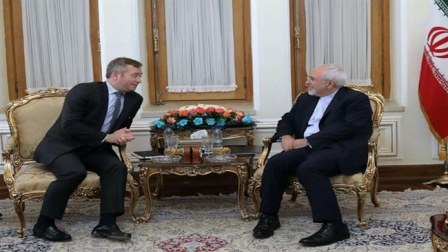
In early August, Foreign Minister Mohammad-Javad Zarif in a meeting with French Minister for Europe and Foreign Affairs Jean-Baptiste Lemoyne said France is one of Iran's major partners in the European Union.

He said ample grounds are available for cooperation with France on bilateral and regional levels.

Lemoyne said, “We will make serious endeavors to protect the JCPOA. We are interested in cooperation with Iran to tackle regional crises. Expansion of cooperation with the Islamic Republic of Iran, especially in the economic domain is among our priorities.”


IMIDRO- Renault joint venture


Several months ago, Iranian Mines and Mining Industries Development and Renovation Organization (IMIDRO) and French carmaker Renault signed a cooperation pact in the form of joint venture.

As per the agreement, Renault has agreed to produce two of its products Renault Symbol and Duster in Iran by 2018.

Renault said it would start a joint venture in Iran, tapping into the country's fast-growing car market as it opens up to foreign investment after the end of Western sanctions.

The venture, in which Renault will hold a majority stake, includes a new production plant that is to raise Renault's production capacity in Iran to 350,000 vehicles per year from 200,000 now, it said in a statement.

Previous Minister of Industries, Mines and Trade, Mohammad-Reza Nematzadeh called Renault, which has been active in Iran for more than 12 years, the ideal partner for this project.

Renault chief Carlos Ghosn said Iran's car market is projected to reach two million vehicle market by 2020, giving it 'undeniable potential'.

The factory is to roll out its first Symbol and Duster models in 2018, Renault said.

The venture will, for the first time, give Renault its own distribution network in Iran, complete with sales and after sales services, it said.

According to the media reports, Renault sales in Iran rose by 56 percent in 2015 from a year earlier to 51,500 vehicles, giving it a market share of 4.8 percent. Growth continued to be strong in the first eight months of this year, the company said.


Historic occasion


The Renault deal comes after another French carmaker, PSA Peugeot Citroën, which has 35 percent of the Iranian market, signed a deal last year to open a plant producing 200,000 vehicles annually. Peugeot was a major producer in Iran before sanctions were imposed. PSA only avoided a fall in overall global sales last year due to increased sales in Iran.

Meanwhile, France’s Total and the China National Petroleum Corporation (CNPC) signed a 20-year, $4.9 billion contract with Iran’s Petropars to invest in the South Pars offshore gas field, which is split between Iranian and Qatari waters. With an initial $1 billion investment, Total will have a 50.1 percent stake; CNPC and Petropars will own 30 and 19.9 percent, respectively.

Total CEO Patrick Pouyanné called the occasion “historic” and encouraged other companies to invest in Iran. “We aren’t a political organization, but I hope this agreement will encourage other companies to come to Iran because economic development is also a way of building peace,” he told AFP. “We are here to build bridges, not walls.”

Total is working to circumvent US sanctions, appointing a compliance officer to ensure that it is not targeted by Washington—as in 2014, when the US imposed a $9 billion fine on France’s largest bank, BNP-Paribas, for violating the embargo. Iran’s oil minister Bijan Namadar Zanganeh said Iran’s oil industry needs some $200 billion in investment over the next five years.

The European powers long enjoyed special access to Iranian markets, as Washington cut ties with Tehran that emerged from the 1979 revolution against the CIA-backed Shah of Iran. Particularly after the Stalinist bureaucracy’s dissolution of the Soviet Union in 1991, US-EU rivalries surged in the Persian Gulf. France’s companies grabbed Iranian market share in the 1990s, while its diplomats argued that European influence in the Persian Gulf was necessary to build a “multi-polar” world. These tensions culminated in the illegal and unilateral US invasion of Iraq in 2003.

In 2006, however, Washington and the European powers jointly voted to impose sanctions against Iran over its uranium enrichment program, which Iran insisted was for peaceful purposes. Over the last decade, China has increasingly developed its trade with Iran, which joined the Chinese-led Asian Infrastructure Investment Bank (AIIB) and became a focus of China’s plans for a web of transport, energy and trade routes across Eurasia.

The US-backed UN sanctions slashed Franco-Iranian economic ties. Trade in 2014 amounted to only €514 million, compared with €4 billion in 2004. France’s market share in Iran fell from seven percent to one percent.

Since the 2015 nuclear deal, European ruling circles are desperate to reestablish their presence in Iran, which has the world’s second-largest gas reserves and fourth-largest oil reserves, and an internal market of nearly 80 million people. The EU is likely to clash with Washington, should it seek to reimpose sanctions on Iran in the near future. After the nuclear deal was initially ratified, the European Council on Foreign Relations issued an analysis on August 26, 2015, headlined “Europe won’t bow to an anti-Iran-deal US Congress.”

It said, “Europeans are now looking beyond a nuclear-centric vision of Iran to focus on how they can use the opening up to engage Iranian President Hassan Rouhani’s administration. Both Iran and Europe are eager to reignite their once-prosperous trade relations, and Europeans would also like to work with Iran to more constructively deescalate conflicts in the Middle East. This kind of progress can’t be easily undone, and if it is, European policy makers may blame Washington rather than Tehran for prematurely derailing an agreement that was given virtually global acceptance.
 

Iran-Import-Export-Trade-Equipment-Oil-Gas-Petrochemical- France-MBN

www.mbncompany.com


Information of news
  • Views: 616
  • Author: mbncom
  • Date:

Iran expects $5b from petrochemical exports

Category: News

Export of Iran's petrochemical products is expected to reach 11.5 million tons in the six months to September 22 while the revenues will reach $5.25 billion, according to figures released in an official document by Iran's National Petrochemical Company which was procured by Trend News Agency.


Petrochemical output for the one year period to August 21 is also expected to stand at 51.9 million tons, compared to 51.3 million tons in the year to August 21, 2016.

The document also listed 58 new petrochemical projects which are under development with nominal capacity of 58.4 million tons/year.

Iran plans to inaugurate seven petrochemical plants by March 2018 and a further 23 the following year. The country needs $20 billion in additional investments to double its production capacity by 2022 and $35 billion more to increase the figure to 150 million tons/year by 2025.

Iran's nominal petrochemical production capacity stands at 73 million tons per year.

Islamic Republic's petrochemical sector is one of the rapidly growing industrial sectors, which experienced a seven percent growth in nominal capacity during the last fiscal year.

Iran's actual production level during the previous year (2014-2015) was 46.41 million tons.


Iran-Import-Export-Economy-Trade-Gas-Oil-Petrochemical-Equipment-MBN-


www.mbncompany.com


Information of news
  • Views: 562
  • Author: mbncom
  • Date:

German ties with Iran dynamic, flexible

Category: News

Germany maintains dynamic and flexible ties with Iran, the country's envoy to Iran, Michael Klor-Berchtold, said.


Berchtold made the remarks Tuesday in a meeting with East Azarbaijan Province Governor General Esmail Jabbarzadeh.

He expressed Germany's readiness to utilize all the potentials in the Iranian northwestern province to bolster bilateral ties in different fields, including the pharmaceutical and car manufacturing sectors.

He said that construction of two solar power plants is under way in Iran with German investors' participation.

The German ambassador to Iran also hailed the launch of a direct flight between Tabriz and Hamburg.

Meanwhile, Jabbarzadeh expressed hope for facilitation of commute between Iranian and German citizens and the process of issuing business visas.

Developing ties in the fields of new and renewable energies, environmental issues as well as revival of Orumieh Lake were among other topics discussed during the meeting.


Iran-Economy-Gas-Oil-Petrochemical-Equipment-Trade-Import-Export-Germany-Power-Solar-Energy-Renewable-MBN


www.mbncompany.com


Information of news
  • Views: 608
  • Author: mbncom
  • Date:

Iran starts building South Pars gas sweetening unit

Category: News

Construction of the first sweetening unit at the second refinery of the phases 2 and 3 of the giant South Pars Gas Field has started, said a senior official.

Project Manager of the Demercaptanization (DMC) Unit in Gas and Oil Pars Company Sirous Peykar said, "The project to construct the sweetening unit was assigned to the Khatam-ul Anbiya Construction Company with the aim of taking the sour Sulfur compounds from gas condensate in phases 2 and 3 of South Pars Gas Field."

Noting that the unit's goal will be sweetening the gas condensate in South Pars refineries, he said, "The project to decrease the corrosion from harmful compounds in refineries, as well as improving the quality of gas condensate and raising the added value of the product is being implemented for the first time in the field."

South Pars field that Iran shares with Qatar, has 19 billion barrels of gas condensate in its Iranian part, 9 billion barrels of which is recoverable.

810,000 barrels of gas condensate are currently produced in 18 phases of the field, some 80,000 barrels are recovered from phases 2 and 3.


Iran-MBN-Trade-Gas-Oil-Petrochemical-Project-equipment-Economy-


www.mbncompany.com


Information of news
  • Views: 577
  • Author: mbncom
  • Date:

Iran preparing Chabahar port for container ships

Category: News

Iran is preparing to receive container ships in its southeastern port of Chabahar.


Chabahar Port development project has witnessed 92 percent progress and there is a 30-hectare terminal area for containers, cranes and installing related equipment.

These developments will enable the port to provide facility for the loading/unloading of 120,000 tons of freight.

So far, investment to the tune of $940 million has been made in developing the port which will turn it into a commercial hub linking Iran to India to the south, and provide access to the North-South Corridor that will stretch to Europe.

Chabahar is a seaport located on the Gulf of Oman. It serves as Iran's only oceanic port, and consists of two separate ports named Shahid Kalantari and Shahid Beheshti, each of which have five berths.

India and Iran first agreed to plans to further develop Shahid Beheshti port in 2003.

In May 2016, India and Iran signed an agreement in which India would refurbish one of the berths at Shahid Beheshti port, and reconstruct a 600-meter-long container handling facility at the port.

On Sunday, India's Minister for Shipping and Road Transport and Highways Nitin Gadkari in a meeting with Iran's First Vice President Es'haq Jahangiri highlighted the activation of contract of Chabahar port development noting that India Ports Global Limited (IPGL) has finalized procurement of critical equipment such as Rail Mounted Gantry Crane (RMGC), and is close to finalizing orders relating to Rubber Tire Mobile Crane (RTMC), MT Container Handlers(MTCH), Truck and Tractor Trailers Containers and related equipment.

He also expressed India's readiness to aid Iran in taking up operations in Chabahar port during the interim period between the actual activation of contract.

He requested the Iranian side for an early submission of loan application for Chabahar Port Development to EXIM Bank of India so that the contract between the two countries can be activated.

The Iranian side had requested India to provide up to $150 million and had made it a condition for activation of the Chabahar Port contract. The application for loan to EXIM Bank of India is still awaited.

Jahangiri said relations between Iran and India have always been outstanding and important.

He further called for closer economic ties and said the Islamic Republic welcomes India's participation in implementing oil industry projects.

What matters is that the interests of the two countries should be considered in implementing the projects, the vice president added.

He also said Iran is fully prepared to supply India's energy needs and can be reliable partner for the country in this field.

Later on Sunday, Gadkari, in a meeting with Iran's Minister for Roads and Urban Development Abbas Akhoundi , conveyed to him the latest update on procurement of equipment for the two terminals — multipurpose and container — that are covered by the Chabahar Port agreement.

He also requested Akhoundi that in the interest of supporting Chabahar Port operations, the Iranian side should consider waiving the condition to submit loan application as it was time consuming.

The Iranian side assured that the application shall shortly be presented to EXIM Bank of India.

The Foreign Investment Promotion and Protection Act (FIPPA) application was also presented by the MD, IPGL to the Iranian authorities in the presence of Gadkari and Akhoundi . India has opened an IPGL office in Teheran.

In his meeting with Akhoundi, Gadkari stressed the need for attracting cargo to Chabahar Port. He said, Iran and India should organize a workshop at Chabahar for this purpose at an early date.

Gadkari also underlined the need to develop rail connectivity from Chabahar to Zahedan, and said that the MoU with India in this respect may be extended. Ratification of the trilateral Transit Agreement between India, Iran and Afghanistan was also discussed. While India and Afghanistan have endorsed the agreement, Iran is yet to do the same.


Iran-Import-Export-Equipment-Gas-Oil-Petrochemical-Economy-India-Transit-Energy-Investment-MBN-


www.mbncompany.com


Information of news
  • Views: 558
  • Author: mbncom
  • Date:

Iran ready to resume oil swap with Russia, Turkmenistan, Kazakhstan: Zanganeh

Category: News

Iran would resume oil swap with Russia, Turkmenistan and Kazakhstan as soon as the countries supply the required crude, Oil Minister Bijan Namdar Zanganeh said.


He said resuming oil swap is one of the top issues pursued by the Oil Ministry since the current administration took office in 2013.

Since the swap has been on hold for several years, its resumption requires time as well as cooperation from other countries supplying oil, he noted.

"Kazakhstan, Turkmenistan, and Russia should supply the crude for the swap in the north (of Iran)," the minister said, adding that the Iranian side is completely ready to resume the deal.

Based on oil swap deals, which started in 1997, Iran received crude oil from Azerbaijan, Kazakhstan and Turkmenistan through its North Oil Terminal on the Caspian coast and delivered an equivalent volume to their customers in the Persian Gulf. The procedure was suspended in 2010 on grounds that the income from the swap was not sufficient for Iran.

Oil swaps, which stand for the exchange of raw materials to facilitate logistics operations, are expected to allow the Islamic Republic to optimize oil deliveries to refineries, located in the northern parts of the country.


Iran-Economy-Equipment-Oil-Gas-Petrochemical-Crude Oil-Import-Export-Modiran-MBN


www.mbncompany.com


Information of news
  • Views: 622
  • Author: mbncom
  • Date:

Iran starts building Mideast's largest solar farm

Category: News

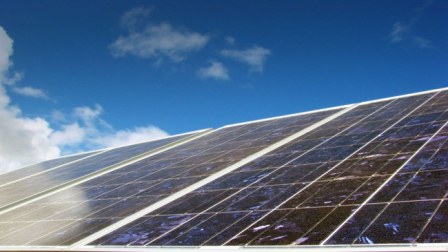
Iran inaugurated a project to build the largest solar power plant in the Middle East.

The construction of the power plant kicked off on Thursday in a ceremony attended by Iran's Energy Minister Hamid Chitchian in the southcentral province of Kerman.

The 100-megawatt solar power plant, which is located between the cities of Kerman and Bam, calls for an investment of $140 million.

In April, Iran launched its biggest solar plant near the central city of Isfahan. The project, which took seven months to complete, was constructed jointly by Iran's Ghadir Electricity and Energy Company and Greece's Metka engineering firm.

Iran is heavily dependent on natural gas and oil to generate power and one of the most energy-intensive countries in the world because government subsidies for fossil fuels encourage inefficient energy use.

Iran is seeking 5,000 MW of renewable energy by 2020, with more than 4,000 MW expected to come from wind power. The country has approximately 141 MW of installed wind power.


Iran-Import-Export-Economy-Energy-Gas-Oil-Petrochemical-Solar-Power-Renewable-Engineering--MBN


www.mbncompany.com


Information of news
  • Views: 782
  • Author: mbncom
  • Date:

Global registration of Yazd, an honor for Iran

Category: News

Cultural Heritage Desk


Global registration of Yazd by United Nations Educational, Scientific and Cultural Organization (UNESCO) is the outcome of 10 years of tireless efforts, said director general of Iran’s Cultural Heritage, Handicrafts and Tourism Organization’s (ICHHTO) Office for Preserving Natural and Intellectual Heritages.

Farhad Nazari further said that Yazd belongs to the world and people around the world are sensitive to its fate as a cultural heritage site.

This is a breakthrough for Yazd and Iran, he said.

The urban management of this city should be in tandem with global standards, he added.

Also, director general of Yazd Cultural Heritage, Handicrafts and Tourism Department said global registration of Yazd would reinforce the standing of Iran’s cultural heritage in the global arena.

Fatemeh Danesh-Yazdi said Yazd is an ancient city, located in the heart of Iran’s Central Plateau.

Historical textures in Yazd, which are spread over 2,200 hectares, have been registered on the National Heritage List, she added.

It is a great honor for Yazd since it symbolizes the rich Iranian culture and civilization across the world, she said.

She continued that there is peaceful co-existence among Muslims, Zoroastrians and Jews in Yazd.

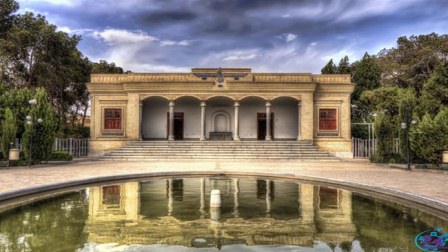
UNESCO added the historical texture of Yazd in central Iran to its list of world heritage sites.

The site was inscribed on the world heritage list during the 41st session of UNSCO’s World Heritage Committee in Krakow, Poland, on July 9.


Iran-Import-Export-Trade-Economy-Cultural-Yazd-Tourism-Nation-Education-MBN


www.mbncompany.com


Information of news
  • Views: 539
  • Author: mbncom
  • Date:

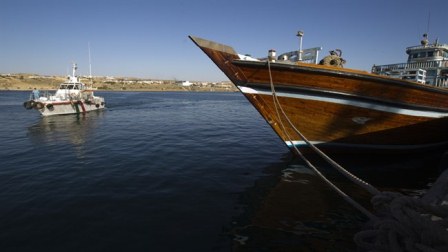
First Iran-made catamaran delivered to Turkey

Category: News

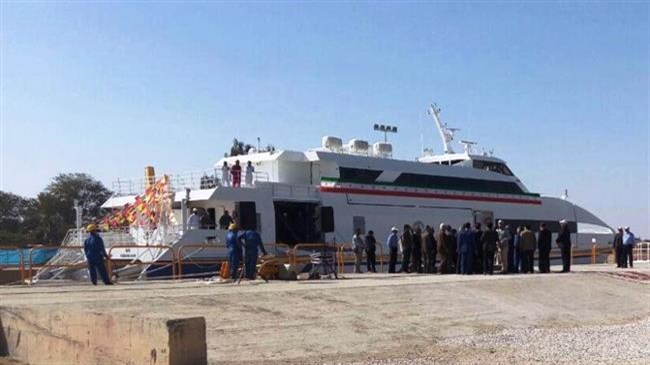
“Iran has completed its first export of a catamaran ship built in the country to Turkey,” media reports said on Saturday.


The delivery puts Iran in the elite club of the manufacturers of catamaran, a multi-hulled watercraft featuring two parallel hulls of equal size.

Hossein Qorbani, managing director of Iran's Arvandan Shipbuilding Company which built the sailing boat, said the vessel sold at around 10 million US dollars.

“One of the key features of the Iranian-made catamaran is that it is able to sail into shallow waters about two meters deep,” he said. “At a speed of 30 knots (55 km/h), the vessel is also able to travel in bad weather,” Qorbani added. 

“Each catamaran takes about 12 to 18 months to build, but Iranian builders are able to bring the period down to eight months,” the official said.

According to Qorbani, “France's Bureau Veritas has certified the quality of the vessel’s hull.”

The Islamic Revolution Guards Corps (IRGC) unveiled a catamaran-type ship capable of carrying a helicopter and up to 100 people in September 2016.

Iran has a sprawling shipbuilding industry, chiefly devoted to constructing oil tankers and container ships as well as offshore structures.

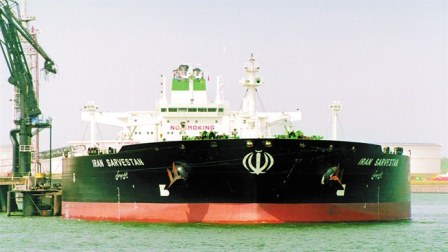
The country owns the world’s largest fleet of oil supertankers consisting of 42 VLCCs, each able to carry two million barrels of oil.

With the removal of US-led sanctions on Iran in January 2016, the Islamic Republic plans to expand its container fleet in order to extend its forward coverage beyond all frontiers.

After the sanctions were lifted, officials said that the country was in talks with major world shipbuilders, including South Korea’s Hyundai and Germany’s Nordic Yards Wismar, to carry out a series of grand projects.

Iran’s biggest operator, the Islamic Republic of Iran Shipping Lines (IRISL), was putting out orders for Triple E vessels capable of carrying more than 18,000 containers, IRISL Chairman Mohammad Saeidi said.

IRISL’s current fleet includes 158 container vessels, dry bulk carriers and tankers which are expected to return to international traffic in early 2016.

Another official said, “Preliminary agreements had been signed with South Korean, German and Chinese shipbuilders to construct high-tech LNG tankers as the country pushes to join the club of liquefied natural gas exporters.”


Iran-Import-Export-Trade-Equipment-Economy-MBN-Vessel-Turkey-Iran-Import-Export-Trade-Equipment-Economy-MBN-Vessel-Turkey-


www.mbncompany.com


Related Posts :

    Contact Us :

    Headquarter: Unit:15-No:12-Gandhi 19-Gandhi Blv-Tehran-Iran
    Postal Code: 1517874438
    Telephones: (+98-21)44237763 (+98-21)88668972 (+98-21)88663258
    Fax NO: (+98-21)89770683
    E-mail : Info@mbncompany.com
    Laboratory and instrumentation section: mbnasir.co@gmail.com
    Electrical section: mbnco@outlook.com
    After sales section: support@mbncompany.com

    Google Map :


    سئو | کاشت مو | صندلی پلاستیکی | بادکنک آرایی